
Kibabii University Develops Digital System to Fight School Dropouts and Child Labour in Bungoma, Busia
Kibabii University is developing a digital education monitoring system aimed at identifying children at risk of dropping out of school and protecting vulnerable learners from exploitation and cross-border child labour in Bungoma and Busia counties.
The proposed technology-driven intervention will use a mobile-based Early Warning and Attendance Tracking System to monitor learners’ school attendance, identify warning signs and alert relevant authorities when children face risks that could interfere with their education.
The initiative, known as From Research to Action: Developing an Evidence-Based Smart Education Model to Address Cross-Border Child Labour in Bungoma and Busia Counties, seeks to strengthen child protection by enabling schools and other stakeholders to respond before vulnerable children are permanently pushed out of classrooms.
The proposed system will particularly focus on learners who repeatedly miss school, engage in work during school hours or face possible exploitation linked to cross-border movement.
Once implemented, the technology is expected to generate mobile alerts whenever a learner’s attendance record raises concern. The alerts will be shared with designated stakeholders, including teachers and child protection officers, who will verify reported cases and coordinate appropriate follow-up interventions.
Kibabii University Study Reveals Extent of Child Labour
The proposed Smart Education Model is informed by a baseline study conducted by Kibabii University, which examined how children’s involvement in work affects their participation in education in the two counties.
Researchers reached 311 children, including 203 from Bungoma County and 108 from Busia County.
The research team also conducted six focus group discussions involving children and eight interviews with education officials, community leaders and child protection stakeholders.
The findings revealed worrying levels of child involvement in work during school days.
According to the study, 58.8 per cent of the children surveyed had engaged in work on school days, while 35.7 per cent reported working during school hours.
The research further established that 48.6 per cent had worked late in the evening, while 60.2 per cent had missed at least three school days in the month before the survey.
These findings highlight the difficulties vulnerable children face in balancing education with work, raising concerns about prolonged absenteeism, school dropout and exposure to exploitation.
Digital Alerts to Support Early Intervention
Under the proposed model, attendance monitoring will become an important tool for identifying children who may need urgent assistance.
Rather than waiting until a learner has completely dropped out, the system is designed to flag repeated absences and other warning signs early enough for teachers and child protection officers to investigate.
The intervention will also help stakeholders identify possible cases where children are engaged in economic activities during learning hours or exposed to risks associated with cross-border movement.
The proposed approach could strengthen coordination between schools, government departments and community-based child protection structures by providing timely information for follow-up.
However, the technology is intended to support existing child protection mechanisms rather than replace the responsibilities of teachers, government officers and other relevant institutions.
Government and Civil Society Back the Initiative
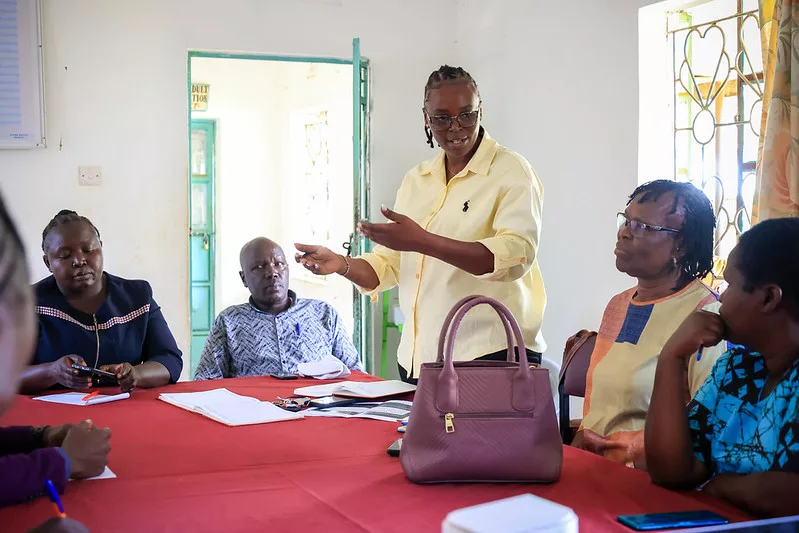
The proposed intervention was discussed during a stakeholder engagement meeting attended by representatives from schools, government departments, community leadership and civil society organisations.
Participants welcomed the initiative, describing it as a timely approach that could improve the identification of children exposed to labour exploitation and strengthen child protection at community level.
Maxwell Ochieng, representing the Ministry of Labour, Social Protection and Senior Citizen Affairs, highlighted existing legal safeguards, including the Children Act, 2022 and the Employment Act, 2007.
Ochieng acknowledged that enforcing the laws remains a challenge and called for stronger interventions within communities.
He also pointed to the Child Protection Information Management System (CPIMS), which is used to record, manage and track cases involving children exposed to child labour, neglect, abuse, exploitation and trafficking.
Meanwhile, Sylvia Wafula, representing SHOFCO, challenged communities to confront the role of adults in perpetuating child labour and violations of children’s rights.
She emphasised that protecting children from exploitation requires responsibility and action from communities, not only government institutions.
Research Team Leading the Smart Education Model
The Kibabii University research team behind the initiative was led by Principal Investigator Isabel Ziz, Co-Principal Investigator Dr Leonida Makila and Chrispus Wanjala.
The project places digital technology at the centre of efforts to address school absenteeism and child labour, particularly in communities where cross-border economic activities may expose vulnerable children to exploitation.
For Bungoma and Busia, the proposed system could provide schools and child protection officers with an additional way of identifying children who need support before absenteeism develops into permanent school dropout.
Its effectiveness will depend on the implementation of the technology, timely verification of alerts and coordinated action by the institutions responsible for protecting children.
The initiative therefore seeks to connect research findings with practical interventions, using early warning information to help keep vulnerable learners in school and protect their right to education.