
Kenya Commits Sh142 Billion to Blue Economy as Ruto Pushes for Ocean Investment and Sustainability
Kenya has pledged to invest approximately Sh142 billion in the blue economy sector, marking one of the country’s most ambitious efforts to harness the economic potential of oceans, lakes, and other water resources while promoting environmental sustainability.
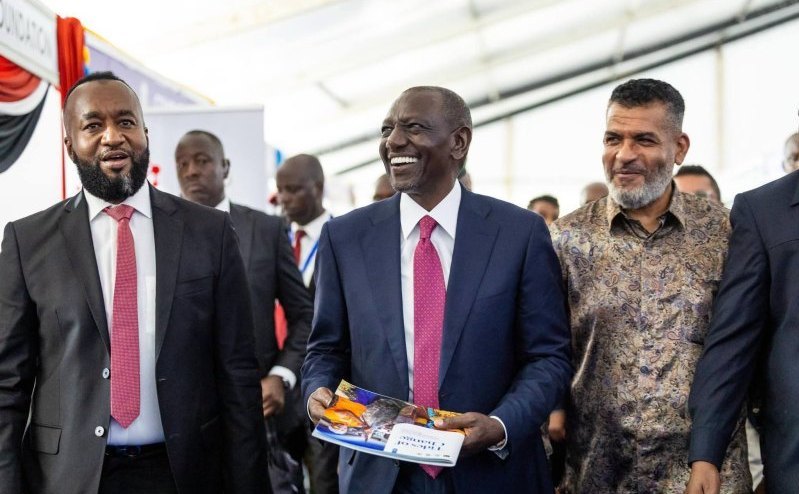
President William Ruto announced the commitment on Thursday during the 11th edition of the Blue Economy Conference, saying the government was determined to fully implement 40 commitments aimed at transforming the sector into a major contributor to economic growth and job creation.
“Kenya alone has made 40 commitments valued at $1.1 billion in support of our blue economy,” President Ruto said. “We are determined to unlock the enormous opportunities that exist within our oceans, lakes, rivers and other water bodies.”
The President explained that his administration made a strategic decision three years ago to establish a dedicated State Department for Blue Economy and Fisheries after discovering that the sector was contributing only marginally to the country’s economic development.
According to Ruto, the move has already begun to bear fruit.
“I took the decision that I am going to have a dedicated blue economy and fisheries state department. As a result, in the last three years, we have invested Sh20.3 billion in our blue economy and fisheries ecosystem,” he said.
The government has rolled out several infrastructure projects aimed at boosting fisheries, maritime activities and aquaculture. Among the achievements highlighted by the President is the completion of three fish landing sites, with construction ongoing on five additional facilities along the Indian Ocean coastline and ten more around Lake Victoria.
The 15 fish landing sites and supporting market infrastructure are being developed at a combined cost of Sh2.8 billion.
Ruto also revealed that the long-awaited Shimoni Fish Port in Kwale County has been completed. The project, which cost Sh2.6 billion, is now awaiting the appointment of an operator before it becomes fully operational.
“We broke ground for the construction of Shimoni Fish Port two years ago, and it is now complete. We are looking for an operator to run the facility,” he said.
In a bid to strengthen fish farming and research, the government has also established two centres of excellence for aquaculture in Kisumu and Kwale counties. The facilities, valued at Sh2.5 billion, are in their final stages of completion and are expected to improve fish production and provide training opportunities for local communities.
The President further disclosed that the government has invested Sh1.4 billion in patrol, research and rescue boats, which have already been deployed to support fishing communities and enhance maritime safety.
Additionally, community groups involved in fisheries have received direct support amounting to Sh3.3 billion, benefiting more than 86,000 individuals.
“We have empowered local communities because they are at the centre of our blue economy agenda,” Ruto said.
The government has also invested another Sh3 billion in a maritime information and research centre that will support data collection, scientific studies and policy development in the fisheries and blue economy sectors.
Beyond economic opportunities, Ruto warned that the world’s oceans are facing increasing environmental pressure from climate change and pollution.
He noted that oceans absorb approximately 90 percent of excess heat generated by greenhouse gases and nearly one-third of global carbon dioxide emissions, helping to shield humanity from the worst effects of climate change.
However, he cautioned that marine ecosystems are reaching their limits.
“Rising sea levels are displacing millions of people, acidifying waters are threatening marine food chains and stronger storms are destroying critical infrastructure,” he said.
The President also expressed concern over growing plastic pollution, describing it as a threat that has reached even the deepest parts of the ocean.
He argued that progress in ocean conservation has been slowed by inadequate financing, weak governance structures, limited technological deployment and insufficient political commitment.
Calling for greater international cooperation, Ruto urged global leaders to move beyond promises and take concrete action to protect marine ecosystems.
“The cost of protecting the ocean cannot keep falling on those who did the least to harm it,” he said.
The President praised recent international agreements, including the High Seas Treaty, which came into force earlier this year and provides the first legal framework for protecting biodiversity in international waters.
Ruto also referenced discussions held during the recent G7 Summit in France, saying Kenya would pursue partnerships that deliver mutual benefits rather than arrangements that merely extract resources.
“We will reject any extractive engagement. Going forward, it is going to be investments that create jobs, create value and ensure everybody wins,” he said.
The Head of State concluded by emphasizing that Africa must be treated as an equal partner in global development efforts, particularly in initiatives aimed at protecting oceans and advancing sustainable economic growth.
The Sh142 billion commitment signals Kenya’s intention to position itself as a regional leader in the blue economy while balancing economic development with environmental stewardship. As investments continue to flow into fisheries, maritime infrastructure and research, the government hopes the sector will become a significant driver of employment, food security and national prosperity in the years ahead.