IEBC Flags WhatsApp Fake News as Major Threat to 2027 Elections
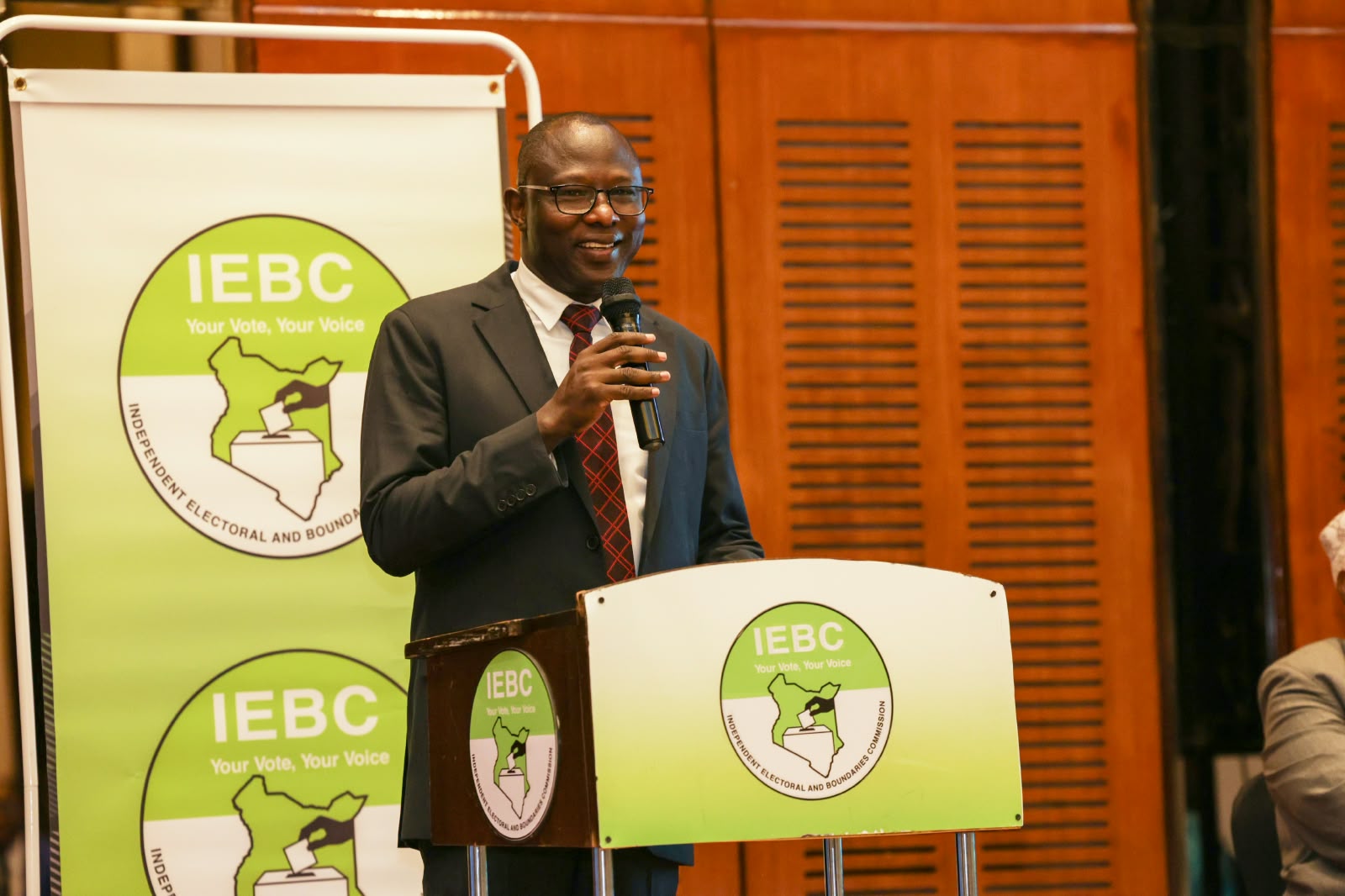
IEBC Chairperson Erastus Ethekon has called on journalists to prioritise factual reporting, independent verification and professionalism to help counter electoral propaganda and prevent the spread of hate speech during the election period.
Speaking during an engagement with journalists, Ethekon said the media remains an important partner in the electoral process, urging reporters to focus on issues rather than personalities and avoid sensationalising election-related matters.
“Our biggest battle in 2027 will be the WhatsApp forwards, fake news,” IEBC Commissioner Alutalala Mukhwana said, highlighting the growing challenge of misinformation in the digital space.
Ethekon said elections are critical to the country’s stability and development, noting that irresponsible reporting and the spread of false information could heighten political tensions.
He urged journalists to help the Commission fact-check electoral information and counter propaganda that could influence public opinion and whip up emotions among Kenyans.
The Commission also sought to reassure Kenyans about the transparency of the 2027 electoral process, particularly following questions raised by some political leaders over the role of the national tallying centre.
Ethekon maintained that the IEBC had nothing to conceal, arguing that the national tallying centre remains necessary for collecting results and establishing whether a presidential candidate has attained the constitutional threshold of 50 per cent plus one vote.
Commissioners reiterated that results declared at polling stations remain final, while the national tallying centre serves to consolidate the figures for the purposes of determining the presidential election outcome.
On proposals for livestreaming electoral proceedings at all polling stations, Ethekon questioned the practicality and financial implications of installing cameras across more than 50,000 polling stations, noting that Kenya already has an active media sector that plays a role in election coverage.
He said the Commission would need to assess proposals for additional transparency measures against their practicality and cost, given the already high expense of conducting elections.
However, the IEBC confirmed that livestreaming would be undertaken at polling stations for information purposes and not as a mechanism for declaring results.
Commissioner Hassan Noor said the Commission’s electoral systems had undergone testing through 32 by-elections conducted during the year, adding that the Kenya Integrated Election Management System (KIEMS) kits had performed during the exercises.
He also clarified that failure of a KIEMS kit should be understood as a technological malfunction rather than evidence of electoral malpractice.
Meanwhile, Commissioner Ann Nderitu announced that political parties that have not complied with registration requirements have until December 7, 2026, to rectify their details, while public fundraising activities will end on December 9, 2026.
The Commission also expects the number of registered voters to rise to approximately 28 million ahead of the 2027 elections, with diaspora polling stations expected to increase following the completion of a mapping exercise.
As preparations intensify, the IEBC has called for closer collaboration with the media and other stakeholders to ensure Kenyans receive accurate electoral information and maintain confidence in the democratic process.