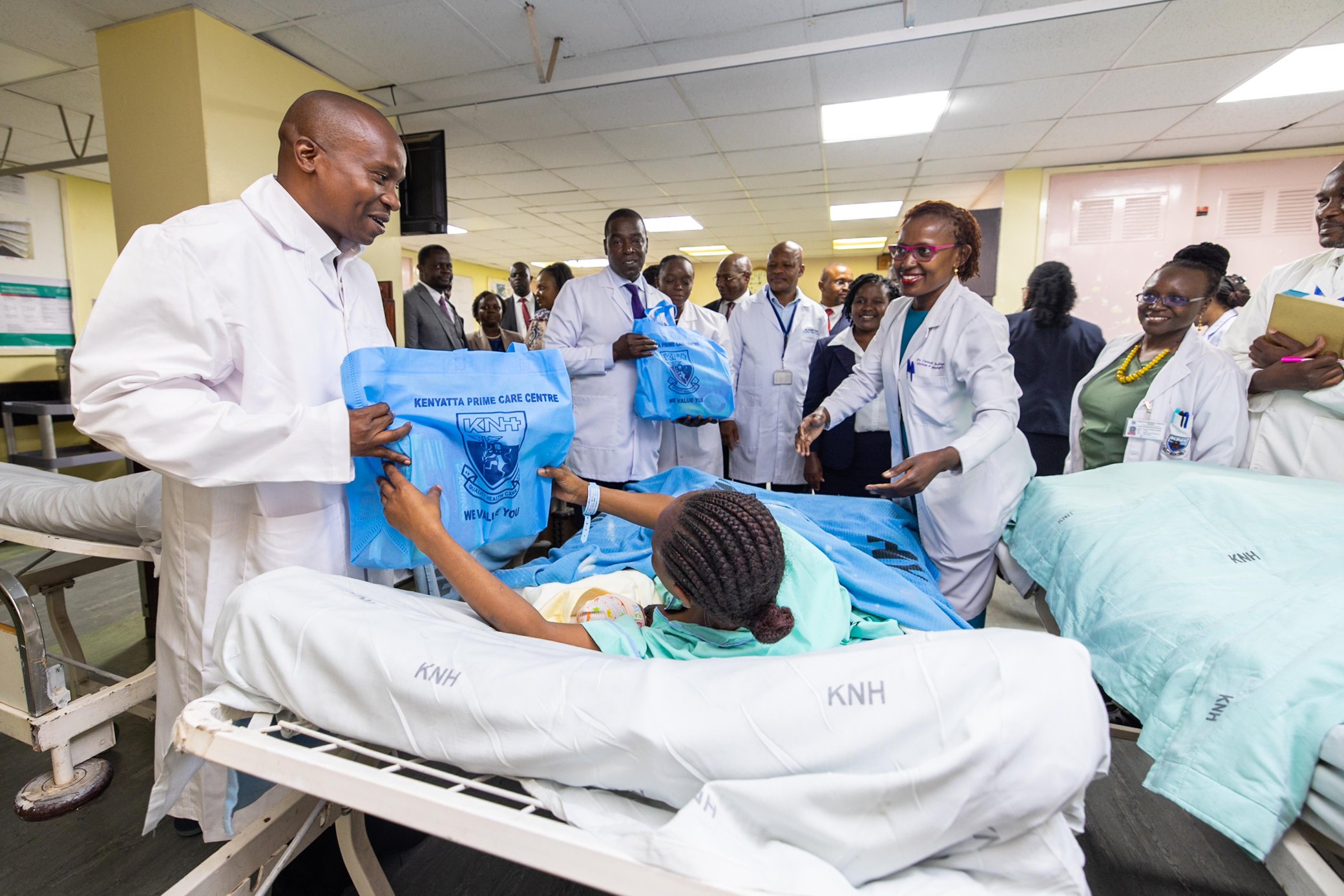

Government Examines Universal Health Coverage Impact at Kenyatta National Hospital
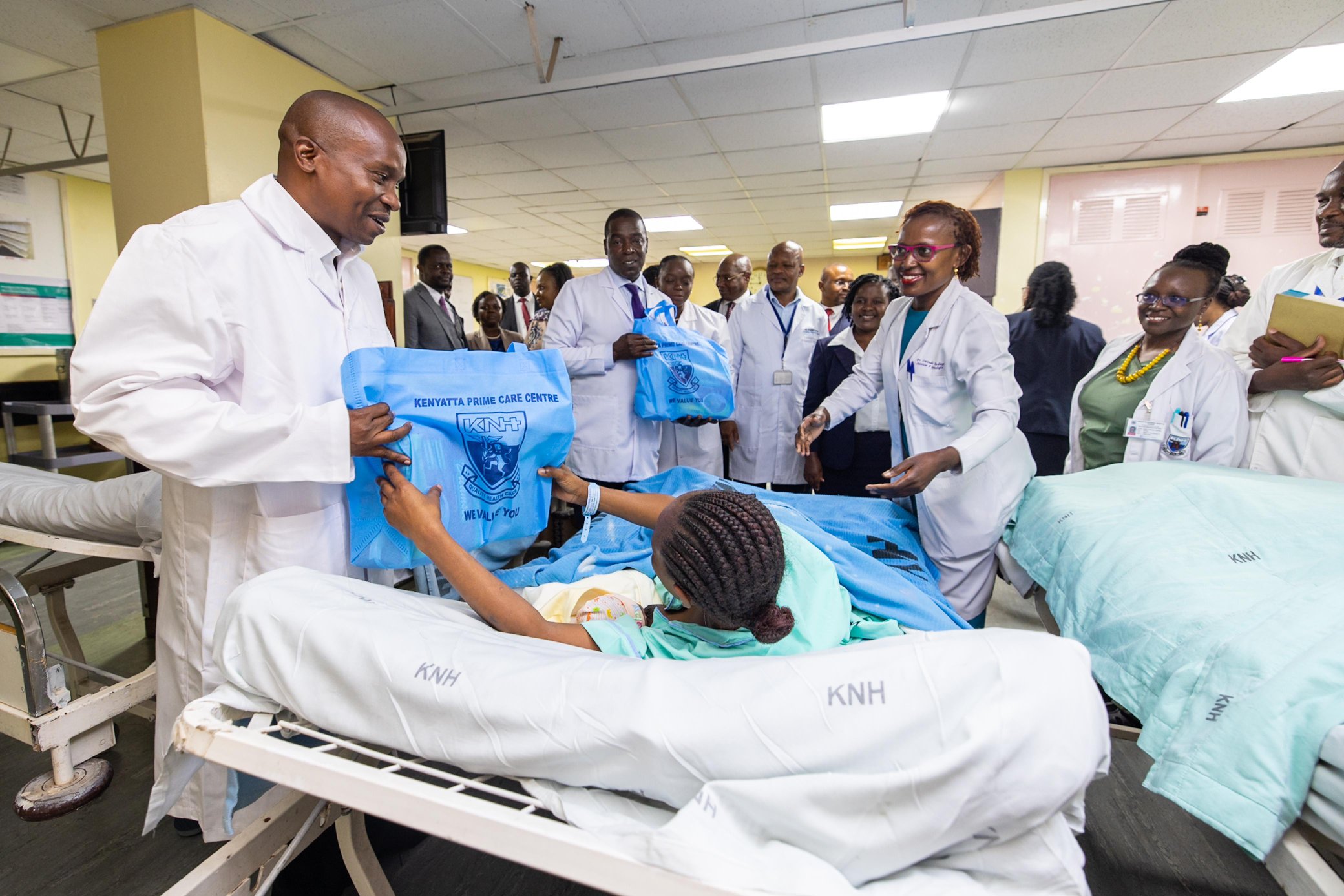
The Deputy President Prof Kithure Kindiki has toured Kenyatta National Hospital (KNH) with the aim of assessing the implementation of the Universal Health Coverage (UHC) program under Social Health Authority (SHA) initiative and engaging with the patient and health workers to establish aspects that require improvement.
The deputy president, who was accompanied by the Minister of Health and key officials, highlighted the government’s commitment to improving healthcare access and quality for all Kenyans.
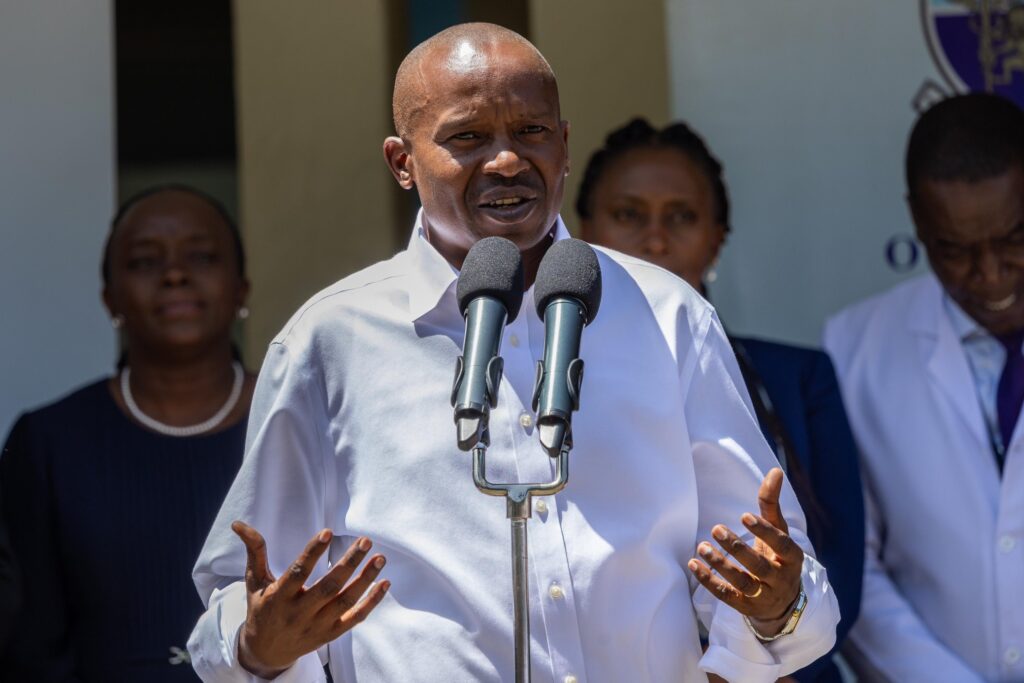
Speaking during the visitation at KNH, the Deputy President acknowledged the hospital’s century-long legacy of providing critical healthcare services.
“Despite the challenges, KNH continues to lead in healthcare delivery. Today’s visit demonstrates the government’s focus on transforming the healthcare sector as part of our national development agenda,” he stated.
He noted the Key achievements under the UHC initiative including enhanced coverage for critical illnesses such as kidney and heart-related diseases and improved service delivery under the Social Health Authority.
The Deputy President stated that it is the intention of the government to make sure that every Kenyan access medical services, noting that it is now two months plus since SHA started out the registration roll-ups hence the numbers are picking up, but they are not good enough.
Let every citizen register under the SHA so that we can be beneficiaries of Taifa Care. It is a better package because of the impact stories that we have had from some of the patients, especially critical patients of critical illnesses. In many of the cases such as kidney transplants, heart related diseases, I have been informed by the patients themselves that the process of getting services is fast.” he said.
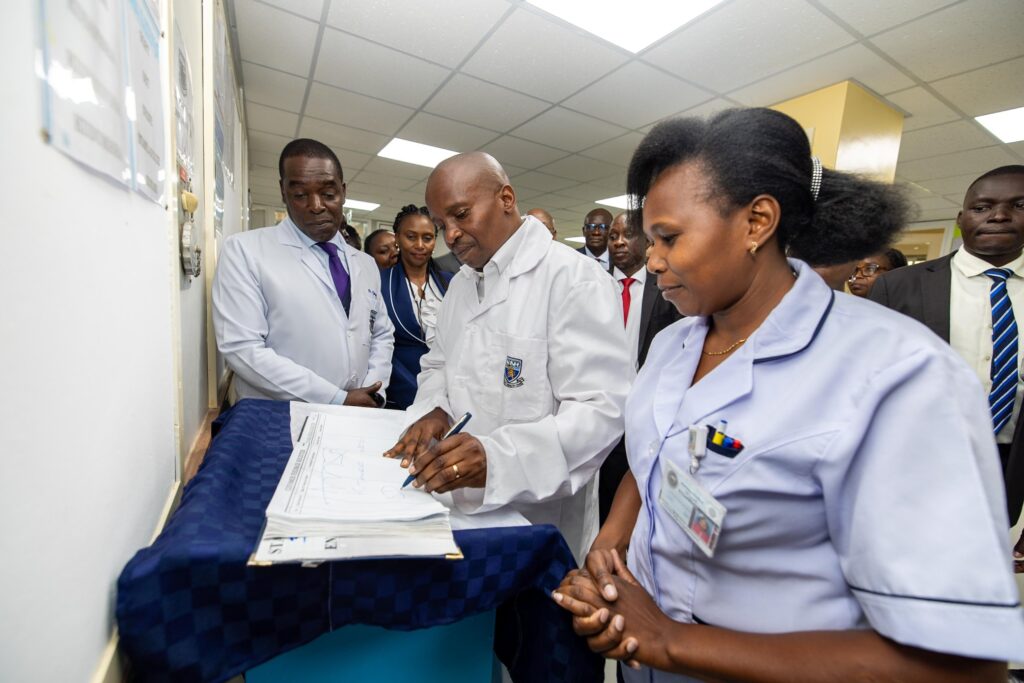
He also visited various hospital departments including the trauma center and the soon-to-be-commissioned East Africa Kidney Institute, a state-of-the-art facility that will provide renal care, including dialysis and kidney transplants, for patients across the region.He acknowledged with assurance of swift resolution to some of the challenges such as procedural delays and technological gaps.
“This program builds on lessons from past attempts and is poised to succeed. We are committed to ensuring every Kenyan registers under the Social Health Authority to benefit from the Type of Care package,” he emphasized.
Additionally, he added that the government is working closely with county governments to address bottlenecks at lower-level hospitals, such as inadequate diagnostic capacity and historical debts under the previous National Insurance Scheme.He reaffirmed KNH administration’s support for the University of Nairobi’s School of Health Sciences for playing a pivotal role in training healthcare professionals.
The Deputy President, while highlighting the importance of primary healthcare, noted the ongoing efforts to increase funding despite resource constraints, adding that the government remains steadfast in its commitment to delivering accessible, affordable and quality healthcare to all citizens.