
Food Insecurity Could Rise to 3.69 Million Kenyans if Long Rains Fail
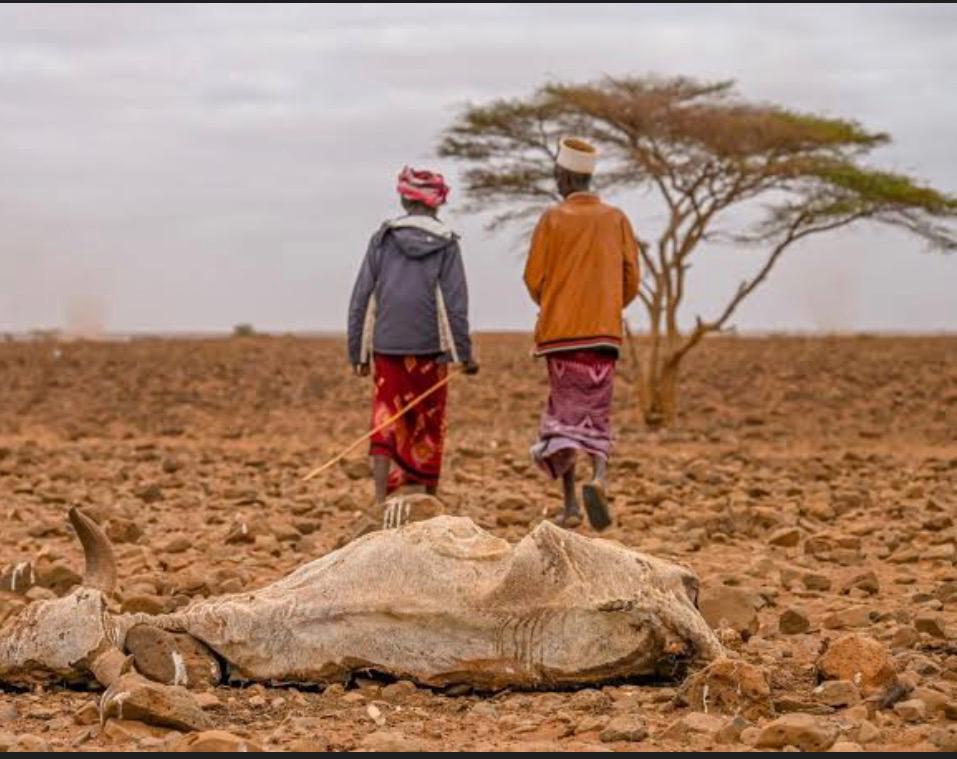
Residents in Mandera County,have raised the Alarm phase of drought after the failed October–November–December 2025 short rains, face growing vulnerability, with more than 335,000 people currently in need of humanitarian assistance.Atleast 3.27 million Kenyans are currently facing high levels of acute food insecurity, but that number could rise sharply to 3.69 million if the March–May 2026 long rains underperform, according to a new briefing by the ASAL Humanitarian Network (AHN).
The report warns that failure of the upcoming long rains would significantly deepen the crisis across the country’s Arid and Semi-Arid Lands (ASALs), pushing more households into severe hunger and eroding already fragile livelihoods.
Currently, 3.27 million people are classified under Crisis (IPC Phase 3) and above, representing 18.5 percent of the ASAL population. Of these, 2,873,380 individuals are in Crisis (IPC Phase 3), while 399,850 are in Emergency (IPC Phase 4), one step below famine.
However, projections show that if the long rains perform poorly, the number of people in Crisis or worse could increase to 3.69 million. Emergency cases alone are expected to surge to 607,437 people. In such a scenario, nearly 20 percent of the ASAL population would be facing high levels of acute food insecurity.
Humanitarian actors caution that while Kenya is not currently classified under famine conditions, the steady expansion of Emergency-level cases signals a narrowing window for preventive action.
The nutrition situation in Mandera has reached the most severe classification under the IPC Acute Malnutrition scale. The county is now classified as IPC Acute Malnutrition Phase 5 (Extremely Critical).
An estimated 86,360 children aged 6–59 months in Mandera require treatment for acute malnutrition, including 20,165 suffering from Severe Acute Malnutrition (SAM). Additionally, more than 17,000 pregnant and breastfeeding women and girls require urgent nutritional support, underscoring the deepening intergenerational risks.
Across the country, 810,871 children aged 6–59 months require management for acute malnutrition, reflecting a notable increase compared to mid-2025 assessments. Within ASAL counties alone, nearly 500,000 children require treatment, including more than 113,000 classified as Severe Acute Malnutrition cases.
Refugee-hosting camps remain highly vulnerable to rainfall failure. Currently, about 430,000 people representing 60 percent of camp populations are in Crisis or Emergency phases, including 186,456 in Emergency conditions. Aid agencies warn that reduced rainfall could further strain food assistance pipelines, potentially accelerating deterioration.
The crisis is driven by cumulative climate shocks. Consecutive below-average rainfall seasons have suppressed pasture regeneration and weakened livestock body conditions. Milk production a key protein source in pastoral communities has declined sharply. Staple food prices remain elevated, distances to water sources have increased, and disease burdens continue to stretch fragile health systems.
Should the long rains fail, these stressors are expected to intensify. Livestock mortality could rise, household purchasing power may weaken further, and malnutrition rates could escalate, particularly among children and pregnant and breastfeeding women.

Nutrition commodity stock-outs and limited outreach services in remote pastoral areas are already constraining early detection and treatment. A poor rainfall season would likely widen these gaps.
“With 3.27 million people already in Crisis or worse and potentially 3.69 million if the long rains fail the window for preventive action is narrowing rapidly,” the network warned.
In response, the Government has activated drought coordination mechanisms through the National Drought Management Authority (NDMA) and allocated an estimated Sh6 billion towards drought response efforts. Ongoing food, water, health and livestock interventions are estimated to cost approximately Sh4 billion per month.
County governments have intensified water trucking operations, strengthened livestock disease surveillance and sustained nutrition programming at health facilities. Humanitarian partners have launched flash appeals, conducted hotspot mapping and enhanced integrated response planning.
The ASAL Humanitarian Network has activated a locally led early response under its January–July 2026 Drought Flash Appeal, beginning with Mandera County. The initiative seeks to translate early warning into early action and align interventions with county Disaster Risk Management systems.
However, AHN cautions that current resources may not match the scale of projected needs should the rains fail.
Humanitarian actors are therefore urging timely, flexible and scaled-up financing to stabilize vulnerable communities before conditions deteriorate further.
As the country awaits the performance of the March–May long rains, experts stress that the coming weeks will be critical in determining whether the crisis stabilizes or escalates into a far more severe humanitarian emergency across Kenya’s drought-affected ASAL regions.p