
Church urges leaders to govern before campaigning
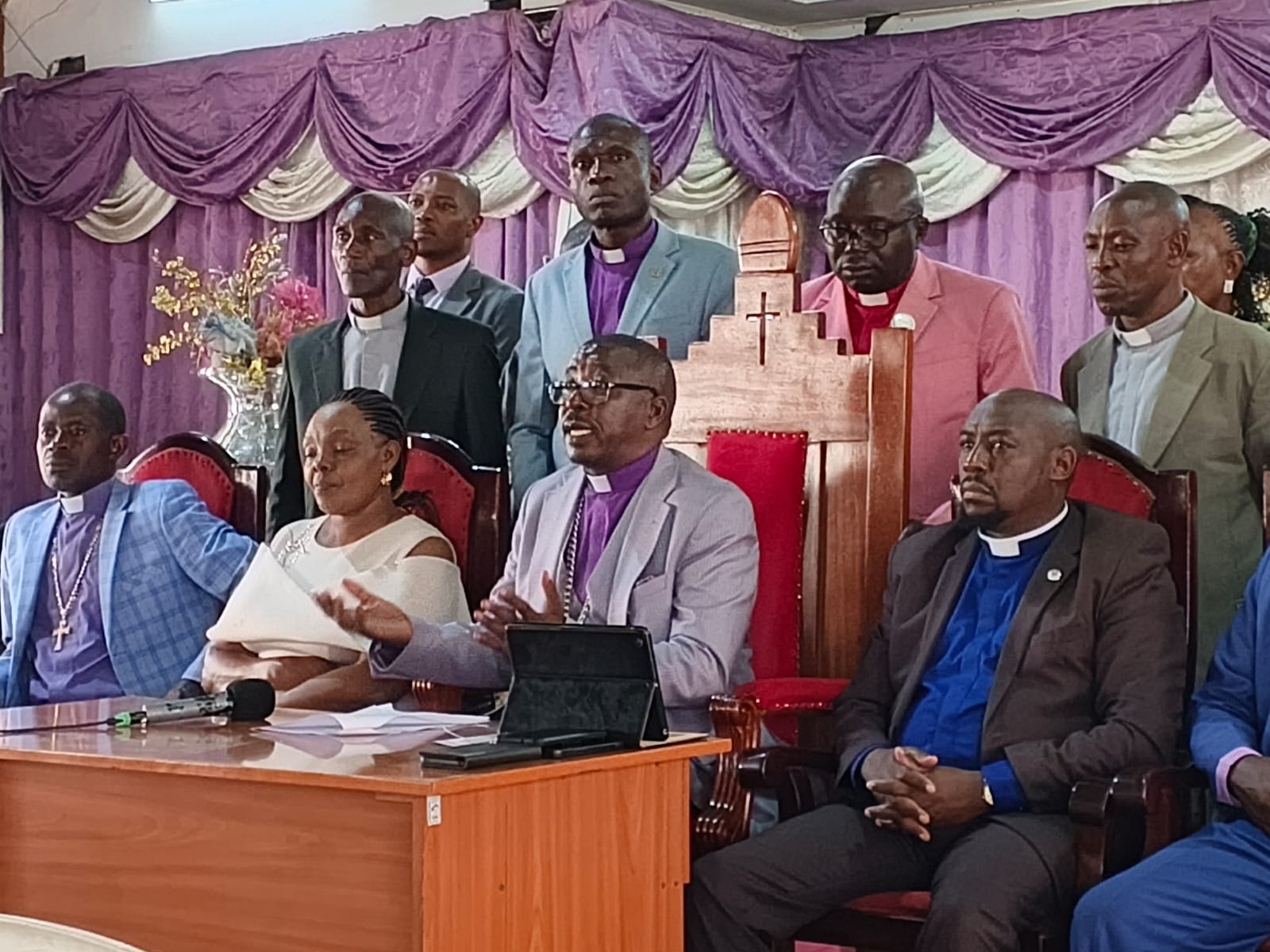
FEICCK chairman Archbishop Dr Samuel Njiriri (centre) addressing the media alongside other church leaders during a press briefing on the state of the nation on August 23, 2026.
The Federation of Evangelical and Indigenous Christian Churches of Kenya (FEICCK) has urged political leaders to focus on governance and development rather than early mobilisation ahead of the 2027 General Election.
FEICCK chairman Archbishop Dr Samuel Njiriri said Kenya risks losing focus on pressing national challenges if political leaders spend the next year campaigning instead of addressing issues affecting ordinary citizens.
The Church said leaders should prioritise employment, education, healthcare, security, agriculture, business and the cost of living while allowing political competition to take place at the appropriate time.
“Kenya needs stability, patience, patriotism and cooperation, not permanent political confrontation,” Njiriri said.
The call comes as political activity ahead of the 2027 polls continues to intensify, with the Church warning against rhetoric that could divide Kenyans along ethnic, regional or political lines.
Njiriri said political competition should be based on policies and performance rather than ethnic mobilisation, insults and hatred.
“Political leaders should compete through ideas, policies, performance and service, not through insults, hatred or ethnic mobilisation,” he said.
FEICCK also backed the Government’s efforts to implement its development agenda, saying the administration inherited significant economic challenges and should be given an opportunity to deliver on its programmes.
However, the Church said supporting the Government should not prevent it from raising concerns over issues affecting the country.
The Church urged the administration to remain focused on job creation, supporting businesses, strengthening agriculture and expanding opportunities for young people as households continue to face economic pressure.
Njiriri also linked youth empowerment to the country’s security challenges, warning that unemployed and vulnerable young people risk being recruited into criminal gangs.
He called for greater investment in technical and vocational education, digital skills, entrepreneurship, agriculture, sports, creative industries, apprenticeships and mentorship.
“A young person should be in school, training, employment, business, sports or productive community activity, not being recruited into crime,” Njiriri said.
The Church further defended the need for a coordinated approach to tackling crime, cautioning against placing responsibility for the outcome of criminal cases solely on the National Police Service.
FEICCK said investigations, prosecution, witness protection and court processes must work together to ensure suspects are held accountable through due process.
The position also saw the Church oppose calls for the resignation of Inspector-General of Police, arguing that changing an individual would not necessarily address weaknesses within the wider security and justice system.
“Changing an individual without strengthening the system may not solve the underlying problem. Kenya needs stronger institutions, better coordination and effective justice, not simply a change of personalities,” Njiriri said.
The Church called for stronger cooperation between the National Police Service, Office of the Director of Public Prosecutions, Judiciary, witness protection agencies and other institutions involved in criminal justice.
FEICCK also raised concern over violence within relationships, particularly among young couples, citing financial difficulties, substance abuse, mistrust, poor communication and unresolved conflicts as some of the pressures affecting families.
The Church urged couples experiencing serious conflict to seek counselling early and called on religious institutions to strengthen premarital and marriage counselling, youth mentorship, family counselling and addiction support.
Njiriri also condemned mob justice following road accidents, urging Kenyans to allow police and courts to establish responsibility instead of attacking motorists or destroying property.
As Kenya heads towards the next election, FEICCK urged political leaders and citizens to prioritise national unity, peace and development over political confrontation.
The Church said the country must strengthen institutions, invest in young people and address economic and social challenges while allowing political competition to take place within the law.
“Let us build before we divide. Let us counsel before we condemn. Let us strengthen institutions rather than weaken them,” Njiriri said.