

Kiplombe Traders, Boda Boda Operators Benefit from MTRH Project

Isabella Ochengo, a fruit vendor along the highway leading to the new Moi Teaching and Referral Hospital in Eldoret, serves motorists and other road users as activity around the construction site continues to grow.
A construction site can become the starting point of a much wider economic transformation. Around the new Moi Teaching and Referral Hospital facility in Kiplombe, Eldoret, the growing workforce and movement of people are already creating opportunities for transport operators and small-scale traders.
Boda boda rider Kevin Kiprop has experienced the change first-hand, prompting him to relocate his operations from Eldoret town to Kiplombe after construction of the hospital began, anticipating increased demand for transport.
“Since the hospital was established here, business has increased,” he says. Workers leaving the site need transport to their homes and other destinations, creating a steady source of customers for riders operating nearby.
Kiprop says the growing activity is also visible in the emergence of other businesses, including a newly established petrol station and small-scale traders selling vegetables. He sees the development as an opportunity for more residents to earn a living as activity around the hospital increases.
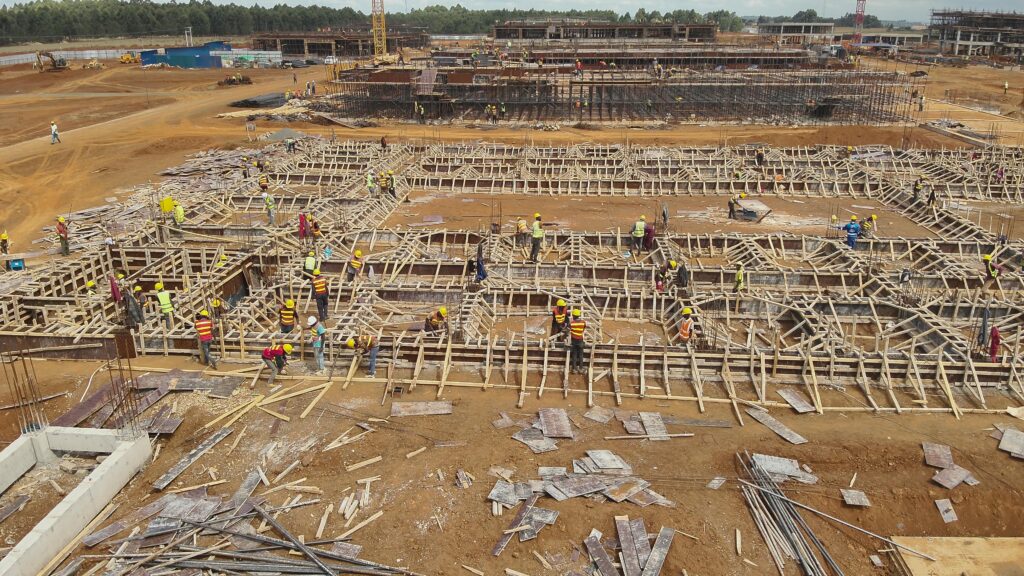
The scale of construction helps explain the growing demand. Captain Noel Gwada, a civil engineer with the Kenya Defence Forces and the project’s Resident Engineer, says 1,077 workers are currently engaged across various construction trades, including masons, electricians, carpenters and plumbers.
The workforce is expected to increase as the project advances, bringing more people to the area and creating demand for accommodation, food, transport and other everyday services.
“The project has provided hundreds of job opportunities to local workers,” Captain Gwada says, adding that the economic benefits are expected to continue into the hospital’s operational phase.
The facility is designed as a 4,000-bed ultra-modern multi-speciality hospital, with the first phase providing 2,000 beds. Its services are expected to attract patients and medical professionals from neighbouring counties and other parts of the country.
development as an opportunity for more residents to earn a living as activity around the hospital increases.
The scale of construction helps explain the growing demand. Captain Noel Gwada, a civil engineer with the Kenya Defence Forces and the project’s Resident Engineer, says 1,077 workers are currently engaged across various construction trades, including masons, electricians, carpenters and plumbers.
The workforce is expected to increase as the project advances, bringing more people to the area and creating demand for accommodation, food, transport and other everyday services.
“The project has provided hundreds of job opportunities to local workers,” Captain Gwada says, adding that the economic benefits are expected to continue into the hospital’s operational phase.
The facility is designed as a 4,000-bed ultra-modern multi-speciality hospital, with the first phase providing 2,000 beds. Its services are expected to attract patients and medical professionals from neighbouring counties and other parts of the country.
That anticipated movement could create a larger customer base for businesses around Kiplombe. Shops, hotels, restaurants, transport services and suppliers may find opportunities as patients, caregivers, visitors and staff begin using the facility.
Captain Gwada says the hospital’s national significance extends beyond healthcare. Its establishment is expected to stimulate commercial activity and create additional employment opportunities in the surrounding community.
Construction is currently at 8.75 per cent overall physical progress. Substructure works stand at 56.67 per cent, while superstructure works are at 16 per cent. The anticipated completion date is April 17, 2027.
The KDF is involved at project management level, ensuring that construction follows approved designs and technical specifications, maintaining quality assurance and monitoring timelines.
Kiprop has witnessed the changes through the growing number of people seeking transport and the businesses setting up around the site. He believes these opportunities will expand as construction progresses and the hospital moves closer to opening.
His experience illustrates how a major public investment can generate economic activity before its main services become operational. The hospital is still under construction, but its presence is already influencing where people work, how they earn and where new businesses see potential.
The longer-term test will be whether this momentum develops into a lasting local economy capable of supporting the hospital and the wider community once the construction workforce gives way to patients, visitors and medical professionals.