
New BRCA Pathway Set to Fast-Track Cancer Diagnosis in Kenya
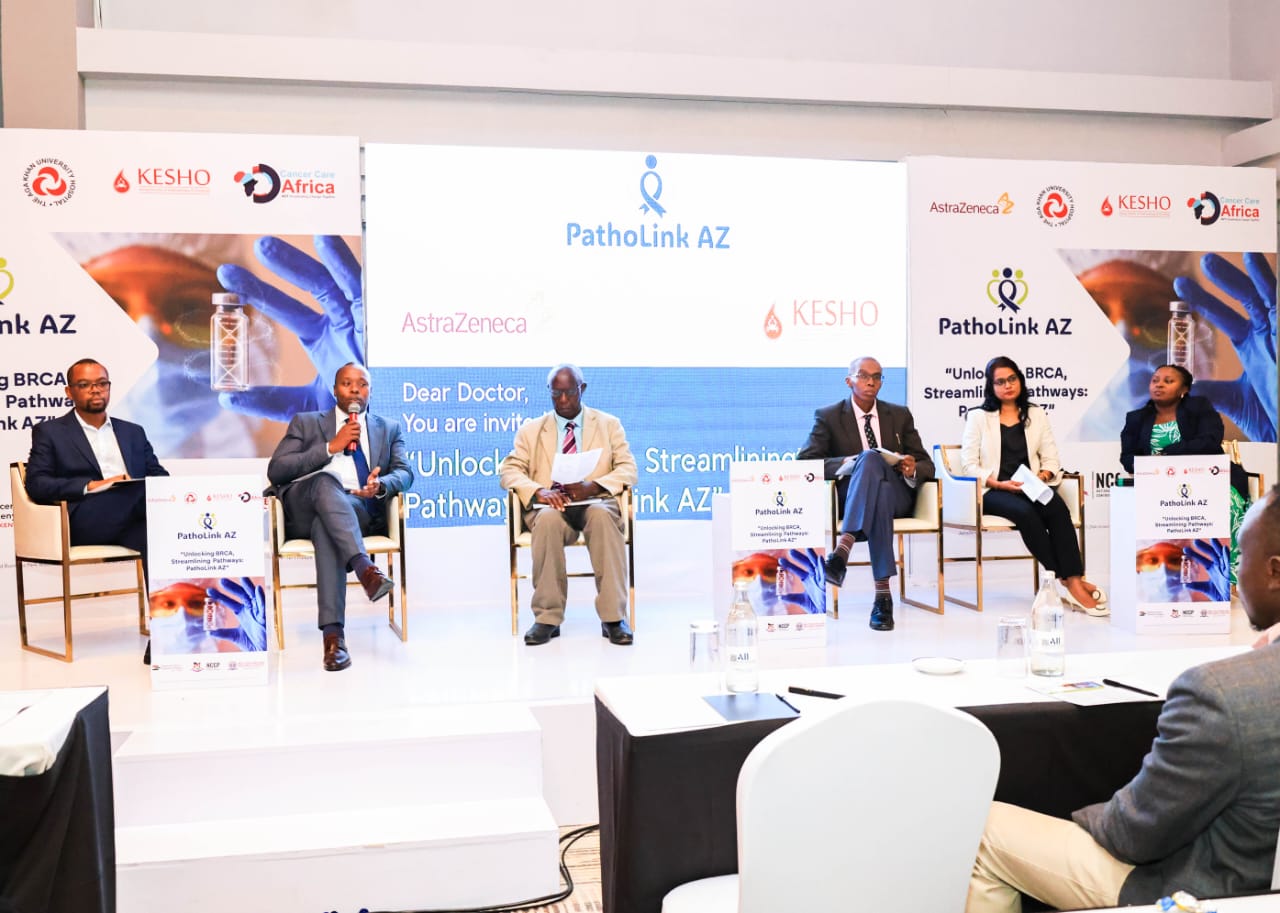
Stakeholders during a panel session at the “Unlocking BRCA, Streamlining Pathways: PathoLink AZ” programme in Nairobi on Friday November 28,2025. Photo/Courtesy
Kenyan cancer patients are set to benefit from faster, more affordable BRCA1 and BRCA2 testing under a strengthened national pathway designed to cut delays that have long slowed diagnosis and treatment. The initiative aims to streamline how patients are identified, how samples move across the country, and how quickly results reach clinicians, helping doctors make critical decisions earlier in the care journey.
BRCA testing plays a central role in determining treatment options for breast, ovarian, prostate, and pancreatic cancer. For families with hereditary cancer risk, it also guides preventive strategies that can be life-saving. Yet for years, limited access, high costs, and long turnaround times have kept many Kenyans from getting the tests they urgently need.
Grace Humwa, AstraZeneca’s Cancer Care Africa Lead, said the improved pathway is designed to ensure that no patient is left behind simply because genomic testing was previously out of reach.
“Genetic testing has remained out of reach for too many patients,” she said. “This pathway ensures timely access, and it brings precision oncology closer to every Kenyan who needs it.”
Dr. Allan Njau, a consultant anatomic and molecular pathologist at Aga Khan University Hospital, explained that delays often begin at the point of ordering the test, where clinicians may not be fully certain what clinical question they are trying to answer.
“When ordering any genetic test, the first thing you must ask is: What will I do with this result? If that is unclear to the doctor, the process becomes slow and confusing for both the clinician and the patient,” he said.
Under the new system, once a patient qualifies for BRCA testing, they will complete a two-page voucher and consent form, after which blood or tissue samples collected at any of 86 AKUH, Mombasa, and Kisumu outreach centres will be transported to Nairobi within 24 hours. Results are expected within three to four weeks, allowing oncologists to adjust treatment in real time.
Dr. Njoki Njiraini, a consultant clinical oncologist at Kenyatta National Hospital, noted that the improvements will directly impact treatment planning.
“Timely BRCA results can completely change the treatment plan. For patients with aggressive disease, every week matters,” she said.
The initiative will also subsidise over 80 percent of the testing cost, leaving patients to pay just KSh 6,500, either through insurance or out-of-pocket.
John Waigwa, laboratory manager at Aga Khan University Hospital, said the networked approach finally brings the service within reach.
“For the first time, BRCA testing becomes truly accessible and affordable in Kenya,” he said.
With growing partnerships and a coordinated national system, experts say Kenya is positioned to significantly improve early diagnosis and give more patients a fighting chance.