
Ethiopia Marks New Year with Unity, Progress, and Celebration of Historic Achievement
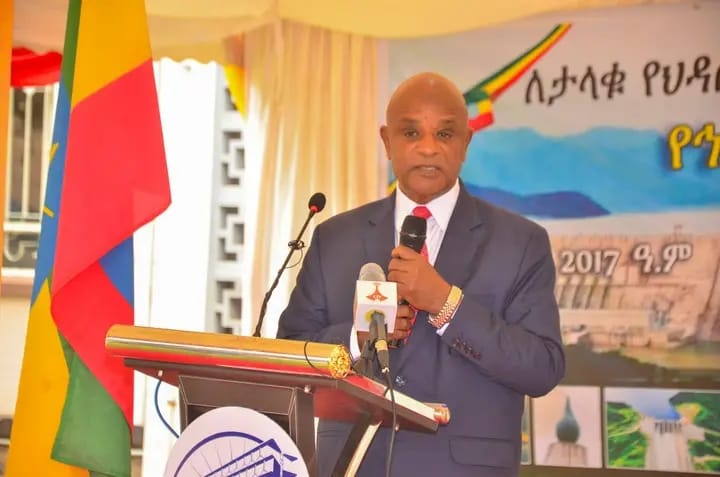
Deputy head of mission Ambassador Demeke Atnafu during the inauguration celebration of the Grand Ethiopian Renaissance Dam (GERD).
As much of the western world views September as the close of summer, Ethiopia welcomes this time as the beginning of a new year filled with promise. The Ethiopian New Year, known as Enkutatash, falls on September 11 according to the Gregorian calendar but follows a unique 13-month Ethiopian calendar that lags the western calendar by seven years and eight months. This distinct calendar, with 13 months 12 of 30 days each and a final month of five or six days marks the New Year with vibrant celebrations rooted in history and culture.
Enkutatash, meaning “gift of jewels,” honors the legendary visit of the Queen of Sheba to King Solomon, who presented her with precious gifts. The festival symbolizes renewal, generosity, and fresh beginnings. Ethiopia also has a unique way of measuring time; the day is divided into two 12-hour cycles where noon corresponds to six o’clock, reflecting a different cultural approach to daily rhythms.
This year, Ethiopia extended its celebrations through the five days of Pagume, the final stretch of the Ethiopian year, themed to promote unity, progress, and hope. Led by the federal government, the festivities highlighted core values such as perseverance, diversity, achievement, and regeneration. Legesse Tulu, Minister of the Government Communication Service, pointed to 2017’s major national accomplishments including the near completion of the Grand Ethiopian Renaissance Dam (GERD), advancements in Addis Ababa’s infrastructure, industrial growth, and a successful nationwide greening campaign.
Pagume’s first day, the “Day of Perseverance,” paid tribute to Ethiopia’s enduring spirit and sacrifices for freedom. The next two days, “Hiber Day,” focused on celebrating Ethiopia’s ethnic and cultural diversity with community meals and support for educational resources. The “Day of Achievement” recognized remarkable progress in agriculture, mining, tourism, and a milestone increase in government revenue. The celebration closed on the “Day of Regeneration,” emphasizing sustainable development projects like the GERD and the Green Legacy Initiative, signaling Ethiopia’s transformation and renewed optimism for the future.
At the heart of Ethiopia’s recent achievements is the Grand Ethiopian Renaissance Dam, hailed as a generational victory and a symbol of national pride. The GERD, completed after 14 years of work and significant citizen involvement, reflects a collective effort uniting Ethiopians across the country. The project has not only provided critical power for industry and development but also reshaped Ethiopia’s narrative on the continental stage.
“GERD is more than a dam; it stands as a monument of Africa’s renaissance,” Minister Legesse Tulu emphasized. “It embodies the spirit of unity and determination, showing that nothing is impossible when a nation rises together.” The dam’s construction overcame many challenges through the collaboration of the government, workers, and the public, turning frustration into a powerful surge of action and achievement.
The success of GERD is viewed as both a national triumph and an inspiration to the continent, dispelling old narratives of poverty and helplessness. It has become a beacon for future mega-projects, teaching Ethiopia valuable lessons in cooperation and resilience. The project asserts that Ethiopians are a generation capable of finishing what they start and sets the stage for continued national resurgence.
As the New Year dawns, Ethiopia combines its rich cultural heritage with bold development milestones. The celebrations and achievements signal a nation deeply committed to unity, progress, and sustainable growth, with the GERD standing tall as a testament to what can be accomplished through collective effort.
By Cynthia Masibo