
Recommendations for Comprehensive Action to End Femicide,Sexual/GBV in Kenya
INTRODUCTION
Project Red Lipstick
Executive Summary
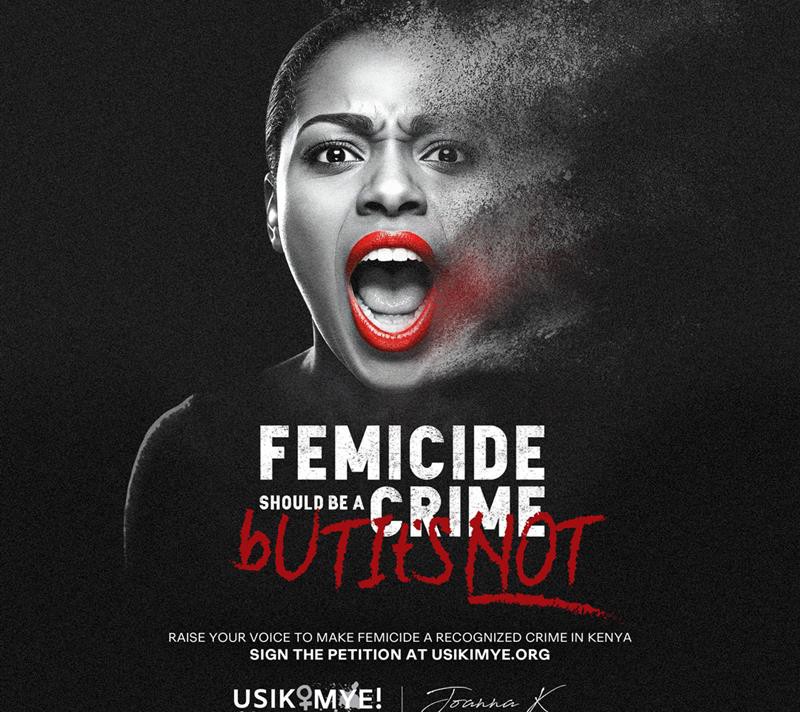
This memorandum outlines the “Project Red Lipstick” initiative, a comprehensive social campaign designed to address the escalating crisis of femicide in Kenya. Developed by Ogilvy Africa and WPP Scangroup, this multi-faceted initiative aims to raise public awareness, challenge harmful societal narratives, advocate for the legal recognition of femicide as a distinct crime and foster a national culture of safety and respect for women. Leveraging the symbolic power of red lipstick as an emblem of female empowerment and resistance, the project employs a strategic blend of social media engagement, influencer partnerships, media collaborations, community outreach, and targeted legal advocacy. This submission seeks the government’s attention and potential collaboration in amplifying these efforts to combat femicide effectively across the nation.
Background and Rationale
Kenya is currently grappling with a disturbing increase in cases of femicide, which refers to the gender-related killing of women and girls. This crisis is a grave violation of human rights and a significant impediment to gender equality and national development.
Despite widespread public outcry, femicide is not yet recognized as a distinct crime within the Kenyan legal framework, leading to inadequate data collection, inconsistent prosecution, and a perpetuation of impunity. “Project Red Lipstick” is a direct response to this urgent societal need, seeking to ignite a national discourse and drive tangible change through a combination of public education and legislative reform advocacy.
Campaign Goals
The overarching goal of “Project Red Lipstick” is to contribute significantly to the reduction and eventual elimination of femicide in Kenya by:
Raising Public Awareness: To elevate national consciousness regarding the severity, prevalence, and systemic nature of femicide as a distinct form of gender-based violence (GBV).
Challenging Harmful Narratives: To actively dismantle victim-blaming sentiments and promote portrayals of women that uphold their dignity, agency, and fundamental human rights.
Advocating for Legal Recognition: To champion the formal recognition of femicide as a specific criminal offense within Kenyan law, ensuring appropriate legal recourse and accountability.
Fostering a Culture of Safety: To cultivate a societal environment characterized by gender equality, mutual respect, and zero tolerance for violence against women.
Specific Objectives
To achieve the aforementioned goals, the campaign has identified the following specific objectives:
Public Discourse Amplification: To significantly increase public discourse on femicide and its underlying causes, including systemic gender-based violence, through sustained social media engagement and traditional media coverage.
Symbolic Product Adoption: To effectively utilize a symbolically resonant product (Kenyan Flag Red lipstick) in collaboration with an established influencer’s cosmetic line to generate widespread awareness and engagement.
Influencer and Community Mobilization: To strategically engage influential personalities and community leaders in disseminating positive and empowering messages within urban and peri-urban populations, leveraging digital connectivity.
Legislative Reform Advocacy: To actively lobby for legal reforms aimed at expediting the resolution and prevention of femicide cases, including the formal declaration of femicide as a distinct crime.
Campaign Activities
“Project Red Lipstick” employs a multi-pronged approach encompassing the following key activities:
Social Media Campaign:
Launch and promotion of dedicated hashtags: #MakeFemicideACrime and #EndFemicideKe.
Dissemination of compelling visuals, ethically sensitive victim stories sourced from publicly available domains (e.g.,https://femicide.africauncensored.online),and clear calls to action.
Encouragement of user-generated content (UGC) through personal story sharing to foster empathy and collective action.
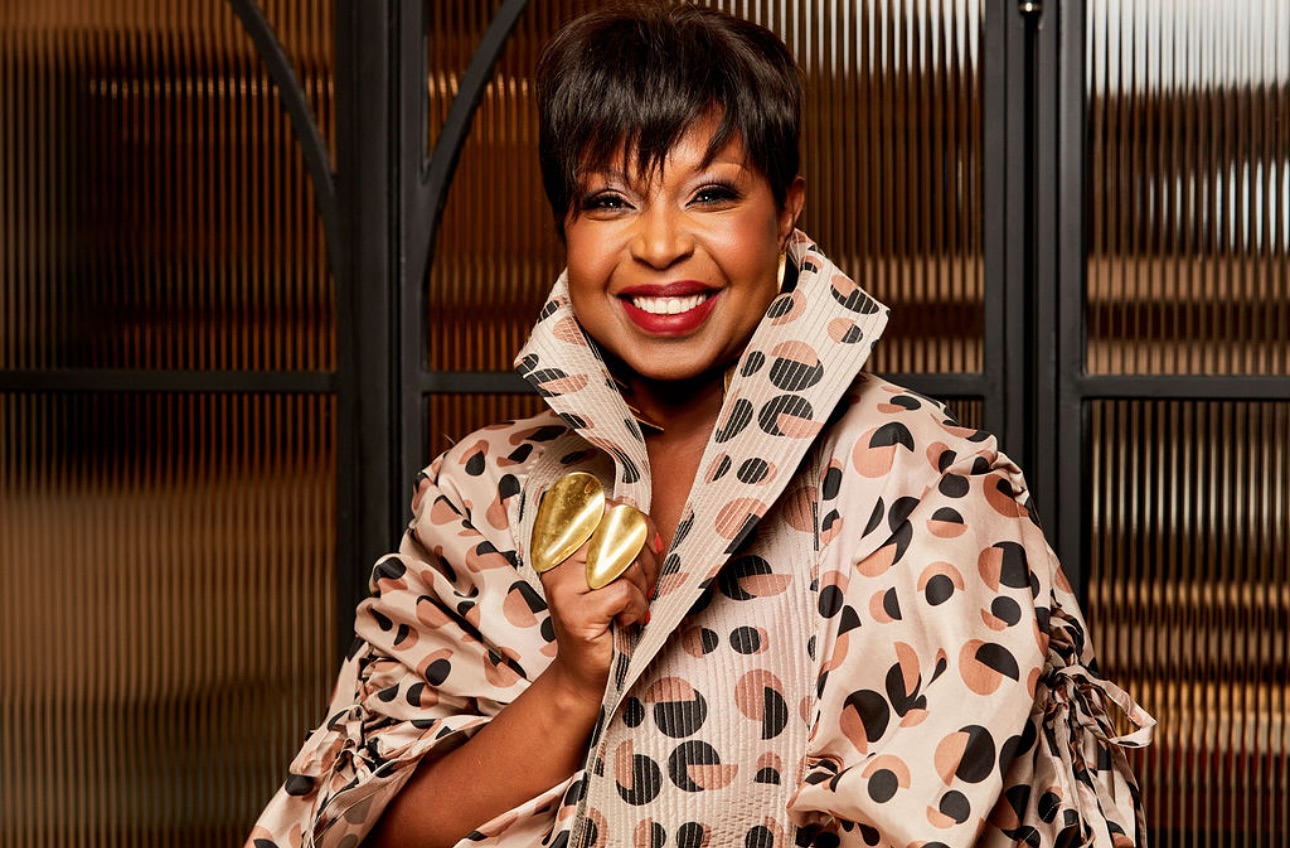
Strategic partnership with a female-owned cosmetic line (Joanna K Cosmetics – Unapologetic & Boss shades of red) for a limited-edition “Kenyan Flag Red” lipstick. A percentage of sales proceeds will be directly donated to community support programs via USIKIMYE,a core campaign partner, for women affected by violence and femicide, at the discretion of Joanna K Cosmetics.
Influencer and Advocacy Engagement:
Collaboration with prominent female and male influencers, podcasters, and documentary creators to amplify campaign messages and promote the urgent need to criminalize femicide in Kenya.
Media Partnerships:
Securing interviews, features, and dedicated articles in mainstream media outlets and online publishers to extensively cover the femicide crisis and the campaign’s objectives.
Community Engagement:
Formal partnership with USIKIMYE, an organization specializing in gender-based violence, to facilitate the provision of essential resources and support services to affected individuals and communities.
Mobilization of a national petition aiming to secure 100,000 signatures to formally declare femicide a distinct crime in Kenya (accessible via
https://www.change.org/p/declare-femicide-a-crime-in-kenya/dashboard).
Legal Advocacy & Institutional Engagement:
Convening at least one round-table discussion with key policy communities to advocate for the official declaration of femicide as a crime in Kenya.
Hosting structured round-table discussions with legal communities, including representatives from “Winning at Law Podcast,” “The GBV Task Force,” the State Department for Gender & Affirmative Action, and individual legal professionals, to identify and address systemic impediments to justice.
Facilitating the provision of pro bono legal support through USIKIMYE to women and families directly affected by femicide.
Desired Outcomes
The successful implementation of “Project Red Lipstick” is anticipated to yield the following significant outcomes:
Enhanced Public Awareness: A substantial increase in public awareness and a deeper understanding of the multifaceted nature of femicide in Kenya.
Shift in Public Discourse: A discernible shift in public discourse, moving away from victim-blaming narratives towards increased accountability for perpetrators and a greater emphasis on prevention.
Legal Recognition of Femicide: The successful declaration of femicide as a distinct criminal offense in Kenya, primarily driven by the public petition led by our core partner, USIKIMYE.
Sustained Support for Victims: Establishment of long-term direct pledges from corporate partners to USIKIMYE, ensuring enhanced and sustained support for victims, survivors of GBV, and the continued operation of safe houses.
Conclusion and Call to Action
“Project Red Lipstick” represents a critical and timely intervention in Kenya’s fight against femicide. Its comprehensive strategy, combining public awareness, advocacy, and community engagement, offers a viable pathway to address this escalating crisis. We respectfully urge the relevant government MDAs to consider the merits of this initiative and explore avenues for collaboration, partnership, and support. Government endorsement and collaboration would significantly enhance the campaign’s reach, impact, and ultimately contribute to creating a safer and more equitable society for all women and girls in Kenya.
Usikimye Organization
Usikimye Organization, a leading voice in the fight against Gender-Based Violence (GBV) and a fervent advocate for the rights and safety of women and girls in Kenya, commends the establishment of the Femicide Taskforce led by Dr. Nancy Baraza. This initiative signifies a crucial step towards acknowledging and addressing the escalating crisis of femicide in our nation. We appreciate the opportunity to contribute our insights and urgent recommendations, informed by years of working directly with survivors and affected families.
The systematic and brutal killing of women and girls in Kenya recommends an urgent, comprehensive, and unwavering response from the government. Our recommendations are rooted in the belief that every woman has the right to live free from incessant violence and that the State has a fundamental duty to protect this right on the bases of Articles 21 and 27 of the Constitution of Kenya 2010.
THE CONTEXT
CASE 1 : Masa Mayeshe.
Masa was 9 years old and a grade 3 student.
A cheery, and obedient girl, she loved playing and was first to raise her hand in class.
Masa and her family were Congolese fleeing the war and hoping to find a place to settle in Kenya.
March 24, 2024 – Her mother had to finish making supper, so Masa asked if she could play outside as she finished cooking, when her mother went to call her to eat: She couldn’t find her. Together with concerned neighbours , they went to report to the police after about two hours of searching for her. The missing report was lodged at both Kayole and Soweto Police.
The following morning, her body was found on the roof of the next building next to their house. She had been defiled, killed and dumped.
Her murderer is still at large.
CASE 2: Ruth Mwelu Mbula
Ruth was 69 years old. She was a jovial lady, many people remember her for running her food business with her daughter and grandchildren near Blue Sky – Ruaka.
10th May 2025 – Ruth left her house to go to the market at around 5am in the morning. Her body was found dumped in a ditch.According to her autopsy report, she was raped, sodomized and strangled to death. No one has been arrested to date.
CASE 3: Charity Mukami Machira.
She lived in Kirigiti and worked in an insurance company in their procurement department.
Her family described her as generous, smart, soft spoken and always had a kind word to tell everyone. She just turned 30 on 02nd May.
Her best friend called her on Monday morning and she didn’t pick her calls. A bit alarmed she called a friend who usually uses the bus with Charity to go to work together, she said she hadn’t seen her that morning.
She kept calling Charity and as it wasn’t her behavior not to pick calls , she shared with another mutual friend about her discomfiture. They reached out to her mother who said for the first time Charity hadn’t called her that morning as she always did. Her mother reached out to her workplace only to be informed she had reported. Her colleagues said she hadn’t responded to calls or emails either. Her husband Boni wasn’t answering her calls either.
They contacted a neighbour who they were in Chama together, she told them she had heard a loud scream on Sunday night but she wasn’t sure where it could possibly have come from. Armed with this information they went to her landlady and together with the police they broke down the door to her house.
There they found Charity. Lifeless. Bloody. Murdered.
Her postmortem reads she had been hit six times on the head. Three wounds on her forehead. Behind her ear and behind her head.
Her husband Boniface Mwaniki Mugo had left a note addressed to Charity’s brother: He stated that everything in that house belonged to him. The goods should be given to his younger brother. The man’s last call was traced to Meru.
He is still at large.
CASE 4 : Naomi Chebet
Naomi was 31 years old, working in Nairobi and a mother to 3 girls. She had been in a long term relationship but according to her family they had separated last year in October. She even relocated to Kangemi. In February they rekindled their relationship but she did not tell anyone from her family that they had gotten back together. They had had previous incidents of threats and violence in the relationship. The man had threatened to kill her and the children. As a result the family intervened and took the children to Solai, Nakuru.
On Sunday there is a witness that spotted the two entering the house together at 9pm but the man left an hour later. Her father says that he left with her phone and tools he used to assault her.
When. Naomi’s body was found to have holes on some parts of her head. At midnight, when her brother came home , he found her body propped on the sofa as though she was seated and covered in a fleece blanket; he assumed she had fallen asleep while watching TV. The next morning when he tried to wake her up, is when he discovered she was dead. He called the police, they made their observations and took her to Chiromo morgue.
The matter is at Kabete Police Station. He is still at large. The man had also been posting murder threats on Facebook.
CASE 5: Baby Wamaitha
Wamaitha was 3.5 years old.
She was from Maragua, Muranga. Her grandmother says she was looking forward to join nursery school.
Her mother says she last saw her on 9th Feb 2025
Baby Wamaitha’s body was found 11.02.2025. She had been defiled, then strangled to death and her body was dumped in a dam in Maragua
CASE 6: Lydia Tokesi
Lydia was 29 years of age.
Lydia had gone to visit her boyfriend who is a resident in Rongai. When she didn’t report to work on Monday, her colleagues and family were alarmed and reported her as missing. Circulation of her missing person posters were rife on social media. Lydia had been missing for a week.
14.01.2025 – Lydia’s mutilated body was discovered on Sunday in Oloolua Forest, near the Gataka-Embulbul junction. Investigations by officers from Riruta Police Station revealed she was last seen with her boyfriend, Joseph Philip Orwa, at his rented home in Rongai. Police believe Orwa used the very car Lydia bought him to transport her body after the murder. The vehicle was later abandoned near Lydia’s parents’ home.
Lydia’s family shared that she had been in a relationship with Orwa for 8 years since their university days. She was employed at Kasha Tech at the time of her murder.
Orwa is still at large.
CASE 7: Sylvia Kemunto
She was a first year student in MultiMedia University. She was a Mass communication and computer major student. She was only 19 years old.
On Sunday, her mother could not reach her and wanted to confirm if the money she had sent through a church elders phone had gotten to her. When she couldn’t get to her she decided to go to the university to confirm what was wrong. Her mother filed a missing person report with Langata Police.
On Sunday lunchtime while her roommate was away, her boyfriend – Philip Mutinda strangled her and stuffed her body in a suitcase. He then dragged the suitcase to his room. His roommate says he tried to use the suitcase as a pillow but it was uncomfortable so he put it under his bed . The next day his roommate confirms both the suitcase and Philip had disappeared.
Sylvia’s decomposing body was discovered in Block E in a water tank after 3 days.
Philip surrendered himself to Sultan Hamud Police station on April 03, 2025.
CASE 8: Gaala Aden
Gaal was a 17 year old girl who was forcibly married off to a 55 year old Mohamed Kassim Tifo . Under the cover of darkness she was taken from Dagahaley Refugee camp and taken to Wajir, she completely refused the marriage when she reached there. She spent 27 days of fear and agony resisting the marriage.
She sent her mother a voice note detailing her beatings and suffering in the hands of those who she had been sent off to, but to no avail.
Her voice note said ” 24 hours I’m being beaten. This is not a man. I was betrayed into marrying this herder. Why is my face swollen? I don’t have a man here. He gets your support every time. No one wants to listen to me. Every sunset when I get to that house,
I get beaten. ”
Her last call was to her mother and stepmother on Saturday 22nd March, she told them her phone was being taken away and that they had beaten and had also stabbed her. The postmortem reports indicate they took her body, put it in a mattress and burnt her body.
There were 100% burns.
The murderer was arrested
The same week we had the body of Lucy Wamaitha recovered from Sagana River, and a decomposing body of a woman discovered to have been killed and buried in her farm by her husband.
In 2025 girls are still being forcibly married to old men. Girls are being killed for saying NO The agony of the beating that Gaal endured and not getting rescued or relief from her own family.
CASE 9: Teresa Kemunto
Teresa was 26 years
Teresa worked as a security guard based at Coop Bank Towers in town. Her co-workers describe her as ever jovial and willing to help. Kemmie, as she was fondly remembered, was a mom to 2.5 years old and was married to Oscar Oundo. They lived in Soweto, Kayole.
Kemmie had been having fights with her husband and for a time they had separated and she went to live in Umoja. After their reconciliation, barely two months in, her husband beat her , leaving her badly injured. In spite of how badly injured she was, she sought help at Soweto Police station but her family claims no help was forthcoming from the authorities.
Kemmie went home and tried to nurse her injuries, this was Thursday and by Saturday she was in too much pain. She called her brother for help , where she was rushed to hospital and succumbed to her injuries.
Her husband was later arrested by Soweto Police on May 6 2025.
CASE 10: Tamara Blessing Kabura
Tamara was 7 years old. She is from Nyeri Town.
Tamara went missing on 24th May 2024 with her missing poster being circulated online. She had last been seen at the New Open Air Market in Nyeri. The CCTV cameras were able to place her with the perpetrator buying her cakes and sweets in a local supermarket.
Then further going into Witemere slums while holding her hands.
People have been searching for her and her body was found , she had been raped, murdered and buried in a popular Bebabeba man’s house.( Bebabeba are the people who pull trolleys or carry goods )
The body was taken to the mortuary for a post mortem and the suspect was arrested.
THE RECOMMENDATIONS
LAW , LAW ENFORCEMENT, LEGAL FRAMEWORK
Enactment of a Distinct Law Against Femicide:
Rationale: Existing laws are often insufficient to capture the gendered nature and systemic patterns of these killings, leading to inadequate prosecution and conviction rates. A specific law will act as a deterrent and send an unequivocal message that the State recognizes and will severely punish the intentional killing of women and girls.
Recommendation:
We advocate for the urgent drafting and enactment of a specific, standalone law criminalizing femicide. This distinct legislation must clearly define femicide, encompassing killings motivated by gender, and provide for stringent penalties that reflect the gravity of this crime.
We recommend legislation that defines crime to encompass all levels of relationships between members of society, the power dynamics of these relationships and the aggravating circumstances that lead the SGBV crimes to escalate to femicide. The definition of
femicide should clearly define the dynamics of familial homicide, intimate femicide, stranger femicide, femicide of women working in sex trade, sexual femicide; femicide that occurs in the course of human trafficking and armed conflict and; cultural femicide
(which includes child marriages and female genital mutilation); female perpetrated homicide. The gender related motivation must be succinct to ensure a separation between homicide and femicide.
We recommend legislation that cascades down the hierarchy of penal laws and policies governing GBV;