

Kenya’s Economy Remains Resilient as Government Eases Debt Burden and Boosts Liquidity
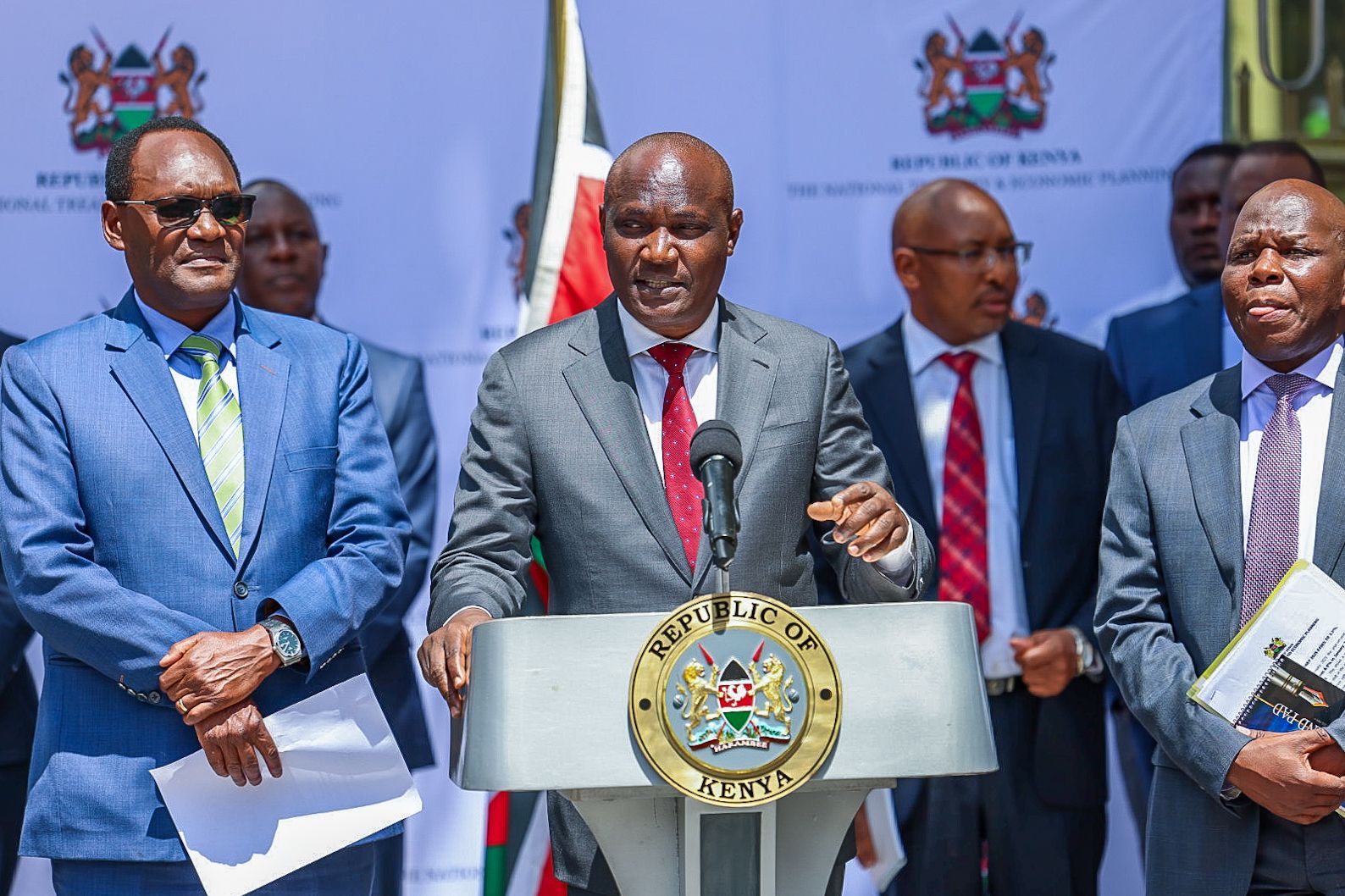
The Kenyan economy has demonstrated remarkable resilience, navigating both domestic and external shocks to maintain steady growth.
This was highlighted by Treasury Cabinet Secretary John Mbadi, who affirmed that the economy’s diversified structure and deliberate government policies have played a critical role in its stability.
speaking on Thursday during a press briefing on the outline progress made by the government in boosting momentum towards putting money in the people’s pockets Cabinet Secretary for Treasury John mbadi noted that the economy has been able to withstand severe impacts of domestic and external shocks to remain resilient.
“Its performance reflects not only the sound and deliberate policies implemented by the government but also the beauty of a diversified structure that doesn’t rely on one or a few sectors,” he said.
Debt Reduction and Fiscal Discipline
One of the major milestones achieved is the reduction of Kenya’s gross public debt-to-GDP ratio from 71.9 percent in June 2022 to 66.7 percent in June 2024. This has been attributed to stringent fiscal policies, including tax reforms, spending cuts, and economic stimulation.
By the end of June 2024, Kenya’s public debt stood at Ksh 10.56 trillion, reflecting a government commitment to fiscal responsibility.
Further, the Present Value of debt to GDP declined from 68.7 percent in 2023 to 63.0percent in 2024, thanks to exchange rate appreciation and reduced borrowing costs.
The government remains committed to maintaining this trajectory through continued fiscal consolidation.Economic Growth and Stability Kenya’s real GDP grew by 5.0 percent in Q1, 4.6percent in Q2, and 4.0 percent in Q3 of 2024, with Q4 projections at 4.7percent, bringing the overall 2024 growth estimate to 4.6 percent .
The economy is expected to rebound further to 5.3 percent in 2025 and 2026, supported by improvements in trade, investment and remittances.
The current account deficit improved from 4.4 percent of GDP in 2023 to 3.6percent in 2024, driven by increased exports and a surge in diaspora remittances, which grew by 16.7 percent to USD 4.87 billion in 2024. These inflows have significantly contributed to foreign exchange stability.
The Kenyan shilling also strengthened against the US dollar, appreciating from Ksh 160.8 in January 2024 to Ksh 129.4 by January 2025, stabilizing within the Ksh 128-130 range. Official foreign exchange reserves stood at USD 10.09 billion, providing a buffer equivalent to 5.1 months of import cover.
Easing Inflation and Interest Rates
Inflation has steadily declined from 9.6 percent in October 2022 to 3.3 percent in January 2025, thanks to government interventions in food and energy prices. This has improved purchasing power and household economic stability.
To enhance liquidity and support private sector growth, the Central Bank of Kenya (CBK) has gradually lowered the Central Bank Rate (CBR) from 13percent in August 2024 to 10.75 percent in February 2025.
Additionally, the Cash Reserve Ratio (CRR) was reduced from 4.25 percent to 3.25 percent, making it cheaper for banks to lend.
As a result, lending rates have dropped, with major banks such as Cooperative Bank, KCB, and Equity Bank cutting their base lending rates by up to 3 percent.
Interest rates on government securities have also declined,91-day Treasury Bill: Down to 9.11 percent from 16.1percent in January 2024.
182-day Treasury Bill: Down to 9.85 percent from 16.2percent in January 2024.
364-day Treasury Bill: Below 11 percent from 16.4 percent over the same period.
With lower interest rates, private sector credit is expected to increase, fostering investment, job creation and economic expansion.
Stock Market and Foreign Investment Uptick investor confidence at the Nairobi Securities Exchange (NSE) has improved, with the NSE 20 Share Index rising from 1,509 points in January 2024 to 2,162.6 points in January 2025.
Market capitalization also grew from Ksh 1.44 trillion to Ksh 1.98 trillion, signaling increased foreign direct investment inflows.
Addressing Pending Bills to Boost Liquidity
Despite the positive economic indicators, the issue of pending bills remains a challenge, affecting businesses, particularly Micro, Small, and Medium Enterprises (MSMEs).
Delays in payment have resulted in liquidity constraints, reduced profitability, and operational disruptions.To resolve this, the National Treasury established a special committee to address the root causes and recommend long-term solutions.
Key findings include:
A mismatch between budget estimates and actual revenue.
Lack of exchequer releases despite approved budgets.
Budget cuts during the fiscal year affecting committed funds.
The committee has made interim recommendations, including:
The Government should endeavor to budget within its means,Fast track transition to accrual accounting,Implement Public Investment Management regulations to the latter,Implementation of e-procurement to ensure all documents are captured electronically,Need to negotiate penalties and interests on pending bills in respect of arbitral and court awards and prioritize settlement of bills related to MSMEs especially those of business owned by women, youth and persons with disabilities.
Government’s Commitment to Economic Well-being
CS John Mbadi reassured Kenyans that the government is aware of economic challenges and is committed to fostering a more liquid, stable, and growth-oriented economy.
“This government is for all Kenyans, and we continue implementing policies that promote liquidity, ease financial burdens, and create opportunities,” he said.
As the year progresses, Kenyans can expect continued economic improvements, reduced borrowing costs, and increased credit access, driving investment and job creation.
The government’s focus remains on stabilizing public debt, strengthening economic growth, and ensuring financial stability for .