
Kenya Loses Sh13.7 Billion Annually as 40pc of Treated Water Goes to Waste
The losses are undermining efforts to expand access to reliable water services, with households missing out on supplies while utilities lose revenue that could otherwise support infrastructure development and improve service delivery.
Speaking during the inaugural African Water Operators Forum (AWOF) at the Kenyatta International Convention Centre (KICC) in Nairobi on Tuesday, Rono, who represented Prime Cabinet Secretary Musalia Mudavadi, said reducing water losses must become a priority in the country’s water sector reforms.
“We cannot talk about expanding access while allowing significant volumes of treated water to disappear before reaching consumers,” she said.
Rono called for increased investment in water infrastructure, adoption of technology, stronger governance and accountability to address inefficiencies in water distribution.
She said Kenya’s constitutional commitment to universal access to clean water and sanitation, supported by the Water Act, 2016, had established the foundation for improved water management, but implementation needed to be accelerated to ensure underserved communities were not left behind.
Beyond infrastructure investment, Rono challenged African water utilities to strengthen their financial and institutional capacity, saying the continent must mobilise at least US$30 billion annually for the water sector by 2030.
She said attracting the required investment would depend on stronger partnerships between governments, development institutions, private investors and utilities capable of demonstrating sound governance, financial transparency and the ability to develop bankable projects.
Rono welcomed the investment marketplace established under the forum, saying it should help translate discussions into actual financing commitments and projects.
She also urged participants to ensure the proposed Nairobi Water Cooperators Declaration resulted in measurable commitments rather than becoming another conference document.
The declaration, she said, should prioritise reducing water losses, expanding services to informal settlements and small towns, improving operational efficiency, strengthening workforce capacity and increasing the participation of women and young professionals in sector leadership.
Nairobi City Water and Sewerage Company Managing Director Martin Nang’ole said the forum should also explore ways of recycling treated water and returning it to productive use, rather than allowing it to go to waste through activities such as watering gardens and washing vehicles.
“With this conference, we are really going to come up with initiatives whereby we will be able to see how we are really going to recycle that water to bring it back into production,” Nang’ole said.
He further raised concerns over the sustainability of Nairobi’s water catchment areas, warning that inadequate rainfall could worsen the city’s water supply challenges if conservation measures were not strengthened.
“If we don’t conserve those catchment areas, in terms of sustaining water in the city, it’s really going to be a big challenge,” he said.
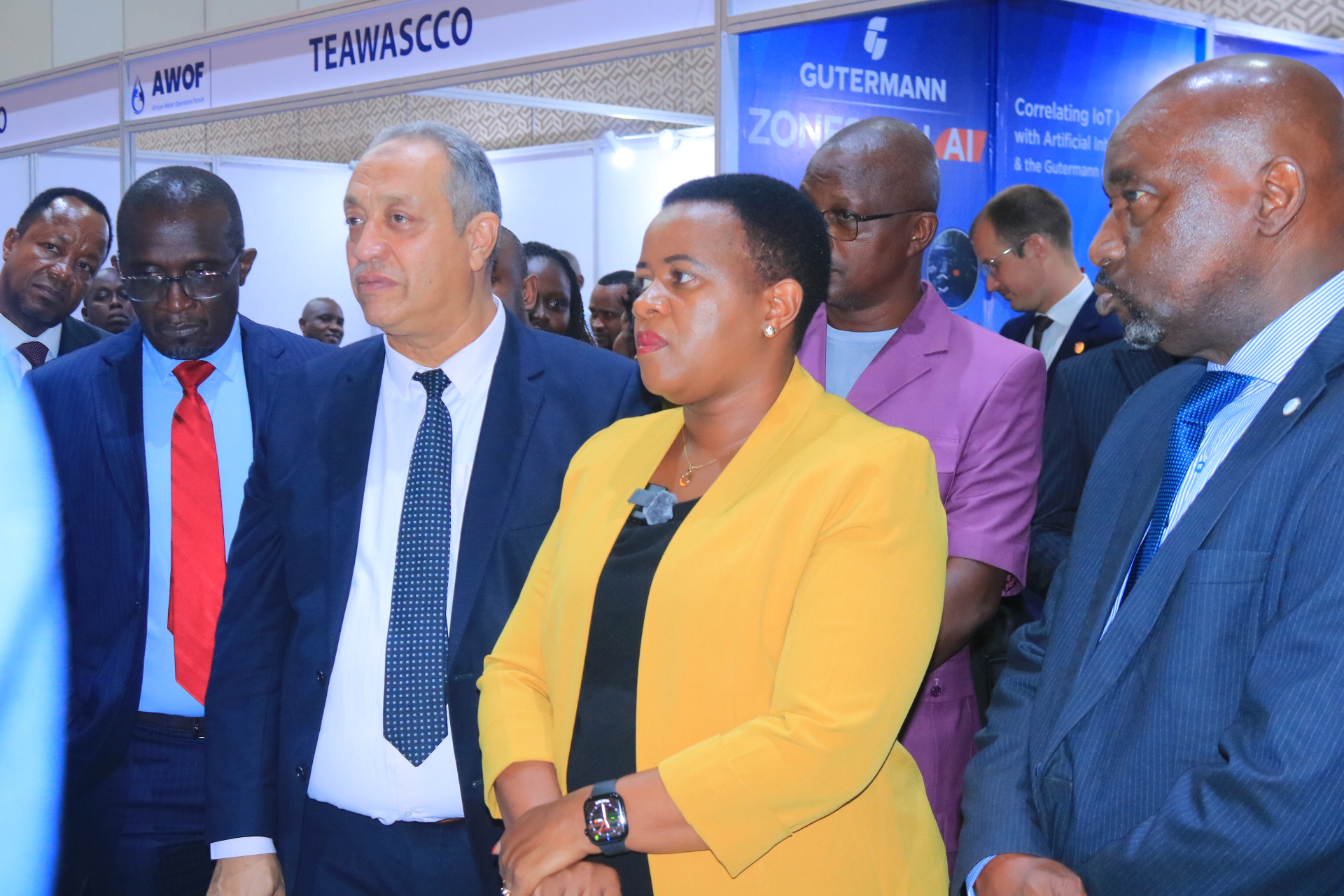
The inaugural forum, convened by the Global Institute for Water, Environment and Health (GIWEH), Nairobi City Water and Sewerage Company and the Water Sector Trust Fund, has brought together water utilities, regulators, government institutions and development partners to explore ways of strengthening water service delivery through regional cooperation.
Running until Thursday under the theme “Together for Water: Partnerships that Flow”, the forum seeks to promote collaboration among African water operators, with a focus on investment, innovation, operational efficiency and sustainable water management.