
Government Seeks Public Views to Shape Kenya’s First National Intellectual Property Policy
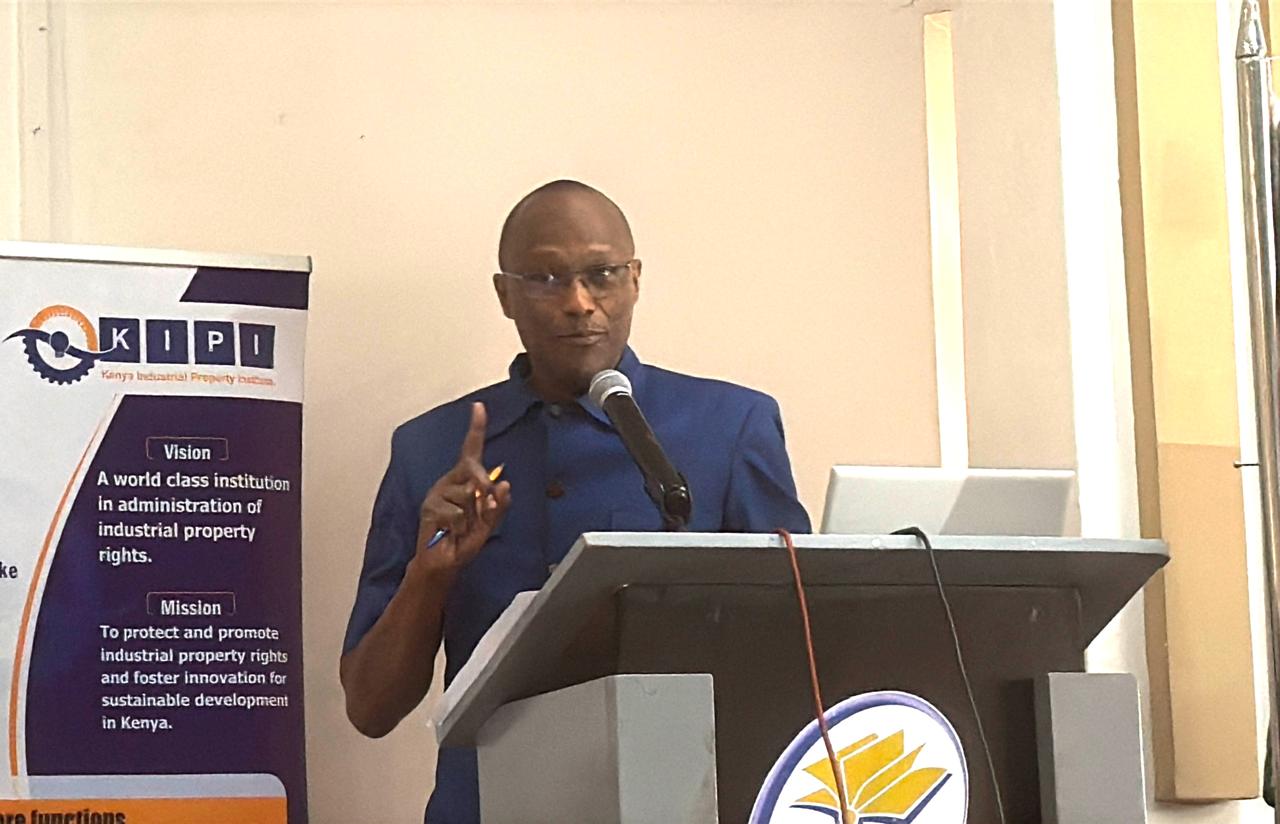
King’uru Wahome, Director of Industries at the State Department for Industry, delivers remarks on behalf of Principal Secretary Dr. Juma Mukhwana during the public participation forum on the Draft National Intellectual Property Policy and Strategy (NIPPS) 2026 at the Kenya Institute of Curriculum Development (KICD) in Nairobi.
Nairobi, July 31, 2026 — The Government has intensified efforts to strengthen the protection of innovation and creativity by engaging Kenyans in the development of the country’s first National Intellectual Property Policy and Strategy (NIPPS) 2026, saying a robust intellectual property framework is key to driving industrialisation, value addition and economic growth.
Speaking during a public participation forum at the Kenya Institute of Curriculum Development (KICD) in Nairobi, Stephen Ngeno, Deputy Managing Director for Technical Services at the Kenya Industrial Property Institute (KIPI), who represented KIPI Managing Director John Onyango, said the proposed policy seeks to modernise Kenya’s intellectual property ecosystem in response to rapid technological and economic changes.
He noted that intellectual property has become central to the country’s development, extending beyond legal protections to include innovations, creative works, traditional knowledge, digital technologies and artificial intelligence.
“The economy has evolved significantly. We now have artificial intelligence, digital platforms and a vibrant creative sector. This policy is intended to make intellectual property more practical, easier to access, easier to commercialise and easier to enforce,” Ngeno said.
He explained that the draft policy covers patents, utility models, industrial designs, trademarks, trade secrets, geographical indications, copyright, plant breeders’ rights, traditional knowledge, genetic resources and folklore, while also addressing emerging technologies and AI-driven innovation.
Ngeno urged stakeholders to actively contribute their views, saying public input would directly inform the final policy before it is submitted to Cabinet.
“Our goal is to develop a policy that creates jobs, protects creators and innovators, and supports economic growth across all counties,” he said.
Also addressing the forum, Anti-Counterfeit Authority Executive Director Dr. Robi King’a said the nationwide public participation exercise fulfils the constitutional requirement for citizen involvement in policy formulation while advancing Article 40(5) of the Constitution, which obligates the State to support, promote and protect intellectual property rights.
He said consultation forums had been conducted across the country to ensure the policy reflects the views of diverse stakeholders, with meetings held in Garissa, Mombasa, Embu, Eldoret, Kakamega, Nyeri, Kisumu, Nakuru and Nairobi.
“This is the first time Kenya is developing a comprehensive national intellectual property policy. It will provide the roadmap for protecting innovations, supporting creativity and strengthening our industrialisation agenda,” Dr. King’a said.
Representing Principal Secretary for Industry Dr. Juma Mukhwana, Director of Industries King’uru Wahome said intellectual property should be viewed as a strategic national asset capable of accelerating Kenya’s journey towards becoming a globally competitive economy.
He urged participants to focus on the broader national development agenda, saying stronger intellectual property protection would stimulate innovation, entrepreneurship, competitive manufacturing, agricultural value addition, investment and job creation.
“We encourage everyone to provide their views with an open mind. Every contribution will be carefully considered as we develop a policy that serves the interests of all Kenyans,” Wahome said.
The draft National Intellectual Property Policy and Strategy is expected to provide Kenya with a comprehensive framework for protecting intellectual property rights, promoting innovation, enhancing value addition, supporting the creative economy and strengthening the country’s industrialisation agenda in line with Vision 2030, the African Union’s Agenda 2063 and other national development priorities.