

Kenya’s Wealthy Investors Shift Strategy, Back Local Market and Alternative Assets
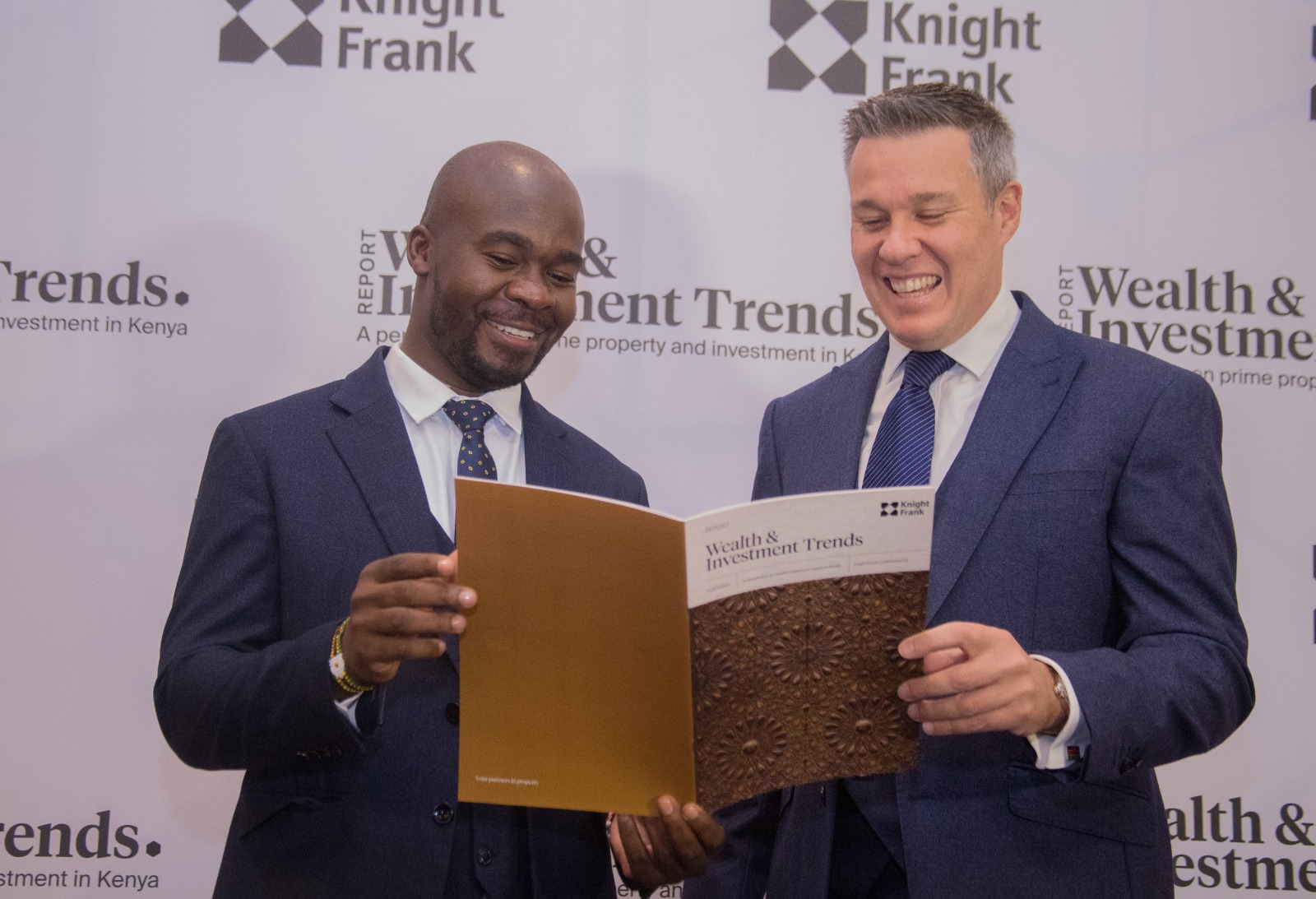
LR: Boniface Abudho, Research Analyst Knight Frank Africa & Mark Dunford, CEO, Knight Frank Kenya.
Kenya’s wealthy investors are increasingly reshaping their investment strategies by maintaining confidence in the domestic market while expanding into emerging asset classes such as data centres, logistics facilities, renewable energy and professionally managed rental housing, according to Knight Frank Kenya’s latest Wealth & Investment Trends Report.
The report paints a picture of a maturing investment landscape where high-net-worth individuals are moving away from speculative investment decisions towards carefully diversified portfolios focused on resilience, sustainability and long-term returns.
Despite growing access to international investment opportunities, affluent Kenyan investors continue to retain the bulk of their residential property holdings within the country, signalling sustained confidence in Kenya’s economic prospects and real estate sector.
Knight Frank says the trend reflects investors’ preference for markets they understand, where they enjoy stronger professional networks, greater oversight of assets and easier operational management.
“Investors are making disciplined allocation decisions based on market familiarity, long-term asset performance and the ability to actively manage their investments,” said Boniface Abudho, Research Analyst at Knight Frank Africa.
“While international diversification remains important, domestic investments continue to play a central role in portfolio construction.”
According to the report, investors are no longer concentrating solely on traditional residential property. Instead, capital is increasingly flowing into sectors supported by long-term structural trends including digital infrastructure, logistics, renewable energy and Real Estate Investment Trusts (REITs).
Knight Frank attributes the shift to changing investor priorities that increasingly favour stable income, liquidity and resilience over rapid speculative gains.
Chief Executive Officer Mark Dunford said the modern investor is adopting a more sophisticated investment approach driven by long-term wealth preservation rather than short-term market cycles.
“There is growing interest in investments that combine income, resilience and long-term growth,” he said.
“The difference today is that investors are becoming more deliberate in where they deploy capital.”
The report identifies Kenya’s expanding digital economy, rapid urbanisation and continued infrastructure development as some of the factors creating opportunities beyond conventional property investment.
Data centres are emerging as one of the fastest-growing investment segments as demand for cloud computing services and artificial intelligence infrastructure rises, while logistics facilities continue attracting investor interest on the back of expanding e-commerce and regional trade.
At the same time, commercial property investors are increasingly turning to refurbishment rather than new developments as sustainability considerations reshape the office market.
Knight Frank found that more investors are targeting older office buildings for modernisation through energy-efficient upgrades, renewable energy integration and improved building management systems instead of replacing them with entirely new developments.
The report notes that environmental, social and governance (ESG) considerations are becoming central to commercial property investment decisions, with renewable energy, energy efficiency and green building certification emerging as key priorities among investors.
“Commercial property is entering a new phase where value is increasingly created through thoughtful refurbishment,” Abudho said.
“Improving the environmental performance of existing buildings not only extends their useful life but also enhances competitiveness in a market where occupiers are demanding higher-quality space.”
Dunford said refurbishment has evolved beyond cosmetic improvements and now represents a strategic investment decision aimed at reducing operating costs while improving long-term competitiveness.
“It is about reducing operating costs, improving energy efficiency and ensuring buildings remain attractive to tenants and investors in an increasingly competitive market,” he said.
The report concludes that Kenya’s wealthiest investors are increasingly balancing domestic and international investments instead of abandoning local opportunities, with decisions now guided by strategic asset allocation, portfolio resilience and sustainable returns.
Industry analysts say the findings demonstrate that Kenya’s property market continues to evolve alongside changing investor preferences, with technology-driven assets, sustainability and diversified investment strategies expected to define the next phase of growth.
For the broader economy, the report suggests that confidence among wealthy investors remains firmly anchored in Kenya even as global investment opportunities become more accessible, reinforcing the country’s position as a leading destination for long-term real estate investment in the region.