
Kenya Calls for Greater Investment and Innovation to Transform Agriculture
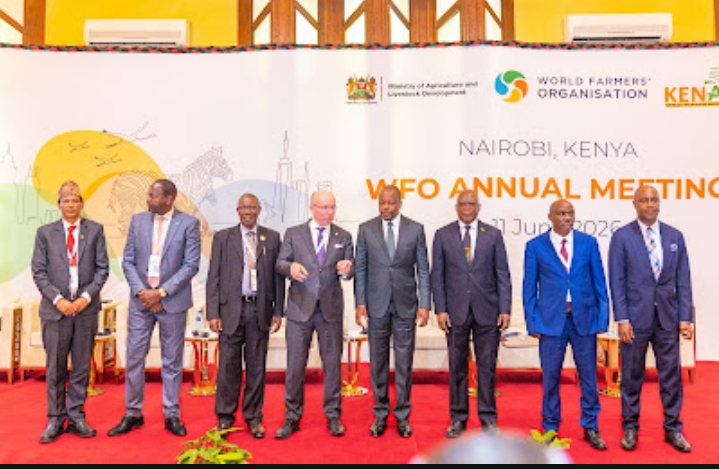
The Cabinet Secretary for Agriculture and Livestock Development, Mutahi Kagwe, has called for increased investment, innovation, and stronger support systems for farmers, saying agriculture remains the foundation of economic growth, food security, and national prosperity.
Speaking during a global farmers’ gathering in Nairobi, Kagwe emphasized that successful agricultural economies around the world have been built through deliberate public investment, strategic support, and long term financing for farmers. He noted that Kenya has embraced this approach through targeted support programs and digital agricultural initiatives aimed at improving productivity and accountability.
The Cabinet Secretary said investments directed toward farmers should not be viewed as a cost but as an investment in national stability and economic development. He stressed that placing farmers at the center of economic innovation is essential for building a resilient and prosperous agricultural sector.
Kagwe highlighted the importance of strong farmer organizations, cooperatives, and rural financial institutions in transforming agriculture. According to him, organized farmers are better positioned to aggregate production, negotiate better prices, facilitate value addition, and strengthen their competitiveness in both local and international markets.
He noted that when farmers work together through organized groups, they become more commercially viable and are able to retain a larger share of the value generated along agricultural value chains. This, he said, enables agriculture to become a pathway to prosperity rather than a means of survival.
The Agriculture CS also challenged financial institutions to rethink how they finance the agricultural sector. He observed that many existing financial systems were designed primarily for commerce and often fail to accommodate the unique realities of farming.
Kagwe explained that agriculture involves biological production cycles, climate related risks, and longer investment periods, making it different from conventional business enterprises. He said many farmers continue to face high borrowing costs, short repayment periods, and restrictive lending conditions that limit their growth and productivity.
To address these challenges, he called on financial institutions to develop innovative financing solutions that recognize agricultural realities. These include supporting contract farming arrangements, warehouse receipt systems, commodity exchanges, and long term agricultural investments. He urged lenders to view agriculture not as a high risk sector but as one of the greatest economic opportunities of the modern era.
On matters of food safety and environmental protection, Kagwe called for stronger global cooperation in regulating agricultural chemicals. He criticized what he described as double standards in the international management of pesticides and other agricultural products.
The Cabinet Secretary argued that chemicals considered unsafe in one country should not be exported or sold in other markets. He maintained that the health and safety of farmers and consumers in developing countries are equally important and deserve the same level of protection enjoyed elsewhere.
Kagwe called for harmonized international standards governing agricultural chemicals and urged governments, regulators, manufacturers, and traders to work together to eliminate harmful substances while combating counterfeit and illegally traded farm inputs. He warned that unsafe agricultural chemicals undermine consumer confidence, threaten export markets, and expose farming communities to significant health risks.
The Cabinet Secretary further highlighted the growing role of technology in agricultural transformation. He said Kenya has made significant progress through the Kenya Integrated Agricultural Management Information System, which has created one of Africa’s most comprehensive farmer databases.
According to Kagwe, the system enables more effective planning, targeted service delivery, subsidy management, traceability, and evidence based decision making. He said integrating technology, artificial intelligence, farmer data, and extension services creates opportunities for governments, researchers, financial institutions, and private sector players to design solutions tailored to the specific needs of farmers.
He stressed that technology should empower farmers and improve inclusion rather than widen existing inequalities within the agricultural sector.
Kagwe also underscored the importance of research and innovation in driving agricultural growth. He noted that research only becomes valuable when its findings are translated into practical solutions that improve productivity, profitability, and resilience at the farm level.
He observed that agricultural success should not be measured by the number of policies developed, conferences held, or reports published. Instead, he said, success should be determined by whether farmers earn higher incomes, access better healthcare, provide quality education for their children, and remain motivated to pursue farming as a viable profession.
The Cabinet Secretary said history would judge policymakers, researchers, and industry leaders based on their ability to improve the lives of farmers and strengthen rural communities.
As delegates continued their discussions, Kagwe urged them to place farmers at the center of every policy recommendation, commitment, and development strategy. He maintained that improving the lives of farmers is the most effective way to strengthen agriculture and achieve sustainable food security.
“The farmer is not merely part of the solution. The farmer is the solution,” he said.
The Cabinet Secretary concluded by welcoming international delegates to Kenya and encouraging them to engage directly with local farming communities. He invited visitors to explore the country beyond the conference venue, interact with farmers, and experience Kenya’s agricultural and cultural heritage firsthand.
His remarks reinforced Kenya’s commitment to building a resilient, productive, and inclusive agricultural sector that empowers farmers while driving economic growth and food security for future generations.