
Mass Voter Registration Hits 2.6 Million Ahead of 2027 Polls
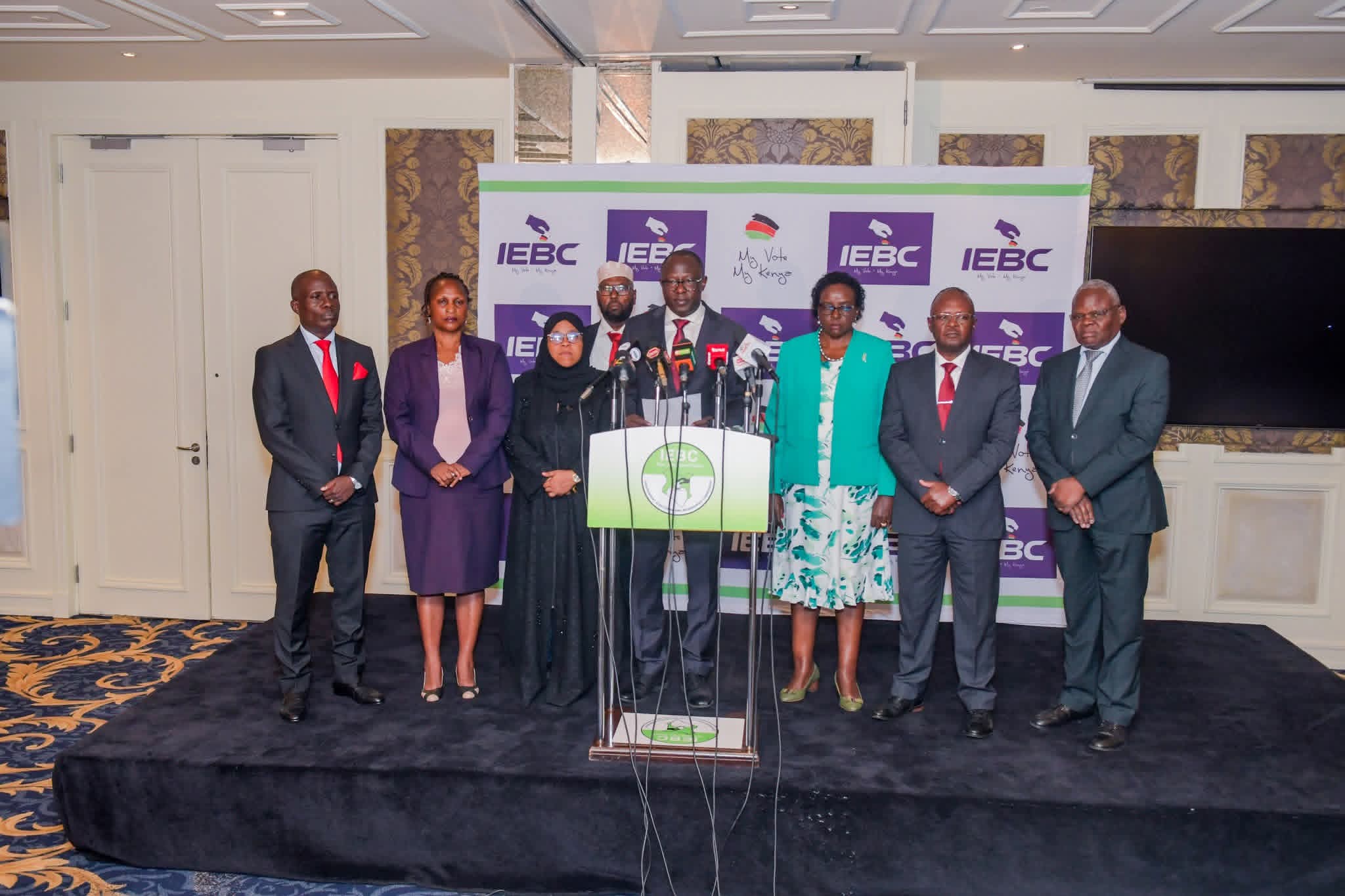
IEBC chairperson Dr. Erastus Ethekon speaking to the press during a press briefing in Nairobi on April 30, 2026 he is accompanied by IEBC Commissioners
The Independent Electoral and Boundaries Commission has registered over 2 million new voters in just one month, marking a major milestone in preparations for the 2027 General Election.
Speaking while announcing the results of the Enhanced Continuous Voter Registration (ECVR) Phase I exercise on Thursday, the chairperson of the Commission Dr. Erastus Ethekon said the figures reflect a significant improvement in both efficiency and outreach compared to previous electoral cycles.
“For us, this is a major milestone, and we would like to thank every Kenyan who has supported this exercise,” he said.
Ethekon revealed that 2,345,476 voters were registered within 30 days of the mass exercise conducted between March 30 and April 28, 2026, pushing the total number of new voters since September 2025 to 2,612,725.
“This performance led to a sustained and consistent output trajectory, which enabled us to record on a weekly basis over 500,000 new registrations,” he added.
The Commission attributed the surge to a series of strategic interventions, including the introduction of the Open Kit system, which allowed voters to register at any centre regardless of their home constituency.
The chairperson said this approach eliminated geographical barriers that had previously limited participation, especially for working populations and students living away from their home counties.
The exercise also saw a significant expansion of registration points, with centres set up in universities, colleges and for the first time, integrated into Huduma Centres across the country.
In total, the Commission deployed over 30,000 registration centres supported by more than 5,000 biometric kits, ensuring nationwide coverage across all constituencies and wards.
Further, Dr. Ethekon said the use of data-driven planning and real-time monitoring helped improve efficiency, enabling better resource allocation and quick response to operational challenges.
Weekly public updates on registration progress were also introduced, enhancing transparency and encouraging competition among regions to boost voter turnout.
The Commission also credited strong partnerships with stakeholders, including government agencies, civil society, political parties and youth organisations for supporting mobilisation efforts, particularly among young and first-time voters.
Additionally, a structured five-tier training system for registration officials helped ensure uniformity, improved technical capacity and compliance with data protection standards during the exercise.
The Commission said the success of the mass registration signals growing public confidence in the electoral process, while setting the stage for a more inclusive and credible voter roll ahead of the 2027 elections.