
Environment CS Barasa Emerges As a Voice For Africa At COP30
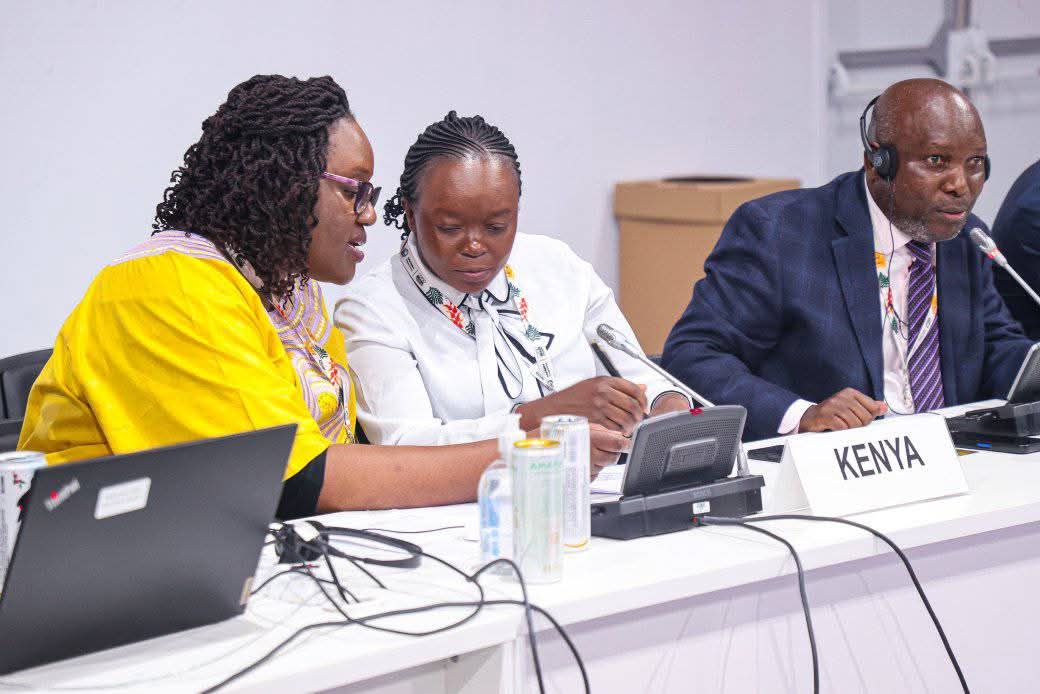
Cabinet Secretary for Environment, Climate Change and Forestry, Dr. Deborah Barasa ( center) in attendance of COP30 at Belem.
Kenya’s Cabinet Secretary for Environment, Climate Change and Forestry, Dr. Deborah Barasa, emerged as one of Africa’s strongest voices at the opening of the High-Level Segment of COP30, delivering a national statement that firmly anchored the continent’s demands and vulnerabilities at the heart of global climate negotiations.
Speaking in Belém, a city nestled within the Amazon rainforest, Barasa said the location itself was a powerful reminder of what the world stood to lose without urgent action. She described the Amazon as “a living symbol of what humanity risks losing and what we must fight to protect,” noting that the window to prevent irreversible climate damage was rapidly closing.
Barasa told delegates that Africa had arrived at COP30 “with clarity and urgency,” emphasising that although the continent contributes the least to global emissions, it shoulders some of the most devastating impacts. From prolonged droughts to destructive floods and rising temperatures, she said extreme weather events were now daily realities that threatened livelihoods, stalled economic progress, and strained national budgets.
“These impacts are not projections; they are the lived reality of a continent already in the eye of the storm,” she said.
The Environment CS reiterated Africa’s longstanding demand for recognition of its special needs and circumstances within the UNFCCC process an issue she framed not as a plea for sympathy, but as a matter of fairness in how global decisions and resources are distributed.
With adaptation dominating this year’s agenda, Barasa insisted that the Global Goal on Adaptation must be translated into tangible outcomes. She called for a comprehensive framework with measurable indicators that capture the full spectrum of resilience spanning infrastructure, food security, health, ecosystems, gender equality, and the inclusion of marginalised communities.
She warned that adaptation must not remain “the poor cousin of climate action underfunded, vaguely defined, and perpetually delayed,” and backed calls by developing countries, including LDCs, for a tripling of adaptation finance.
Barasa urged wealthier nations to deliver predictable, grant-based financing that does not deepen debt burdens. She pressed parties to operationalise the Baku-to-Belém roadmap and meet the USD 1.3 trillion annual climate finance target by 2035, stressing that communities devastated by climate disasters “cannot rebuild on promises.”
She further endorsed an African Just Transition Technical Assistance Network while warning against unilateral trade measures that risk locking African economies out of emerging green markets.
Closing her remarks, Barasa underscored that climate justice is incomplete without gender justice, calling for an enhanced Gender Action Plan that places women and girls at the centre of climate decisions.
She has positioned herself among the leading African voices shaping the tone and expectations of COP30,with her assertive message.