
Mbadi Defends 2026/27 Budget Process, Says Public Views Shaped Government Spending Plan
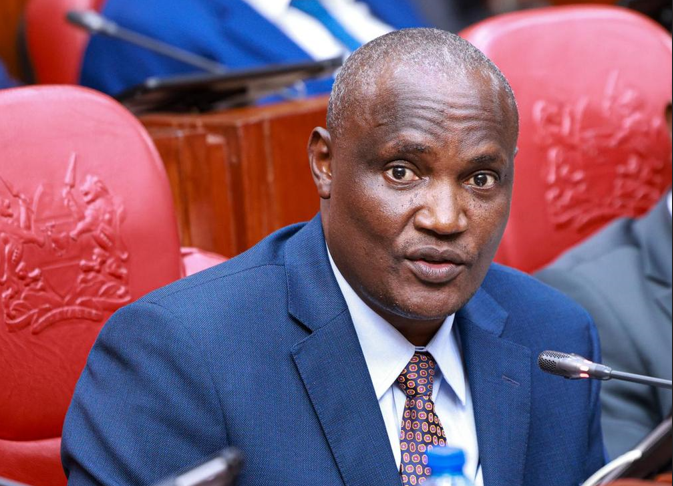
Treasury Cabinet Secretary John Mbadi has strongly defended the government’s 2026/27 budget-making process, insisting that extensive public consultations and citizen input played a central role in shaping the country’s spending priorities and revenue measures.
Speaking on Thursday ahead of presenting the national budget, Mbadi said the National Treasury had deliberately embraced transparency and public participation, arguing that the process went beyond the minimum constitutional and legal requirements.
The Treasury chief maintained that the government had sought to ensure that ordinary Kenyans, youth groups, traders, informal sector workers and other stakeholders had a voice in determining how public resources would be allocated in the coming financial year.
Treasury Opened to Greater Public Scrutiny
Mbadi said one of his key commitments upon assuming office in 2024 was to transform the traditionally closed nature of the National Treasury and make it more accessible to citizens.
According to the Cabinet Secretary, the Treasury has worked to implement both the letter and spirit of the Constitution and the Public Finance Management Act by actively involving the public throughout the budget preparation process.
“What is different is that we have tried as much as possible to live by the spirit of the Constitution and the Public Finance Management Act. What we are doing is to make sure that what is spelt out in law is actually done,” Mbadi said.
He added that his administration was determined to end what he described as a “straitjacket” approach to managing Treasury affairs, replacing it with greater openness and accountability.
“As I assumed office in 2024, I promised that we were going to demystify the National Treasury and open it up. This straitjacket way of dealing with the National Treasury must end, and that is what I’ve tried to do,” he stated.
Nationwide Consultations Shaped Budget Decisions
Mbadi revealed that preparations for the 2026/27 budget began in September last year and involved several stages, including the publication of budget review papers, policy statements, parliamentary scrutiny and public participation forums.
To gather views from citizens, the CS embarked on a nationwide consultation campaign that took him to various regions across the country, including Migori, Kakamega, Eldoret, Nakuru, Embu, Kiambu, Kajiado and Kilifi.
Beyond regional forums, the Treasury also engaged directly with groups that are often overlooked in policy discussions. These included boda boda operators, mitumba traders, youth organisations and informal-sector workers.
According to Mbadi, the consultations generated numerous memorandums and policy proposals that were reviewed and incorporated into the final budget framework.
“There were a lot of memorandums submitted to the National Treasury. I even invited certain specific sectors to the National Treasury, including boda boda riders and the mitumba sector. We tried to take care of some of the suggestions and proposals that came from these sectors,” he said.
The CS noted that several of the proposals reflected in the spending plan and accompanying revenue measures were informed directly by feedback received during the consultation process.
Mbadi Rejects Claims of Education Funding Cuts
At the same time, Mbadi dismissed growing claims that the government was reducing funding for education, describing such assertions as misleading and politically motivated.
“There has been this talk and misleading information that we are defunding education. The narrative is completely misplaced, and it is propaganda. We are funding education more,” he said.
To support his position, Mbadi presented figures showing a substantial increase in education allocations over the years.
According to the Treasury, education funding has risen from Sh526 billion in the 2021/22 financial year, which accounted for 24.5 per cent of ministerial allocations, to Sh784.5 billion in the proposed 2026/27 budget. The latest allocation represents 26.4 per cent of total ministerial spending.
The Cabinet Secretary further noted that funding to the Teachers Service Commission (TSC) had grown significantly from Sh290 billion in 2022 to Sh421 billion in the upcoming financial year.
He attributed the increase to the recruitment of more than 100,000 teachers and salary adjustments aimed at strengthening the country’s education system.
Increased Capitation for Secondary and Junior Schools
Mbadi also highlighted increased government support for secondary and junior secondary education through higher capitation funding.
He said secondary school education received approximately Sh62 billion in 2022. However, when current allocations for free day secondary education and junior secondary schools are combined, the total now stands at about Sh86 billion.
“Secondary school education was receiving Sh62 billion in 2022. Today, if you combine free day secondary education and junior secondary school funding, it comes to about Sh86 billion. That is more than Sh20 billion additional funding,” he explained.
Focus Turns to Budget Day
With the budget presentation scheduled later on Thursday, attention now shifts to Parliament, where Mbadi is expected to unveil the government’s spending priorities, economic projections and revenue-raising measures for the 2026/27 financial year.
The highly anticipated Budget Statement is expected to outline how the government plans to balance rising public demands for services, economic growth ambitions and fiscal discipline, while addressing concerns over taxation and the cost of living.
For many Kenyans, the budget will serve as a critical test of the government’s promise to make public finance management more transparent, inclusive and responsive to citizens’ needs.