


KCB Disburses KSh48.8 Billion in Green Loans as Sustainable Lending Surpasses Target
KCB Group Plc has reinforced its leadership in sustainable finance after disbursing KSh48.8 billion in green loans to support environmentally sustainable projects across East Africa, according to the lender’s 2025 Sustainability Report.
The financing supported projects in renewable energy, sustainable agriculture, green buildings, clean transportation, water management, and climate smart investments, reflecting the bank’s growing commitment to advancing climate resilience and sustainable economic development in the region.
The report, themed Transitioning Economies, shows that KCB also screened transactions worth KSh587.9 billion under its Environmental and Social Due Diligence framework across Kenya, Uganda, Tanzania, and Rwanda. The screening was conducted to ensure financed projects met environmental and social sustainability standards while contributing to the transition to a low carbon economy.
Of the total green financing disbursed during the year, KSh9.9 billion was independently verified as climate eligible through the Climate Assessment for Financial Institutions tool.
The lender exceeded its strategic target of allocating 25 percent of its loan book to green projects, reaching 25.84 percent in 2025 compared to 21.6 percent in 2024. The milestone marks a significant achievement in KCB’s sustainability journey and highlights increasing demand for financing that supports environmental conservation and climate action.
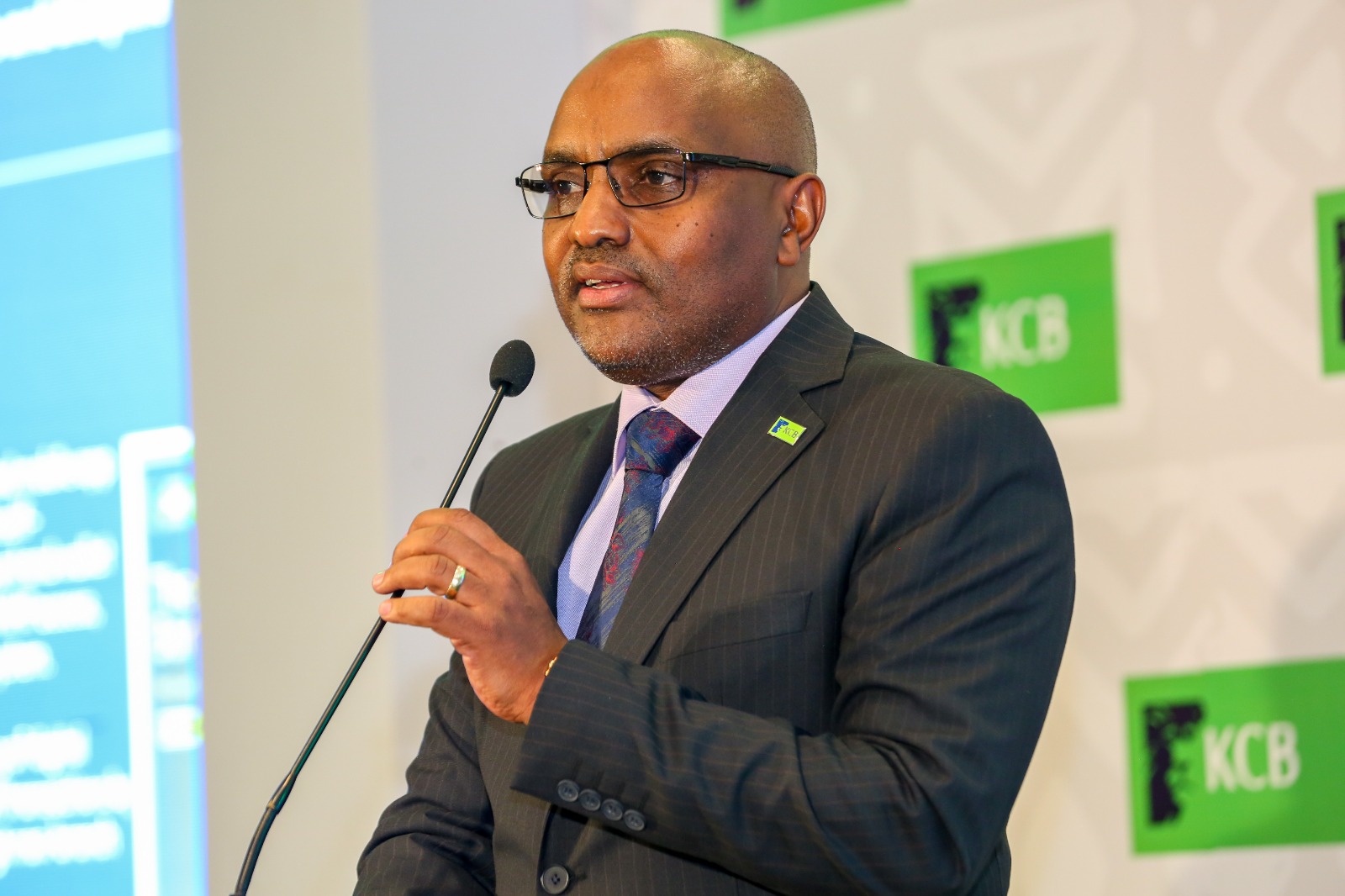
KCB Group Chief Executive Officer Paul Russo said the bank is deliberately aligning its business strategy and financing decisions with climate resilience objectives and sustainable enterprise growth.
He noted that KCB intends to play a greater role in building a robust and sustainable financial ecosystem across East Africa by developing innovative green financing solutions tailored for households, micro, small and medium enterprises, and large corporations.
Russo said the bank will continue strengthening partnerships with global climate financiers to mobilize capital, accelerate innovation, and support the transition to a climate resilient economy.
Beyond financing, KCB continued investing in environmental conservation initiatives through its tree growing programme, which has become a key pillar of the bank’s sustainability agenda.
During the year, the bank surpassed its target of planting 1.5 million trees by planting more than 3.5 million trees across the region. The achievement was realized through more than 200 tree planting activities conducted in partnership with 1,778 schools and other stakeholders.
The initiative contributes to ecosystem restoration efforts and supports Kenya’s national climate action agenda aimed at increasing forest cover and mitigating the effects of climate change.
KCB also expanded its clean energy initiatives, particularly within the education sector. Through its Learning Institutions Customer Value Proposition programme, the bank financed cleaner cooking solutions for 266 schools with funding amounting to KSh782.5 million.
The programme is helping learning institutions reduce dependence on traditional biomass fuels while adopting cleaner and more sustainable energy alternatives.
At the same time, the lender accelerated the implementation of its solar energy programme. Solar installations are now operational in 16 branches across the region, including Maasai Mara, Wajir, Mandera, Watamu, Lamu, Loitoktok, Kakuma, Namanga, and the Karen Leadership Centre.
The group plans to extend solar power installations to an additional 30 branches during the current year as part of broader efforts to reduce reliance on conventional energy sources.
As a result of these investments, KCB recorded a two percent reduction in fuel and electricity consumption and achieved an overall 13 percent reduction in greenhouse gas emissions across the group.
The results demonstrate the effectiveness of the bank’s environmental sustainability strategy, which focuses on renewable energy adoption, resource efficiency, and carbon emission reduction.
The report further highlights KCB’s contribution to economic empowerment and social inclusion through programmes implemented under the KCB Foundation.
During the reporting period, foundation programmes supported more than 265,300 jobs across various sectors. In addition, 16,549 young people benefited from workforce readiness and skills development initiatives aimed at improving employability and supporting entrepreneurship.
Through the 2Jiajiri Young Africa Works programme, 38,635 youth led enterprises received structured business development support to strengthen their operations and improve long term sustainability.
Overall, the group supported 67,090 businesses, reaffirming its commitment to promoting inclusive economic growth and expanding opportunities for entrepreneurs and enterprises across East Africa.
KCB also made significant progress in advancing women’s economic empowerment through its Female Led and Made Enterprise programme.
During the year, the bank disbursed KSh149 billion to women led businesses, bringing it closer to its five year commitment of unlocking KSh250 billion in financing for women entrepreneurs and enterprises.
The lender also strengthened financial inclusion efforts targeting displaced and underserved communities. A total of 20,299 refugees gained access to formal banking services through KCB during the reporting period.
Using identification documents issued by the United Nations High Commissioner for Refugees, refugee entrepreneurs accessed loans worth KSh71.4 million to establish, expand, and sustain their businesses.
The initiative is enhancing economic participation among refugee communities while promoting financial inclusion and self reliance.
The 2025 Sustainability Report marks KCB’s third sustainability report to undergo a limited assurance review. Prepared in line with the International Financial Reporting Standards Sustainability Disclosure Standards IFRS S1 and IFRS S2, the report demonstrates the group’s voluntary early adoption of the standards ahead of the mandatory implementation deadline set for 2027.
The report underscores the increasingly important role financial institutions play in driving climate action, promoting inclusive growth, and supporting sustainable development. Through strategic investments, environmental stewardship, and community empowerment programmes, KCB continues to position itself at the forefront of sustainable finance in East Africa. :::

