
Beyond the Farm: TISA-Led Discussion Calls for Reforms to Make Agriculture Profitable for Kenya’s Youth
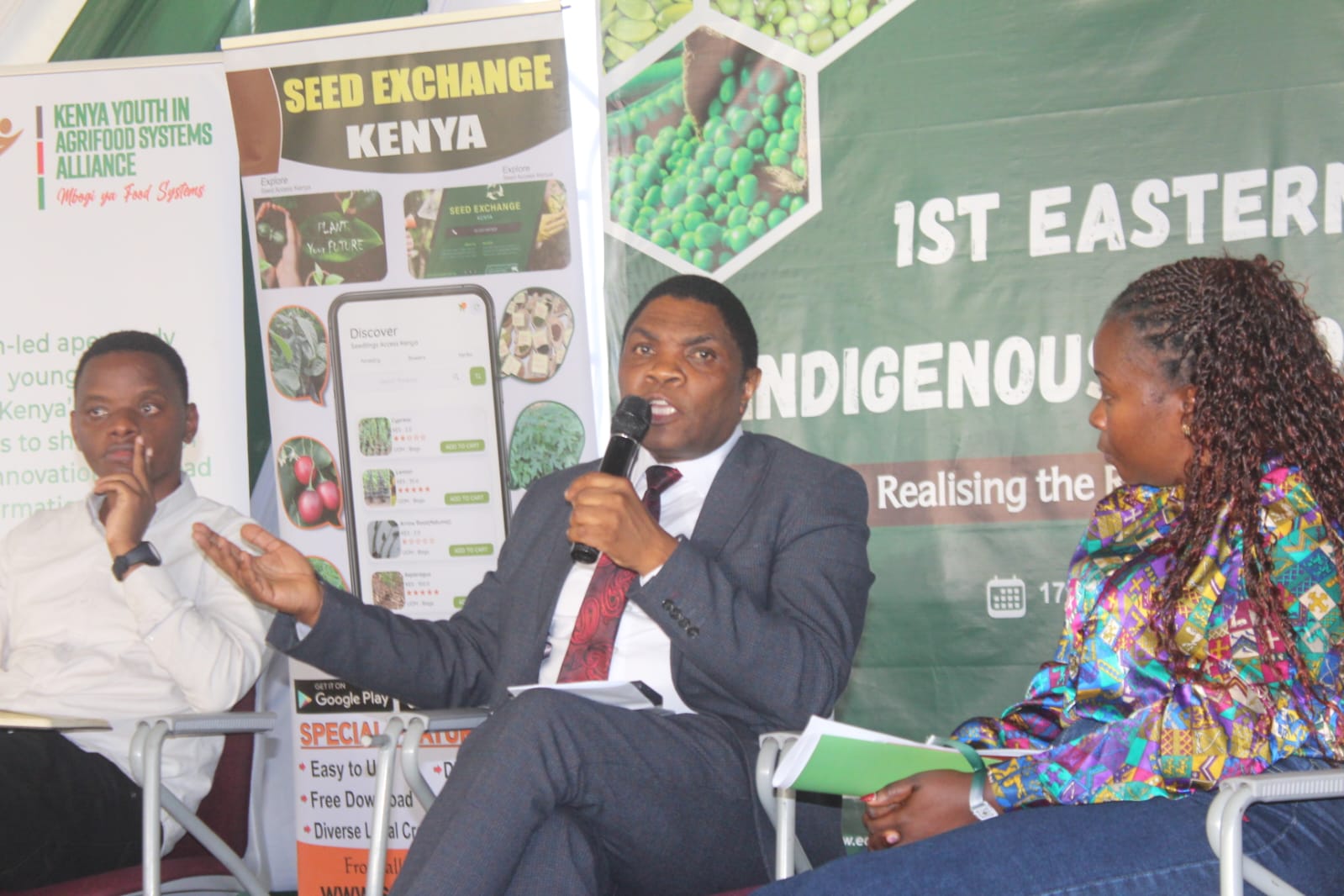
Panelists share their perspectives during a TISA-organised session at the First East Africa Indigenous Seed Conference, exploring ways to strengthen food systems and make agriculture more accessible and profitable for young people.
NAIROBI, TUESDAY 17, NOVEMBER- Agriculture could become a major source of economic empowerment for Kenya’s young people if the government addresses persistent barriers to land ownership, financing, research investment and market access, participants in a discussion organised by the Institute for Social Accountability (TISA) have said.
.
The discussion, held during the First East Africa Indigenous Seed Conference, brought into focus the structural challenges limiting youth participation in agriculture and the need to transform farming into a viable and profitable enterprise.
The TISA-organised session explored how young people could gain greater access to productive resources, participate in agricultural value chains and benefit economically from opportunities within the country’s food systems.
For many aspiring young farmers, the dream of establishing successful agribusinesses is often frustrated by limited access to land, inadequate financing, unreliable markets and concerns over the quality of seeds available to farmers.
One of the major concerns raised during the panel discussion was access to land and affordable financing, which continue to limit the ability of young people to establish and expand agricultural enterprises.
A panelist cited an example of a young farmer who had successfully accessed land through the Kakamega County Government, demonstrating how county administrations could support youth participation in agriculture by making public land available for productive ventures.
The discussion also revealed ongoing efforts to secure land for a PSF initiative, although the process had yet to yield the desired results.
Speakers argued that partnerships between county governments and young agricultural entrepreneurs could provide a practical solution to the land question while opening opportunities for a new generation of farmers.
Beyond access to land and financing, the panel explored how young farmers could benefit from existing government procurement opportunities.
One of the speakers proposed leveraging the 30 per cent procurement reservation for youth and women to connect young agricultural producers with institutional markets.
Schools, county governments and other public institutions were identified as potential buyers whose demand for agricultural produce could provide young farmers with more reliable markets.
The speaker argued that young farmers supplying these institutions should also be considered for opportunities under relevant agricultural programmes, including the AGCO initiative mentioned during the discussion.
The proposal was that connecting youth-led agribusinesses to public procurement opportunities would not only improve market access but also encourage more young people to venture into agriculture.
With predictable markets, young farmers would have greater confidence to invest in production, expand their enterprises and create employment opportunities.
However, the conversation extended beyond youth participation and market access to the broader question of agricultural research and innovation.
Speakers called for increased government investment in agricultural research, warning that overreliance on external funding could undermine the capacity of local researchers and scientific institutions.
One panelist observed that Kenyan researchers spend considerable time preparing funding proposals to attract donor support instead of concentrating on actual research.
“Researchers in fact spend almost 50 per cent of their time coming up with proposals for funding,” the panelist said, arguing that increased government budgetary allocations would allow scientists to dedicate more time to research and innovation.
The speaker emphasised that research is fundamental to agricultural development, particularly in developing improved seed varieties, technologies and farming practices capable of responding to changing agricultural needs.
The need to strengthen seed certification institutions also emerged as a critical issue, particularly amid concerns over fake and adulterated seeds in the market.
A panelist argued that adequately funding certification bodies would strengthen their capacity to regulate seed quality and reduce the circulation of counterfeit products that expose farmers to production losses.
The discussion further highlighted the importance of supporting both formal and informal seed systems, recognising the contribution of different seed sources to agricultural production and farmers’ choices.
But perhaps one of the most significant issues raised during the discussion was the need to redefine how the success of agricultural programmes is measured.
Contributors cautioned against evaluating government interventions merely through the number of seeds distributed or crop varieties released.
Instead, they called for greater attention to whether such programmes actually improve farmers’ choices, strengthen their control over productive resources, build resilience and deliver tangible economic benefits.
Drawing from experiences in social accountability initiatives, including community scorecards, a contribution highlighted the importance of giving citizens structured opportunities to assess public programmes, identify implementation gaps and engage responsible institutions on corrective action.
The discussion also referenced forthcoming TISA reports examining the fertiliser subsidy programme, Inua Jamii and the NYOTA Fund.
The reports are expected to contribute to conversations about public programme implementation, accountability and whether intended beneficiaries are receiving meaningful benefits.
Ultimately, the underlying concern was that agricultural development should be measured by improvements in people’s livelihoods rather than simply by the scale of government interventions.
One of the panelists emphasised that the ultimate goal should be to see agricultural earnings translate into tangible improvements in household welfare, including the ability to educate children, improve housing conditions and provide for families.
With a significant proportion of Kenyans depending on agriculture for their livelihoods, making the sector more attractive to young people could have far-reaching implications for employment creation, household incomes and national food security.
The challenge, therefore, is not simply to persuade more young people to take up farming, but to create an agricultural system in which they can establish viable businesses, access reliable markets and earn meaningful returns.
From land access and research financing to seed quality assurance and public procurement, the proposals emerging from the TISA-organised discussion point to the need for a more coordinated approach to agricultural development.
As Kenya continues to confront questions surrounding food security, unemployment and rural livelihoods, the future of agriculture may depend on whether young people are given more than an invitation to farm — whether they are given the resources, opportunities and institutional support to make farming a profitable business.