
Dangote, Ruto Break Ground on $16bn Lamu Oil Refinery
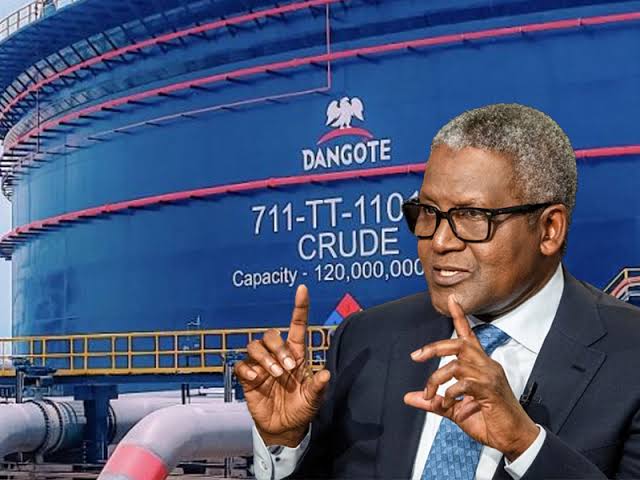
Nigerian billionaire Aliko Dangote and President William Ruto have broken ground on a $16 billion oil refinery in Lamu County, a project expected to become one of Africa’s largest industrial investments.
The refinery, being developed on Kenya’s northern coast, is designed to process up to 700,000 barrels of crude oil per day once fully operational. Its planned capacity would make it the largest refinery project in East Africa.
The groundbreaking ceremony was attended by several African leaders, including the presidents of Uganda, Ethiopia, Togo and Benin, underscoring the project’s regional significance.
Dangote, Africa’s richest man, said the investment would demonstrate that major industrial projects can be developed on the continent.
“This is Africa coming together to build Africa,” Dangote said during the launch. He described the project as a new chapter in Africa’s industrial development and said the refinery was expected to be completed by 2030.
The project follows the development of Dangote’s refinery in Nigeria’s Lekki area, which began operations after years of construction and investment.
Dangote has offered regional governments a combined 30 per cent stake in the Lamu refinery, according to Reuters. The arrangement is intended to give neighbouring countries an opportunity to participate in the project and benefit from its operations.
President Ruto said the refinery represented a shift towards greater African investment in processing and adding value to resources within the continent.
The Lamu refinery is expected to become Kenya’s largest infrastructure project since independence, surpassing the approximately $5.1 billion Standard Gauge Railway.
However, the project has faced opposition from some residents and environmental campaigners in Lamu.
Ahead of the groundbreaking ceremony, some residents held demonstrations seeking increased compensation for land affected by the development.
Dangote dismissed the protests, arguing that the company was using only the portion of land made available to it by the government. He also rejected claims that the demonstrations would derail the project, maintaining that construction would continue towards the planned 2030 completion date.
“We took only the portion of land that we needed from what the government made available,” Dangote said.
Environmental concerns have also emerged.
Walid Ali, co-founder of the Save Lamu campaign group, told the BBC that residents wanted access to the findings of the project’s environmental impact assessment and details of the measures proposed to mitigate potential effects on the local community.
“We are asking for the findings from the environmental impact assessment so that we can see what mitigation measures are being proposed,” Ali said.
A group of 133 Lamu residents has also moved to the High Court in an effort to halt construction activities on disputed land.
Court proceedings have resulted in restrictions on activities including excavation and construction on the contested site until the next hearing scheduled for October 14.
The project’s location has also generated debate because Kenya does not currently produce crude oil on a scale comparable to some neighbouring countries.
Uganda and Tanzania are developing their petroleum sectors, while Uganda is working towards exporting crude through the East African Crude Oil Pipeline.
Kenya’s Energy and Petroleum Cabinet Secretary Opiyo Wandayi defended the decision to establish the refinery in Lamu, saying a refinery does not necessarily have to rely on crude produced locally.
“Refineries get crude oil from the market. And the market is open,” Wandayi told the BBC.
Dangote similarly pointed to Singapore, a major global refining and trading centre despite having no significant domestic crude oil production.
At peak construction, Dangote said the refinery could create about 60,000 jobs, with employment opportunities expected to extend beyond workers directly employed by the project.
The refinery is also expected to strengthen Kenya’s position as a regional petroleum products hub, although its eventual economic and environmental impact will depend on construction, financing, crude supply and the resolution of outstanding legal and community concerns.