
Muslim Leaders Back SACCO as Government Takes Economic Dialogue to Western Kenya
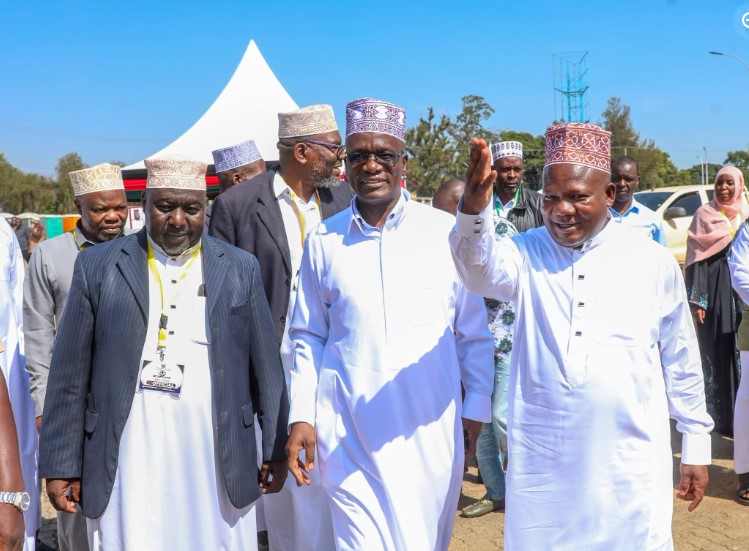
Principal Secretary for Economic planning Dr. Boniface Makokha(Centre) and Kakamega Governor Fernandes Barasa during the Gumzo la Mashinani forum at Bukhungu stadium on September 03, 2026
Muslim leaders from five Western Kenya counties have welcomed the establishment of a regional Muslim SACCO as part of efforts to expand economic opportunities while urging the government to address challenges affecting the community.
The leaders from Kakamega, Bungoma, Busia, Vihiga and Trans Nzoia made the call during the Gumzo la Uchumi Mashinani forum held in Kakamega, where they engaged government officials on economic development and issues affecting Muslim communities.
The forum brought together religious leaders and government representatives to discuss economic empowerment, access to opportunities and the role of grassroots communities in national planning.
Speaking during the event, Principal Secretary for Economic Planning Dr. Bonface Makokha said the government’s decision to take economic discussions to the grassroots was intended to ensure that citizens’ priorities inform national planning and budgeting.
“If the voice of wananchi does not find its way into the plan, it will not find its way into the budget. Anything that is not planned cannot be budgeted for, and if it is not budgeted for, it cannot be implemented.”
The proposed Western Kenya Muslim SACCO emerged as one of the key economic initiatives discussed during the forum, with leaders viewing it as a platform through which members of the Muslim community can strengthen savings, access affordable credit and invest in businesses.
The initiative is expected to bring together members across the five counties and provide a structured avenue for economic empowerment within the community.
The forum also gave Muslim leaders an opportunity to present concerns directly to government officials, including calls for Madrasa teachers to be considered for inclusion in the government payroll.
The leaders further raised concerns over the accommodation of Muslim girls who wear the hijab in schools, alongside other issues touching on education, employment and access to government opportunities.
Kakamega Governor Fernandes Barasa used the forum to highlight the role of inclusivity in both county and national government.
Barasa said Muslims were already represented in senior positions within his administration and at the national level, arguing that such representation demonstrates the importance of ensuring different communities participate in government.
“Here in Kakamega, we have Muslims serving as chief officers in my administration, just as we have Muslim Cabinet Secretaries and Principal Secretaries in the national government. This is a demonstration that our governments are committed to inclusivity.”
The governor also pointed to county programmes aimed at improving livelihoods among vulnerable groups.
He said the county had set aside Sh60 million for an empowerment programme targeting youth, women and persons with disabilities across the county’s 60 wards.
The programme, according to Barasa, had already been implemented in five sub-counties, with the county targeting completion of the remaining areas by the end of September.
Barasa further said the county had supported 102 Islamic women’s groups to strengthen their businesses, while affirmative-action measures were being used to give members of the Muslim community opportunities to participate in government procurement.
“We have also supported 102 women’s Islamic groups to enable them to grow their businesses, and through affirmative action, we are ensuring that members of the Muslim community get opportunities to apply for government contracts.”
The discussions come as the national government continues to promote the Bottom-Up Economic Transformation Agenda (BETA), with the administration seeking to expand economic opportunities among communities at the grassroots.
For the Muslim leaders, however, economic empowerment must go hand in hand with addressing social and educational concerns, with the forum providing a platform for them to place those issues directly before government representatives.
The Gumzo la Uchumi Mashinani programme is intended to strengthen public participation in economic planning by bringing government officials closer to communities and allowing citizens to raise concerns and propose priorities for development.