
EAC pushes for regional recognition of education qualifications
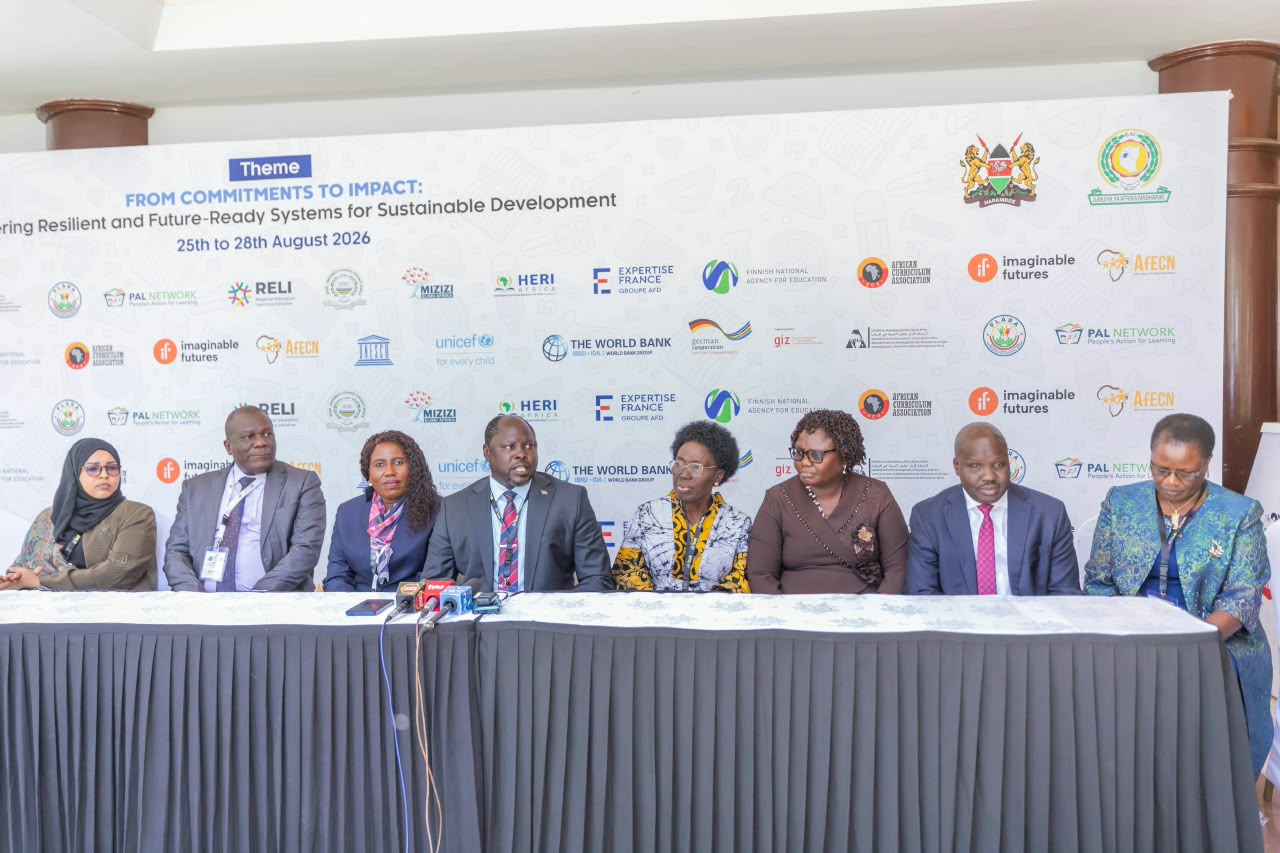
EAC officials and education stakeholders during a press briefing on the 2nd EAC Regional Education Conference in Nairobi, where delegates are discussing harmonisation of education standards and strengthening regional education systems. Photo/ Courtesy
East African Community countries are stepping up efforts to harmonise education standards and qualifications to allow students, teachers and researchers to move more freely across the region.
The initiative is expected to remove barriers that have previously made it difficult for learners to transfer between institutions or have their academic qualifications recognised in another Partner State.
EAC Deputy Secretary-General Andrea Rik said the harmonisation of education systems is central to achieving deeper social integration within the region.
“It also encourages East Africans to work towards having a harmonised education system and curriculum, which will, at the end of the day, promote job mobility across the board,” Rik said.
He said the framework would allow students to pursue studies in other Partner States and transfer credits back to their home institutions.
“The intention is to promote social integration in the community,” Rik said.
The move is also expected to create a more mobile workforce as countries work towards ensuring that graduates possess skills that can be recognised and utilised across East Africa.
Cabinet Secretary for East African Community Affairs, ASALs and Regional Development Beatrice Askul Moe said the region had made significant progress in addressing one of the barriers to the implementation of the EAC Common Market Protocol.
She said the mutual recognition of academic qualifications would give young people greater opportunities to study and work beyond their countries.
“In the past, it was difficult for students to cross from one country to another at different levels, but now with the mutual recognition of academic qualifications, it’s going to be a big impetus in the regional movement of young people,” Askul said.
The countries are also seeking to harmonise Technical and Vocational Education and Training standards to address the mismatch between skills produced by education systems and the needs of employers.
Kenya’s Principal Secretary for Higher Education, Muganda Inyangala, said the region must move beyond making commitments and focus on programmes whose impact can be measured.
“In summary, it is not just about commitment, but it’s also about investments, and it is about programmes with tangible outcomes that are measured and communicated to the public,” Inyangala said.
He said Kenya was already implementing programmes aimed at monitoring learning outcomes, teacher distribution and the availability of teaching and learning materials.
Tanzania is similarly restructuring its education system to strengthen the link between training and employment.
A Tanzanian education official said the country was expanding technical and vocational education at secondary school level while establishing vocational training colleges across its administrative districts.
“We have developed a strong link between industry and education system,” the official said, explaining that industries were being involved in curriculum development to ensure students graduate with skills required in the market.
The regional reforms are also targeting disadvantaged learners, including children with disabilities, refugees and other marginalised groups.
South Sudan’s Minister for Higher Education, Science and Technology said Partner States must ensure that disadvantaged groups benefit from the regional education agenda.
“Those disadvantaged people, they are part of us, and they must benefit,” the minister said.
Kenya is also prioritising inclusive education through additional support for learners with special needs, including assistive devices and specialised services.
The push for harmonisation comes as East African countries seek to address unequal access to education, teacher shortages, skills mismatches and weak transitions from education into employment. The EAC has identified education as a key pillar of social integration and human-resource development.
The second EAC Regional Education Conference, which is bringing together about 600 delegates from the eight Partner States, is being held in Nairobi from August 24 to 28, 2026, under the theme “Transforming Education in East Africa: From Commitments to Impact, Fostering Resilience and Future-Ready Systems for Sustainable Development.”