
Counties Step Up Efforts to Unlock Youth Potential in Agribusiness
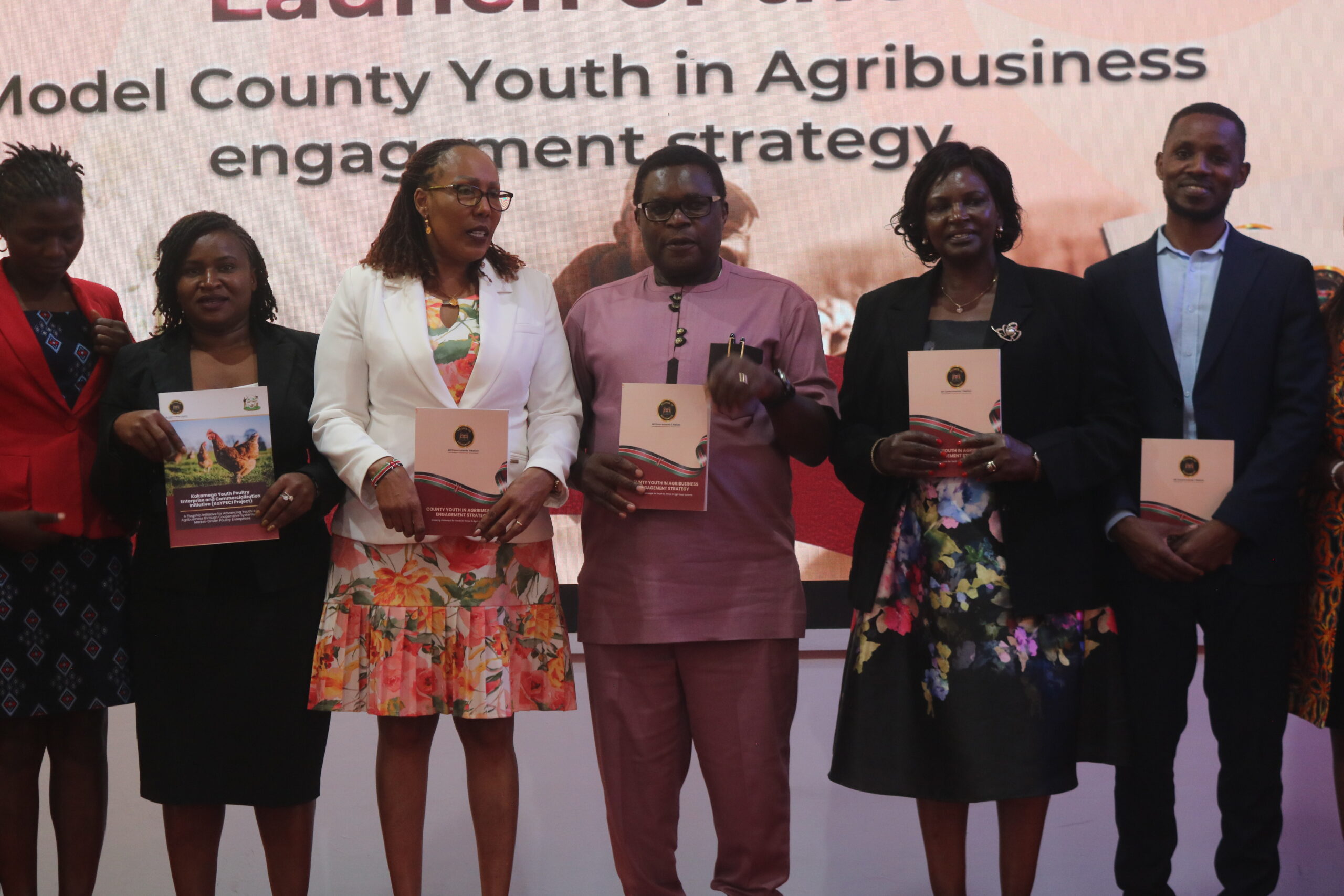
Bungoma Governor Kenneth Lusaka and other Agriculture stakeholders during the launch of The Model County Youth in Agribusiness Strategy in Nairobi on Wednessday August 12 2026
County governments are stepping up efforts to create structured opportunities for young people in agriculture, with the Council of Governors launching a new strategy aimed at moving youth from low-value activities into profitable agribusiness and modern farming.
The Model County Youth in Agribusiness Strategy was launched during the International Youth Day celebrations, bringing together county governments, young people, development partners, financial institutions and the private sector to develop practical pathways for youth participation in the agri-food sector.
Speaking during the launch, Council of Governors Chair of the Agriculture Committee and Bungoma Governor Kenneth Lusaka said research across five counties had challenged the long-held perception that young people were abandoning agriculture.
“The challenge is not a lack of willing young people. The challenge is that our systems have not been designed to help them succeed.”
Lusaka said young people were already active across the agricultural value chain as farmers, traders, transporters, processors, innovators and entrepreneurs, but many remained trapped at the lowest end of the chain where returns are low, risks are high and access to markets and growth opportunities is limited.
He said the new strategy was therefore designed to provide a structured pathway for young people to move beyond participation and build sustainable businesses in agriculture.
The initiative has already developed implementation toolkits for five pilot counties — Kirinyaga, Bungoma, Meru, Kakamega and Nakuru — alongside county-specific flagship initiatives intended to provide practical entry points for implementation.
Lusaka said the counties deliberately chose an approach that would go beyond producing another policy document, insisting that the focus must now shift to implementation.
“We did not want to produce another dutiful policy document that would eventually gather dust on our shelves. We wanted implementation.”
He called on development partners, financial institutions and the private sector to support the flagship programmes in the pilot counties while also helping expand the strategy to the remaining 42 counties.
Lusaka said transforming youth livelihoods would require collaboration between county governments, young people, development partners and the private sector, noting that no single institution could deliver the ambition on its own.
The Governor also challenged stakeholders to rethink how young people are trained, calling for more practical programmes conducted directly on farms rather than relying heavily on hotels, workshops and boardrooms.
He said young people should be exposed to successful agricultural enterprises so they can see what is possible and replicate models that are already working in other counties.
Lusaka further called for a change in the perception of farming, arguing that agriculture must be presented to young people as a modern commercial sector driven by technology, innovation and investment.
“Let us move from seeing farming as a survival activity. Let us see it as a modern business, technology and investment opportunity.”
He pointed to emerging opportunities including greenhouse farming, irrigation and hydroponics, drone operations, agri-technology, seed and nursery production, livestock genetics and food processing as areas where young people can build careers and businesses.
The Council of Governors says it will work with county governments and partners to integrate the strategy into county planning, budgeting and development priorities.
The launch marks an attempt to shift the conversation around youth and agriculture from simply encouraging young people to farm to creating the systems, markets, skills and investment opportunities needed to help them build viable agribusinesses.
With the strategy initially being rolled out through five pilot counties, its success could provide a model for expanding structured youth opportunities across all 47 counties.