
African governments face growing pressure as health, education gaps persist despite donor support
African and Asian governments are facing mounting pressure to fix persistent healthcare and education gaps even as philanthropic organisations and international partnerships continue stepping in to bridge critical shortages in public systems.
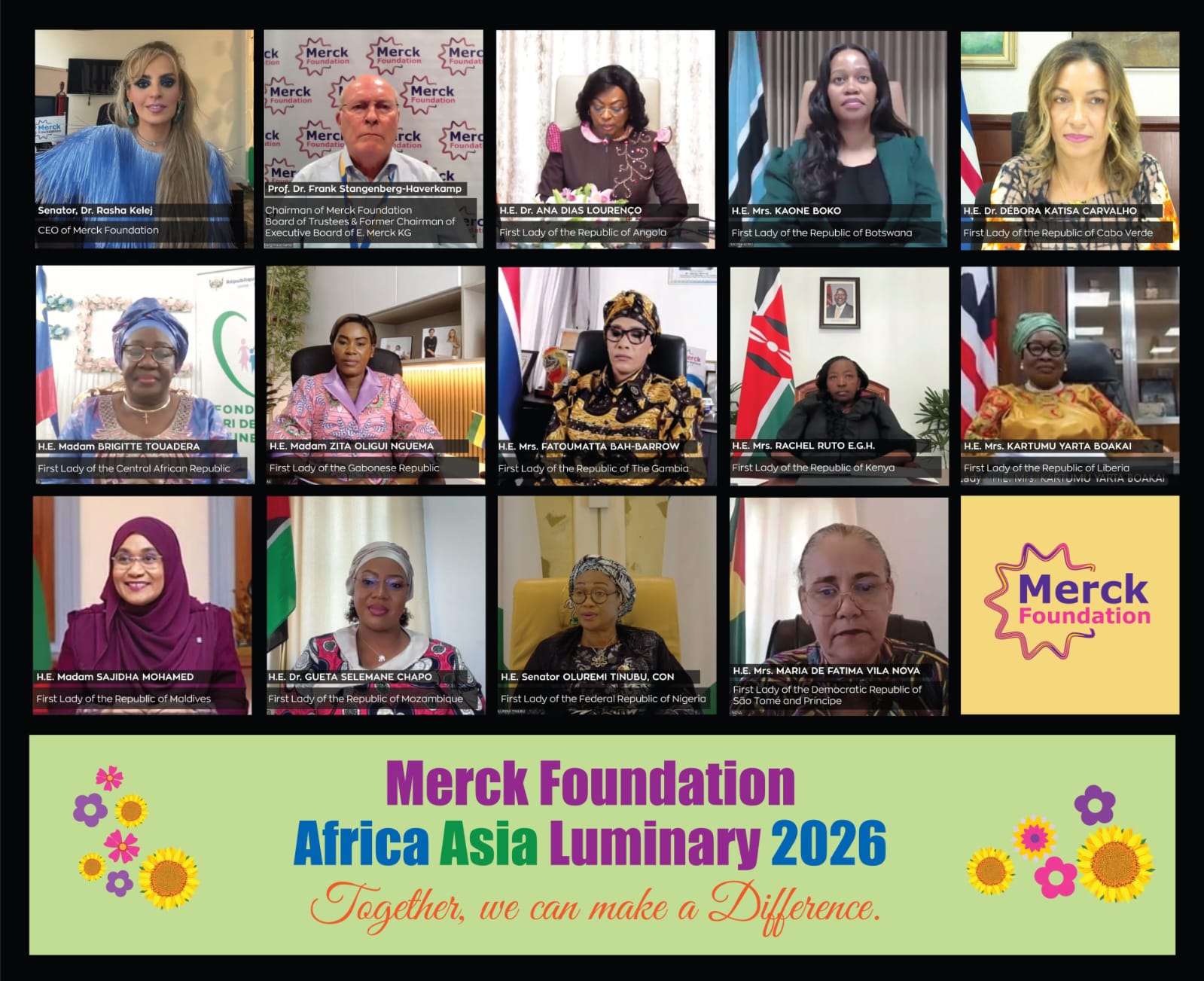
The challenge came into sharp focus during the 13th edition of the Merck Foundation Africa Asia Luminary, where First Ladies, policymakers and development partners showcased major gains made through specialist medical scholarships, girls’ education programmes and healthcare capacity-building initiatives across dozens of countries.
However, beneath the success stories emerged a growing policy debate on whether philanthropic interventions are strengthening public institutions or simply compensating for long-standing structural weaknesses governments have failed to resolve.
Healthcare capacity remains a major challenge
Opening the conference, Prof. Frank Stangenberg-Haverkamp, Chairman of the Foundation’s Board of Trustees, said the organisation remains focused on improving healthcare systems through long-term investment in specialist training.
“We remain committed to improving health and well-being by building healthcare capacity and providing access to quality and equitable healthcare across Africa, Asia, and beyond,” he said.
According to the foundation, more than 2,600 scholarships have so far been awarded to healthcare professionals drawn from 52 countries, targeting specialised medical fields such as oncology, fertility treatment, psychiatry and reproductive health where shortages remain severe in many developing countries.
Rachel Ruto pushes for equal opportunity
Kenya’s First Lady Rachel Ruto, who joined the summit virtually, said inequality of opportunity continues to lock out millions of vulnerable children from accessing quality education and healthcare services.
“Every child is born with limitless potential, yet for many in Africa and Asia, opportunity is shaped by circumstance,” she said.
“Leadership is ensuring that where a person begins does not determine where they end.”
Ruto noted that through Kenya’s partnership with the foundation, 328 Kenyan healthcare professionals have already received scholarships in specialised medical fields.
“I hear the heartbeat of a mother receiving care, and a cancer patient getting treatment closer to home,” she said.
“When we educate a girl, we change generations.”
Questions over dependency on donor partnerships
Other leaders echoed similar concerns over the growing dependence on external partnerships to support essential services traditionally expected to be delivered through strong public systems.
The First Lady of The Gambia, Fatoumata Bah-Barrow, said specialised medical training has already transformed healthcare delivery in her country.
“Education remains one of the most powerful tools for transforming lives and breaking cycles of poverty and inequality,” she said.
Meanwhile, Rasha Kelej said the foundation’s programmes go beyond technical training by also tackling harmful social attitudes around health.
Africa faces deeper structural questions
Despite ambitious frameworks such as the African Union Agenda 2063, Sustainable Development Goals and national commitments toward Universal Health Coverage, many African countries continue struggling with shortages of healthcare workers, limited education access and weak public investment.
The conference highlighted a growing dilemma facing African governments: whether donor-backed interventions are accelerating stronger public systems or quietly sustaining gaps that require deeper structural reforms and long-term state investment.
As countries push for universal healthcare and inclusive education, experts say the balance between philanthropy and government responsibility will remain central to Africa’s development debate for years ahead.