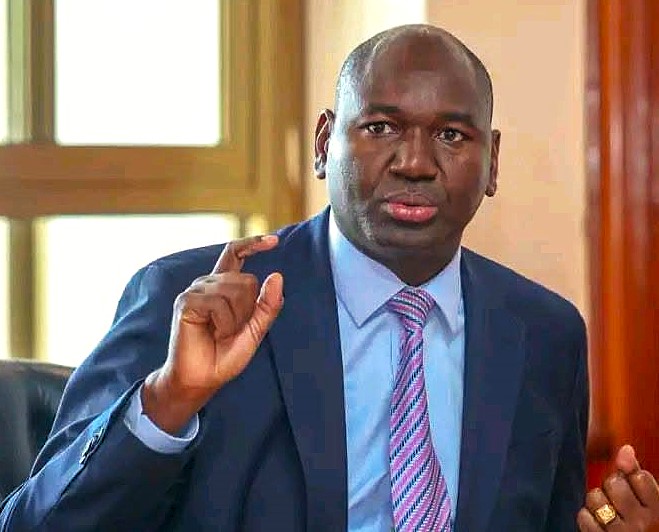

Africa already has the opportunity and the finance. But the local operational ecosystems are still in their nascent stages.

Rishabh Khanna, Earthbanc AB Co-Chief Executive Officer
The conclusion of the Africa Forward Summit 2026 leaves behind an unmistakable signal to the continent: global investors are taking Africa’s green economy more seriously than ever.
At the two day Summit in Nairobi, Kenyan President William Ruto, French President Emmanuel Macron, African leaders, European investors and international business executives discussed how to unlock larger flows of investment into Africa’s green economy.
While much of the summit focused broadly on energy transition, infrastructure, industrial growth and climate finance; land restoration is increasingly an important part of Africa’s wider green growth agenda. Healthy landscapes support water, food and energy security, and restoring critical catchment areas can strengthen all three. It also helps local ecosystems become more self-sufficient and resilient at a time when global supply chains remain fractured.
Africa holds some of the world’s greatest restoration potential. According to the African Forest Landscape Restoration Initiative (AFR100), more than 30 African countries have committed to restoring over 100 million hectares of degraded land by 2030, with Kenya positioning itself as one of the continent’s most ambitious restoration markets.
At the same time, the United Nations estimates that nearly two-thirds of productive land across Africa is degraded, threatening food systems, biodiversity and rural livelihoods.
But as climate finance conversations accelerate after Nairobi, a more difficult question also deserves attention: Is the broader local operational ecosystem ready to support long-term restoration investment at scale?
Because land regeneration is not simply a financing challenge. It is an implementation challenge. Large-scale restoration efforts across Africa have repeatedly shown that financing alone is not enough. Coordination, local implementation capacity and long-term stakeholder alignment remain among the sector’s biggest challenges.
Restoration projects are far more complex than public debate often suggests. They operate under strict long-term requirements around seedling supply, private and public land rights, community consent, biodiversity, carbon permanence and environmental integrity, to name a few.
Policy analysis by Geneva Policy Outlook has noted that even well-intentioned projects can become socially fragile if issues around land tenure, community participation, inheritance, local governance or benefit-sharing are not handled with extraordinary care. In many African contexts, where land systems are communal, intergenerational and culturally sensitive, even small breakdowns in trust or communication can escalate into larger conflicts that destabilise long-term restoration efforts (and other pre-existing tensions).
The science itself is also evolving. Different landscapes require different restoration methods depending on rainfall, soil quality, existing vegetation and land use. Across the sector, practitioners continue to refine approaches ranging from nursery-grown planting and agroforestry to assisted natural regeneration and direct seeding.
What works in one geography may not work in another.
At Earthbanc and Earthtree, these realities became clear through the project we designed and launched in Kenya in 2024, working with farmers and communities across multiple counties on nursery development, seedling supply and on-the-ground restoration.
What we found was that the technical work, the nurseries, the planting protocols, the monitoring systems, was the more straightforward part. The harder part was the operational layer that surrounds it: the careful navigation of inheritance questions that determined who actually held the land, and the willingness to walk away from land that looked viable on a map but where the social conditions for long-term restoration were misaligned. Almost every meaningful course correction we made in the first eighteen months came from those conversations on the ground, not from a strategy deck.
This is not unique to our project. Community engagement in restoration work is continuous and deeply sensitive across the sector, intersecting with land use, livelihoods, governance and long-term stewardship in ways that require sustained communication over many years.
As one farmer participating in training sessions told us: “Before the training, many of us did not realise how valuable these trees could be. We learned how to plant and care for them properly and how they can benefit both the environment and our farms.” That insight matters because trust is not a secondary issue in restoration work. It is foundational.
International companies may bring technology, scientific expertise, monitoring, reporting and verification (MRV) methods and private capital into African markets. However, the long-term success of these projects depends heavily on trusted local partners, regular community engagement, reliable nursery supply chains, alignment of interests, reliable information flows (promptly countering both innocent and malicious misinformation), institutions capable of sustaining confidence over long project cycles and stable stakeholders.
Without those, even technically strong projects can become vulnerable to confusion, competing local interests and breakdowns in coordination.
Yet these long term operational realities rarely receive the same attention as investment announcements or planting targets. They are issues the broader restoration sector across emerging markets must confront honestly if it wants to attract durable long-term climate finance.
The sector has spent the last decade getting better at raising capital for restoration and not much better at effectively deploying it. The frontier worth working on now is not the next pledge or the next methodology. It is the operational discipline to make the projects already funded deliver what they said they would. That work is unglamorous, two steps forward and one step back, it does not produce announcements, but it is where the next phase of credibility for restoration finance will be earned or lost.
President William Ruto and President Emmanuel Macron framed the summit around long-term investment partnerships and green growth. The restoration economy offers exactly that opportunity.
Africa’s restoration future will not be determined only by climate pledges or investment annually.