

Businesses Urged to Go Beyond Insurance to Strengthen Risk Resilience.
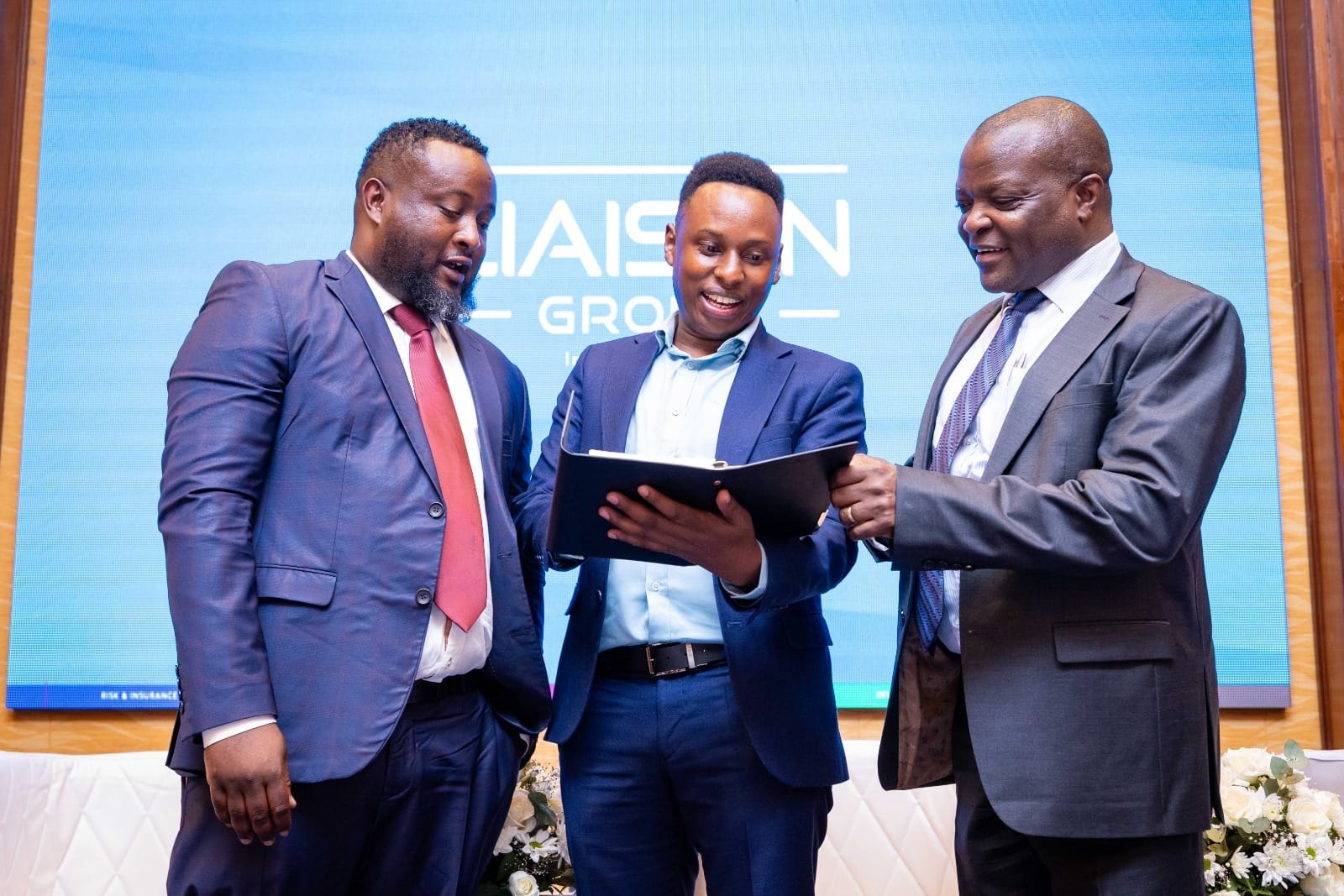
From left: Brian Rop, General Manager Risk and Insurance at Liaison Group; Dennis Karanja, General Manager Regional Business at Liaison Group; and Kalai Musee, Director of Supervision at the Insurance Regulatory Authority (IRA), during the Liaison Group Corporate Risk Management Forum in Nairobi.
By Fride Amiani
Businesses have been urged to adopt proactive risk management strategies beyond purchasing insurance to strengthen resilience, safeguard assets and maintain operational continuity amid evolving economic and operational challenges.
Liaison Group officials said organisations must regularly assess their risk exposures, identify vulnerabilities and ensure insurance policies reflect changing business needs to avoid costly disruptions and financial losses.
Speaking during the Liaison Group Corporate Risk Management Forum in Nairobi on Thursday, October 22, 2026, industry experts emphasised that insurance alone cannot guarantee business resilience without proper risk identification, preparedness and effective oversight.
They noted that businesses must integrate risk management into their daily operations, anticipate emerging threats and work closely with insurance partners to ensure adequate protection against potential losses.
“While insurance remains an important mechanism for managing financial exposure, resilience also depends on what organisations do before a loss occurs,” the forum heard.
Participants were encouraged to understand the potential consequences of disruptions, review existing insurance cover and make informed decisions about the risks they retain and those they transfer to insurers.
The discussions highlighted the need for businesses to reassess their risk exposures as operations change, ensuring that insurance cover reflects current assets, liabilities and operational realities.
Speaking at the forum, Brian Rop, General Manager for Risk and Insurance at Liaison Group, said the growth of Kenya’s insurance industry must translate into meaningful protection for the people and businesses it serves.
“The more important question is this: what does that growth mean for the people and businesses we serve? Behind every policy, every premium, every claim and every benefit is a person, a family, a business or an institution with something valuable to protect,” Rop said.
He emphasised that the value of insurance should be measured not only by industry growth but also by its ability to provide reliable protection when policyholders face unexpected challenges.
Rop’s remarks underscored the importance of ensuring that insurance products respond to the actual needs of businesses and individuals, particularly as risks become increasingly complex.
He said organisations should look beyond the mere acquisition of insurance policies and develop a comprehensive understanding of their exposures, enabling them to prepare for disruptions before they occur.
The forum noted that businesses face a wide range of threats, including cybercrime, climate-related damage, supply-chain disruptions, fraud and liability exposures, which can undermine operations and their ability to meet financial obligations.
These risks require organisations to strengthen internal controls, review their preparedness measures and ensure that risk management decisions are aligned with their long-term objectives.
The participants also stressed that businesses must work with insurance partners who understand their operations and can advise them on appropriate protection as their assets, liabilities and activities evolve.
Kalai Musee, Director of Supervision at the Insurance Regulatory Authority (IRA), said public confidence and effective regulation were critical to the development of a strong insurance sector.
“A strong and trusted insurance industry depends on effective regulation, responsible market conduct and the confidence of policyholders that their interests are protected,” Musee said.
He added that continued collaboration between regulators and industry players was essential to ensuring that insurance products deliver meaningful value to individuals and businesses.
“As the sector evolves, continued collaboration among regulators and industry players remains essential to ensuring that insurance delivers meaningful value to individuals and businesses,” he said.
Musee’s remarks highlighted the role of regulatory oversight in promoting responsible conduct, protecting policyholders and strengthening trust in insurance providers.
The forum heard that confidence in the industry depends on policyholders understanding their coverage and having assurance that their interests will be protected when they need to make claims.
Effective regulation, participants noted, must therefore go hand in hand with responsible business practices and efforts to improve the relevance and reliability of insurance services.
The discussions further emphasised that risk management should extend beyond conventional corporate insurance to other areas of business and financial planning, including retirement benefits.
Dennis Karanja, General Manager for Regional Business at Liaison Group, said businesses needed to adopt a proactive approach to risk management and ensure insurance programmes remained aligned with their changing needs.
“Risk management must be proactive. Businesses should not wait for a loss to discover where they are vulnerable. As operations, assets and risk exposures change, insurance programmes must evolve too,” Karanja said.
He noted that the role of an insurance partner extends beyond securing cover, requiring a clear understanding of a client’s business, sound advice and regular reviews to ensure protection remains appropriate.
“The value of an insurance partner goes beyond securing cover; it lies in understanding the business, providing sound advice and ensuring that protection remains appropriate when it matters most,” he said.
Karanja’s remarks highlighted the importance of maintaining regular communication between businesses and their insurance providers to identify gaps in protection as organisations expand or change their operations.
He said insurance programmes should be reviewed whenever significant changes occur in a business’s assets, activities or risk profile to ensure that the cover remains relevant.
Failure to make such adjustments could leave organisations exposed to losses that existing policies may not adequately cover.
The forum also examined risk management in the retirement benefits sector, including the application of the Pension Risk Management Framework (PRMF).
The discussions extended beyond corporate insurance to the identification, assessment and management of risks associated with pension schemes and retirement benefits.
Participants stressed that retirement benefits institutions must adopt structured risk management approaches to protect funds, strengthen governance and ensure their long-term sustainability.
The framework was highlighted as an important tool for identifying potential vulnerabilities and improving preparedness within the retirement benefits sector.
The meeting also called for stronger integration of risk awareness, appropriate insurance protection and effective oversight across businesses and institutions.
Experts observed that resilience requires organisations to understand what could go wrong, determine the potential impact of disruptions and establish measures to respond effectively when circumstances change.
They said businesses should regularly evaluate whether their existing protection remains adequate rather than assuming that having an insurance policy automatically guarantees comprehensive coverage.
The discussions come amid growing concerns over emerging risks that can affect business continuity, financial stability and the ability of organisations to meet their obligations.
Cybersecurity threats, environmental damage and disruptions to supply chains were identified as among the challenges that require businesses to strengthen their preparedness and review their risk management strategies.
The forum encouraged organisations to make risk management an integral part of business decision-making rather than treating it as a responsibility activated only after a loss.
For the insurance industry, the discussions reinforced the need to deliver products and services that respond to the changing needs of clients while strengthening confidence among policyholders.
Liaison Group said the broader objective was to help businesses build and maintain robust risk management and internal control structures through professional advice and a comprehensive range of services.
Founded in 1981, Liaison Group is an independent non-banking financial services organisation specialising in risk and insurance, healthcare administration, pensions administration, and investment advisory and trust services.
The forum concluded that strengthening business resilience requires a combination of risk awareness, appropriate protection, proactive planning and effective oversight, with businesses and insurance providers working together to anticipate threats and minimise their potential impact.