
Smart glasses to give Kenya’s visually impaired a new pair of ‘eyes’
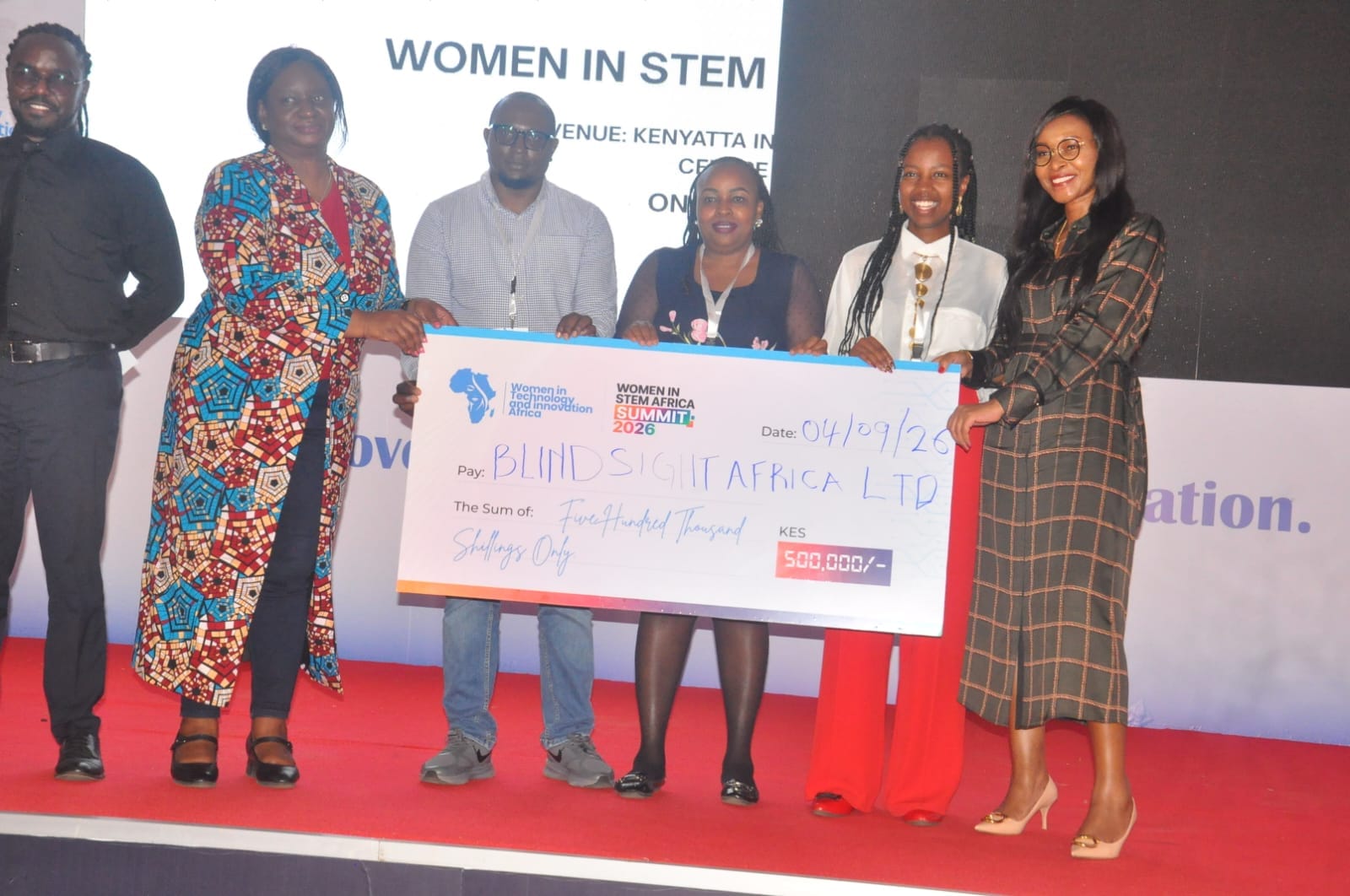
Victoria Mwaura second right receiving the winners award
NAIROBI — A Kenyan innovation seeking to give visually impaired people greater independence has won an award at the just-concluded Women in STEM Summit held in Nairobi, opening the door for wider production and testing of smart glasses designed to “see” and describe the world to their users.
Victoria Mwaura, founder and CEO of Vision Sight Africa, also known as Provision Sight Africa, emerged the winner at the summit after pitching the company’s assistive technology designed to help people with visual impairment navigate their surroundings.
The victory comes with funding that Mwaura says will be channelled directly into refining the technology and producing about 70 additional units, allowing the company to expand testing from a school for the blind to schools and other settings.
“It feels really good. I am so happy that finally this is getting exposure, and not just for personal interest, but mostly because this is bringing impact into the space of visually impaired persons,” Mwaura said after receiving the award.
Vision Sight Africa is developing smart glasses that work alongside a mobile application or companion device to help visually impaired users interpret their surroundings through audio.
The technology captures information from the user’s environment and relays it audibly, enabling the wearer to receive descriptions of scenes, read signs and text, identify obstacles and obtain information about people and objects around them.
Mwaura said the innovation seeks to move assistive technology beyond the simple solutions that have traditionally been available to visually impaired people.
“For so long the space of assistive technology has given them very simple solutions, and now we’re making something that is just as advanced as technological solutions in the market,” she said.
She said the prize money would enable the company to increase production while gathering more feedback from users before scaling up.
“We want to make around 70. That can now increase our traction and test it even in wider settings,” Mwaura said.
The company has already tested the technology with learners at a school for the blind and plans to expand trials to schools and other environments.
The expanded testing will also help the developers establish how adaptable the technology is to different users and situations, including people who wear glasses.
Mwaura said the long-term goal is to refine the innovation into an African-made solution capable of addressing the everyday challenges faced by people with visual impairment.
She said participating in the Women in STEM Summit also provided an opportunity to learn from entrepreneurs and technology experts who have successfully turned their ideas into impactful ventures.
“I’ve always felt that my calling is towards making impact, and I feel like that is better when you have your own passion that you’re working towards,” she said.
For Mwaura, however, the award is more than recognition for an emerging technology company.
It represents an opportunity to push assistive technology into a space where people with visual impairment can access more sophisticated tools to navigate their surroundings and interact more independently with the world around them.
With the new funding, Vision Sight Africa now hopes to move from a promising innovation to a technology tested on a much wider scale — and ultimately put more sophisticated assistive tools into the hands of the people who need them most.