
Government vows tougher LPG crackdown despite political pressure
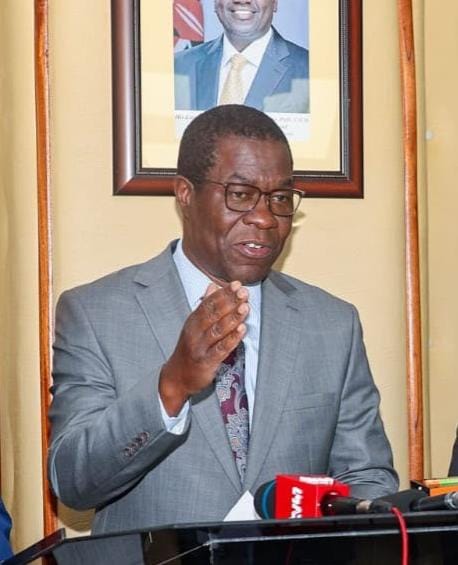
Energy Cabinet Secretary Opiyo Wandayi speaking during a press briefing in Nairobi on 26 August 2026. Photo/Courtesy
The government has vowed to intensify its crackdown on illegal liquefied petroleum gas (LPG) operations, warning that it will not yield to political pressure or cartels benefiting from illicit trade in the increasingly popular cooking fuel.
Energy and Petroleum Cabinet Secretary Opiyo Wandayi said Wednesday that enforcement agencies would continue targeting illegal refilling and trading of LPG cylinders until all operators comply with the law.
Wandayi said the crackdown was necessary to protect consumers from unsafe LPG practices, as the government simultaneously pushes to increase the use of the cleaner fuel and reduce reliance on biomass.
“Government will not succumb to pressure from politicians and cartels hellbent to benefit from LPG illicit trade. The crackdown on illegal LPG operations will be intensified until full compliance is achieved,” Wandayi said.
The warning comes against the backdrop of the deadly February 2024 Embakasi LPG explosion, which exposed the dangers posed by illegal and poorly regulated gas operations. The blast at an illegal LPG site in Mradi killed at least three people and injured hundreds, while destroying homes, businesses and vehicles.
Investigations at the time showed that the site had previously sought approval to establish an LPG storage and filling plant but its applications were rejected by the Energy and Petroleum Regulatory Authority (EPRA), partly because of the high population density and failure to meet prescribed safety distances.
The tragedy has since remained a reference point in the government’s efforts to tighten supervision of the LPG market, with EPRA stepping up nationwide operations against unlicensed refilling plants and counterfeit cylinders.
In November 2025, EPRA told Parliament that it had intensified the crackdown, with illegally refilled cylinders being confiscated as the regulator moved to dismantle networks involved in the illicit trade. The regulator said the campaign was aimed at protecting consumers and ensuring cylinders circulating in the market were genuine and safe.
The enforcement is now being carried out under the Petroleum (Liquefied Petroleum Gas) (No. 2) Regulations, 2025, which require LPG businesses to obtain the necessary licences and comply with prescribed conditions.
The regulations also require LPG cylinders to be properly branded, with refilling restricted to legitimate brand owners or authorised operators. This is intended to prevent the unauthorised refilling and trading of cylinders belonging to other companies.
Wandayi said enforcement teams work with the National Police Service and the Directorate of Criminal Investigations when illegal activities are detected, but insisted that operators are accorded due process.
He said confiscated cylinders are inventoried in the presence of the regulator, police and the affected operator before the operator is given an opportunity to be heard.
“LPG safety is paramount to the consumer and for this reason we urge politicians to refrain from attacks to public officers and law enforcement agencies legitimately performing their duties as required by law,” Wandayi said.
The government is also preparing to introduce a central LPG cylinder tracking system that will allow purchases and sales to be traced and improve accountability across the supply chain.
However, Wandayi clarified that procurement of the system has not been completed, with the process still being undertaken under public procurement law.
The proposed tracking system comes as LPG use continues to grow in Kenya. EPRA data indicates that national LPG consumption rose to more than 414,000 metric tonnes in the year ending June 2025, reflecting the growing importance of the fuel in household and institutional cooking.
The government has consequently sought to balance increased LPG uptake with tighter regulation of the sector, particularly as it seeks to shift households from firewood and other biomass fuels to cleaner cooking alternatives.
The push for greater regulation also extends beyond local distribution. Kenya amended its petroleum importation framework in 2025 to bring LPG, alongside heavy fuel oil and bitumen, into the common petroleum import system that has traditionally covered products including petrol, diesel and jet fuel.
The Ministry said the move was intended to strengthen oversight of the petroleum supply chain while ensuring the country continues to benefit from a coordinated import system.
“The government would continue working with regulators, security agencies and other stakeholders to enforce the rules, insisting that safety considerations must remain central as Kenya expands access to LPG.”
The Cabinet Secretary maintained that the government would not be deterred by political attacks or pressure from interests benefiting from illegal operations, saying enforcement would continue until the LPG market achieves full compliance.