

Land governance key to addressing Nairobi’s housing, water and waste challenges
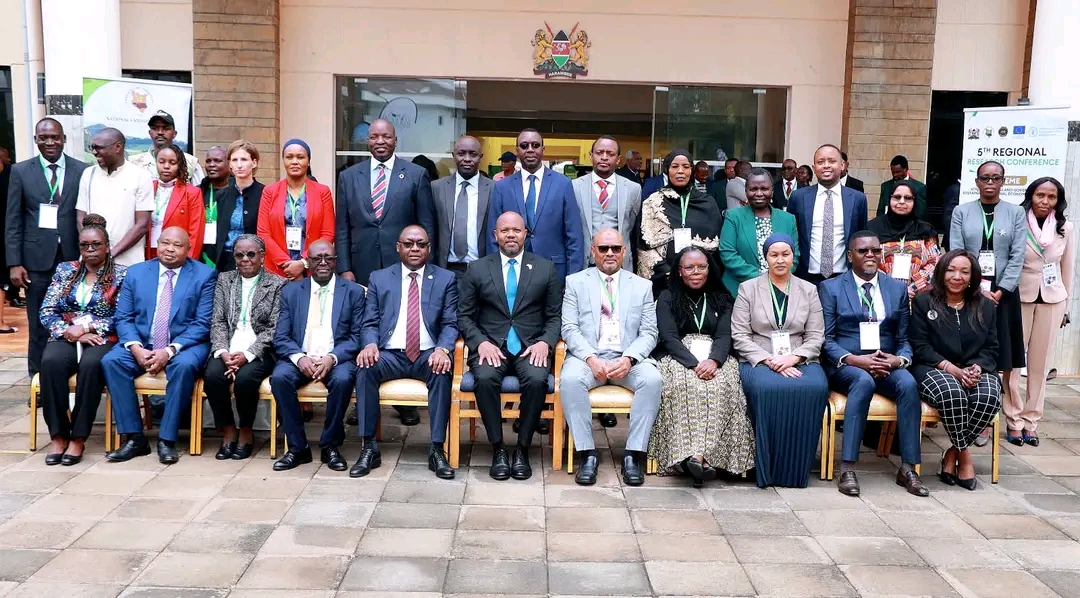
Stakeholders pose for a group photo during the fifth Regional Research Conference on Land Governance held in Nairobi on Wednesday, August 19, 2026.
Effective land governance and proper planning have been identified as critical to addressing Nairobi’s growing challenges, including housing shortages, water demand, waste management and access to public spaces.
Speaking during a land governance conference in Nairobi, Nairobi Deputy Governor James Njoroge Muchiri said the city was under immense pressure as its population and economic activities continue to grow.
Muchiri said Nairobi’s daily water demand stands at about 900 million litres against a supply of approximately 500 million litres, creating a deficit that affects households, schools and businesses.
“Nairobi is under pressure. Our water demand is 900 million litres a day, our supply is 500 million litres a day,” he said.
The Deputy Governor further noted that Nairobi generates more than 30,000 tonnes of waste every day, posing a major challenge to the county government in terms of collection, disposal and environmental management.
He also linked the city’s land challenges to the housing crisis, noting that the national housing deficit remains significant, with Nairobi bearing a substantial share of the burden.
Muchiri said land governance should not be viewed solely as a matter of ownership, titles and rights, but as an issue directly connected to the quality of life of residents.
“Every one of these challenges leads back to one issue, how we plan and manage our land,” he said.
He observed that proper land-use planning determines whether families can access decent housing, children can attend school, businesses can expand and public land can be protected for the benefit of residents.
Muchiri also called for greater public awareness on the value and competing uses of open spaces in Nairobi, saying decisions on land should take into account social, economic and environmental considerations.
He cited the dilemma surrounding public spaces, questioning whether such areas should remain open, be converted into recreational facilities or accommodate informal businesses and other activities.
National Land Commission (NLC) Chairman Dr Abdillahi Saggaf Alawy, meanwhile, called for stronger and more sustainable land governance as a foundation for national development. The current NLC leadership was sworn into office in March 2026, with Alawy serving as chairperson.
Alawy said land was central to Kenya’s socio-economic development and stressed the need for institutions and stakeholders to work together in addressing emerging challenges in the sector.
“As you all are aware, land is the basis for our socio-economic development. Therefore, the way we govern our land and the consequences of our economic prosperity, social protection, and national development,” he said.
He said the review of the national land policy was already underway, describing the process as a welcome development. However, he urged stakeholders to expedite the review in view of the significant socio-economic, environmental, technological and institutional changes affecting the country.
Alawy called for an approach to land governance that is effective, transparent, inclusive and sustainable, saying such a framework would provide a strong foundation for national development.
He further urged participants at the conference to engage in open and constructive discussions and develop practical recommendations capable of strengthening land governance and accelerating Kenya’s economic transformation.
Kenya Vision 2030 Delivery Board Chairman Dr Emmanuel Kombe Nzai said land governance should be approached through stronger collaboration among government, academia and the private sector.
Nzai noted that the country has government institutions, researchers and industry players whose combined expertise can contribute to better land governance and development planning.
He said land is closely linked to economic prosperity, social protection and national development, stressing the importance of bringing together different stakeholders in addressing challenges affecting the sector.
The conference brought together researchers, scholars, policymakers, practitioners, development partners, private-sector representatives and other stakeholders to deliberate on the future of land governance in Kenya.
Nzai, who chairs the Kenya Vision 2030 Delivery Board, is mandated to guide and coordinate the implementation of the country’s long-term development agenda.
The three leaders’ remarks underscored the need for land to be managed as a strategic national resource, with proper planning, accountability and coordination to ensure it supports sustainable development and improves the quality of life for Kenyans.