
Kapsabet Stadium Set to Transform Sport into Economic Opportunity
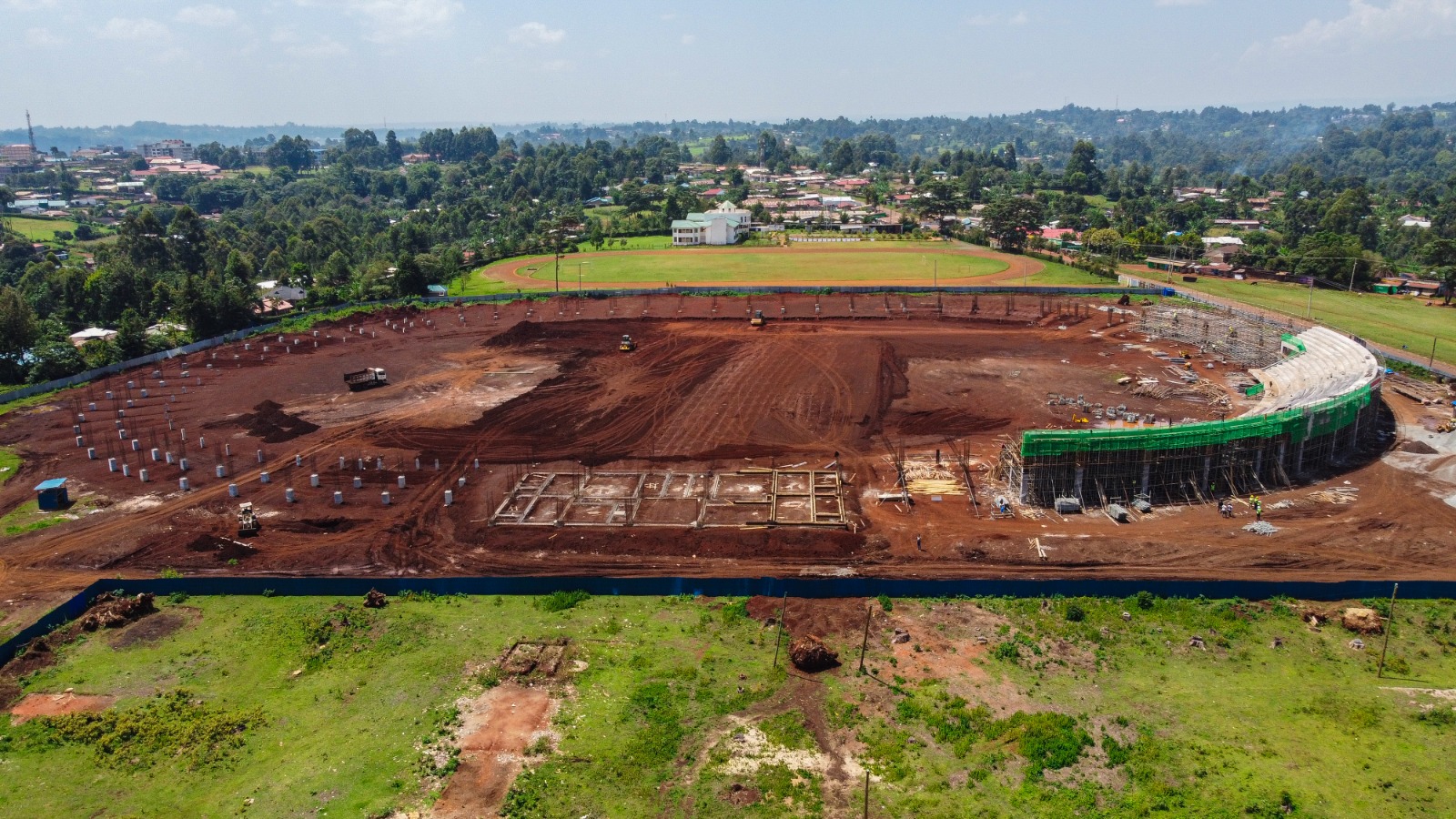
An aerial view of the Kapsabet Stadium under construction next to the Eliud Kipchoge Sports Complex in Nandi County. Once completed, the Government-owned facility will provide athletes with free access to a modern venue for training and competition, further strengthening the county’s sporting ecosystem.
The rising Kapsabet Stadium is expected to do more than produce champions. Located in the heart of Nandi County, globally renowned as the “Source of Champions,” the 10,000-seat facility is set to become a catalyst for sports tourism.
The modern stadium is expected to attract elite athletes from Kenya and around the world for training and competition. Their presence is projected to draw coaches, support teams, sports enthusiasts and other visitors, creating new opportunities for local businesses.
As athletes and visitors spend on accommodation, transport, food and other services, the project is expected to stimulate investment, create jobs and inject more income into local communities, contributing to the country’s broader economic growth.
From accommodation and transport to hospitality, retail and sports services, the stadium is expected to create a value chain that extends far beyond the finish line.
Currently under construction, the nine-month project has reached 34 per cent completion, with superstructure works progressing steadily ahead of its scheduled completion on December 3, 2026.
Once complete, the facility will feature a 10,000-seat stadium, a 14-tier spectator grandstand, VIP and hospitality sections, reinforced concrete spectator stands, a structural steel roof, floodlight infrastructure, internal drainage systems and supporting utility services, positioning it to host county, regional and national sporting events.
Residents already working on the project say the economic impact is tangible.
Dorothy Chemutai, a steel fixer and resident of Nandi County, says the project has transformed her livelihood after a long period without employment.
“I thank the President for bringing this project to us here. I studied fire disaster management, and later trained in plumbing and steel fixing. We have benefited greatly through employment.”
Chemutai says the project has provided reliable income and stable working conditions for hundreds of local workers.
“Before this project, we did not have jobs. Now, we are paid well every end of the month, including overtime. Safety is good and our supervisors manage us well.”
She believes the completed stadium will become a magnet for athletes, creating economic opportunities that extend well beyond construction.
“This stadium will accommodate many athletes. Instead of training on the roads, they will have a big place to practise. When athletes like Kipchoge and others continue breaking records, we will also benefit through employment. Donors and well-wishers will come, and they will help others.”
Her optimism reflects a broader vision for sports as an economic driver.
Sports Kenya Director General Timothy Kilimo says modern sports infrastructure is fundamental to unlocking Kenya’s sporting potential and generating sustainable economic returns.
“Sport is an economy. Infrastructure is its foundation. Every modern stadium creates opportunities for talent to thrive, jobs to grow and communities to earn from talent… but talent alone is not enough; we must, therefore, invest in infrastructure for the highest Return On Investment as a country.”
Kilimo says the partnership between the Ministries of Sports and Defence has accelerated the delivery of modern sports facilities across the country, creating infrastructure capable of transforming athletic talent into livelihoods.
Nandi County has long attracted elite runners from across the world because of its high-altitude environment.
The new stadium is expected to complement that natural advantage by providing world-class facilities for training and competition, encouraging athletes to spend more time in the region while increasing demand for hotels, restaurants, transport services and other local businesses.
As Kenyan athletes continue to dominate global competitions, many invest their earnings back home by building training camps, schools, businesses and community projects.
Leaders believe improved sports infrastructure will strengthen that cycle by attracting more international athletes, competitions and sports tourists, ultimately generating jobs, investment and long-term economic growth.