
LSK Calls for Increased Government Funding for Legal Aid Services
The Law Society of Kenya (LSK) has called on the government to treat legal aid as a basic social need and increase funding for legal services to bridge the gap between the country’s growing number of lawyers and millions of Kenyans unable to access justice.
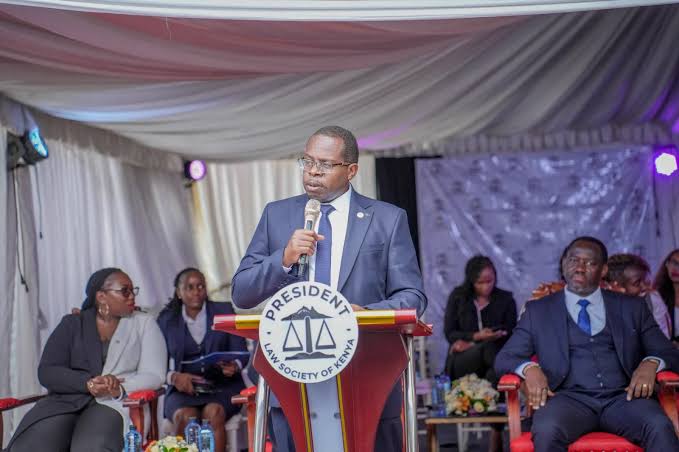
LSK President Charles Kanjama said the legal profession must move beyond waiting for clients to seek assistance in law offices and develop mechanisms that allow advocates to reach people in prisons, informal settlements, counties, workplaces and other communities where legal services are needed.
Speaking during the launch of Legal Awareness Week, Kanjama said access to justice should receive the same attention and public investment accorded to sectors such as health and education.
“We want the government to become increasingly sensitized that as Kenyans pay their taxes, as they go and look for loans for infrastructure and all those various things, let them also put some money aside to build up the infrastructure of legal services, including offering finances to support lawyers who provide legal aid to the public,” Kanjama said.
He said the government had made a start by allocating funds for legal aid through the National Legal Aid Service in the 2026/27 financial year, but the allocation remained insufficient compared with the scale of the need.
Kanjama said LSK would work with the National Legal Aid Service, civil society organisations, the Judiciary and other justice-sector actors to expand legal aid and awareness, noting that professional and civil society organisations could not reach more than 50 million Kenyans without public support.
He said the need for legal services was particularly evident in prisons, where some inmates seeking appeals and reviews rely on community-based organisations, a few lawyers and even fellow prisoners for guidance. He urged advocates to develop stronger mechanisms for reaching prisoners and other vulnerable groups.
National Legal Aid Service Board Chairperson William Kimathi said the existence of legal rights does not necessarily mean that people can access justice, particularly where citizens lack information, resources or timely legal assistance.
Kimathi said legal aid should not be viewed as a service required only by people already before the courts, arguing that many Kenyans need assistance at the point when they first encounter legal problems.
“People have a right to justice, but they don’t know where to go. They don’t know who to ask. They don’t know how to ask. And even when they know, they don’t have the money to get there,” Kimathi said.
He said practical barriers such as transport costs, lack of information and delayed legal assistance can prevent citizens from benefiting from constitutional protections, making it necessary to take legal services closer to communities.
Kimathi said the National Legal Aid Service was expanding access through legal aid clinics, public awareness programmes and partnerships with other actors in the justice sector.
He said legal awareness should also go beyond providing information by ensuring that people are connected to appropriate institutions and receive assistance after referrals.
The call for increased investment in legal aid comes as Legal Awareness Week brings together justice-sector actors to improve public understanding of legal rights and available avenues for assistance.
The initiative seeks to make legal services more accessible to vulnerable and marginalised communities while strengthening cooperation among institutions responsible for delivering justice.