
Sneak Peek: Kenya’s Dual Training TVET Centre Of Excellence
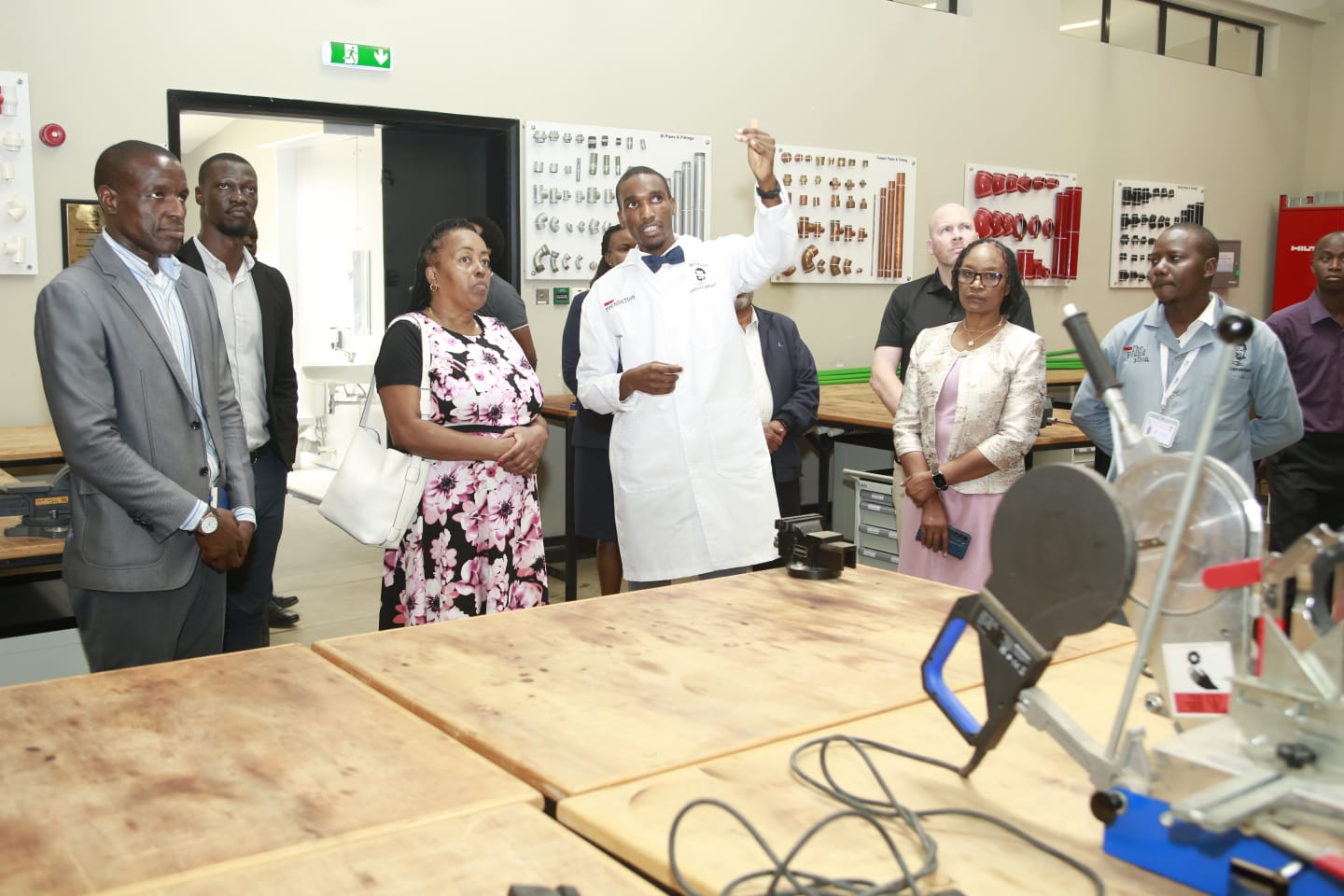
Dr Wanjiru Kariuki, Secretary for Skills Development at the Ministry of Labour and Social Protection, alongside a Swisscontact, Kenya team, is taken through one of the modern workshops at Don Bosco Boys Town in Nairobi, a private sector-led dual training centre of excellence.
Nairobi, Kenya — The government has thrown its weight behind a new private sector-led dual training model in Technical and Vocational Education and Training (TVET), positioning it as a key solution to Kenya’s persistent youth unemployment challenge.
This follows an impromptu visit by Dr. Wanjiru Kariuki, Secretary for Skills Development at the Ministry of Labour and Social Protection, to Don Bosco Boys Town TVET Institute, where discussions centred on establishing a centre of excellence anchored on industry-driven training. The visit came just days after the launch of a new curriculum that allocates 75 per cent of training to the workplace and 25 per cent to classroom instruction an approach designed to ease the transition of young people into the labour market.
“This is very important for us, especially for the government of Kenya and the Ministry of Labour and Social Protection, because our ministry is in charge of creating employment for the youth,” said Dr. Kariuki, noting that the shift seeks to address the long-standing disconnect between training and job market demands.
The curriculum, developed in collaboration with more than 60 companies and accredited by the National Industrial Training Authority (NITA), places employers at the core of skills development. It was officially launched in Nairobi by Principal Secretaries Shadrack Mwadime and Dr. Esther Muoria, signalling a significant shift in how technical education is structured and delivered in the country.
Programmes under the new framework include electrical installation and plumbing courses at both artisan and diploma levels, aligned with industry needs. Training is delivered using modern equipment and technologies, with students gaining hands-on experience both in institutional workshops and real work environments.
The model draws inspiration from Switzerland’s dual training system and has been adapted locally through collaboration with Swisscontact Kenya. Under the framework, trainees spend one week per month in classrooms and three weeks in industry placements, allowing them to apply theoretical knowledge in real-world settings.

Swisscontact Kenya Country Director Sharon Mosin-Urner said the programme’s success depends on strong institutional infrastructure and industry collaboration. She noted that new courses such as lift mechanics currently lacking formal training in Kenya and the wider East African region are being introduced under the model.
At Don Bosco Boys Town, Director Father Joseph Padinjareparampil described the approach as a practical solution to the mismatch between skills training and employment. He cited the PropelA dual apprenticeship programme as a key driver of success, enabling trainees to gain relevant skills, secure employment, and even start their own businesses.
Companies participating in the programme provide workplace training and stipends to apprentices, reinforcing the role of the private sector as both a training partner and employer. Early results indicate that the model is yielding positive outcomes, with graduate employability rates approaching 80 per cent.
The government now hopes that scaling up the dual training model across the country will help bridge the skills gap and create sustainable employment pathways for Kenya’s youth.