
Kenya Sugar Board Assures Public of Stable Sugar Prices
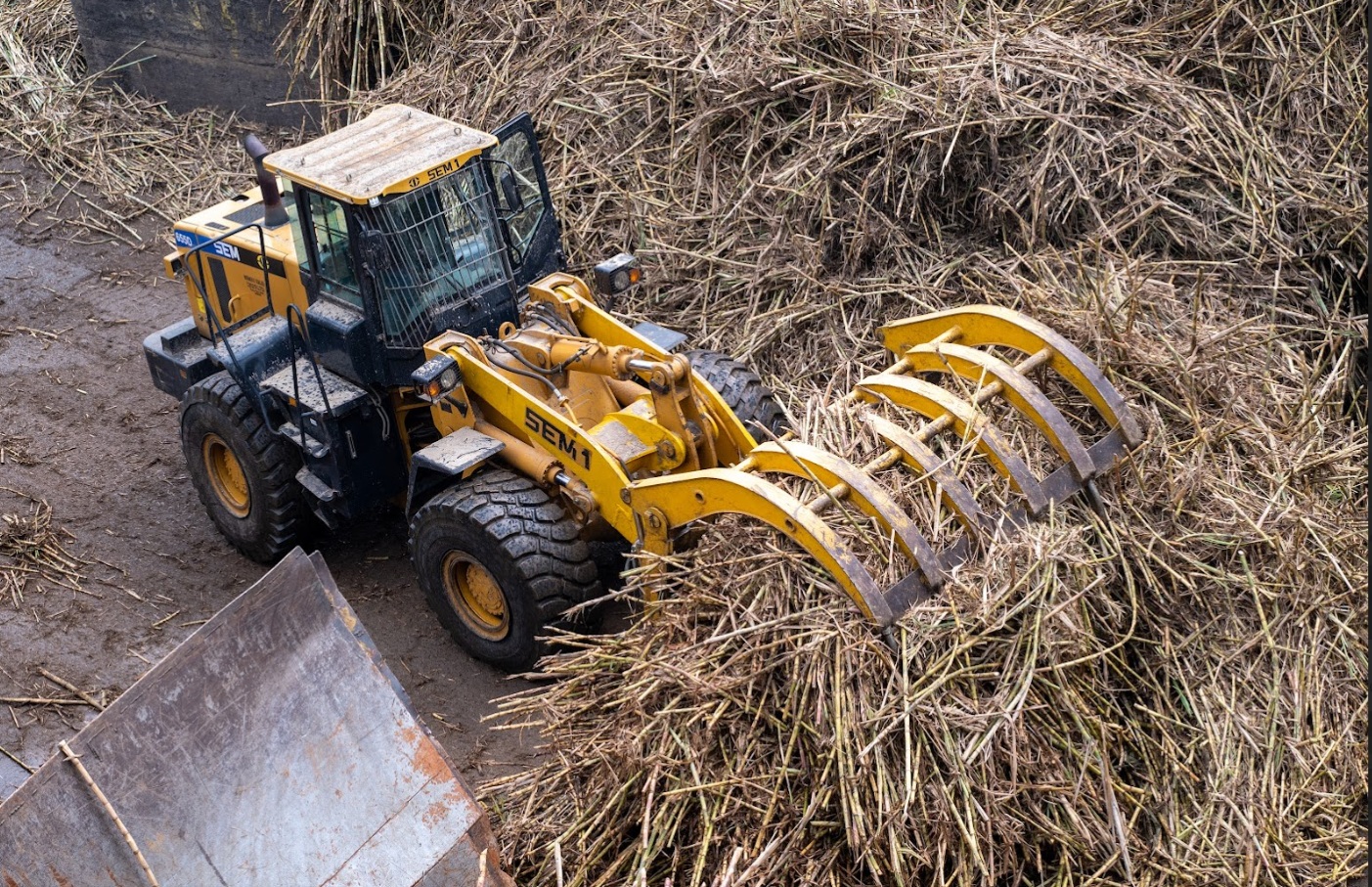
A front-end loader moves harvested sugarcane at a processing yard, preparing the crop for milling.
The Kenya Sugar Board has assured Kenyans of stable sugar prices amid production challenges, among other factors like rising demand.
In a statement, Kenya Sugar Board CEO Jude Chesire said that there was no cause for panic, saying they have put in place measures to safeguard the sugar sector and cushion Kenyans against price unpredictability.
Citing unfavourable weather conditions, “deliberate protection of future cane, and structural reforms designed to secure the long-term survival of the sugar industry,” Chesire said the challenges were temporary.
“We wish to assure Kenyans that there is no cause for panic and continue buying sugar with confidence. Kenya’s sugar supply remains secure despite rising demand driven by population growth, expanding urban consumption, and increased industrial use, even as the country navigates a challenging production cycle that began in 2025 and has extended into early 2026,” he said.
He maintained that much of the mature cane was harvested in 2024, leading to high production that year. “In 2025, a significant portion of cane was still in developmental stages and could not be harvested,” he said.
According to him, this necessitated the temporary closure of seven sugar factories in Lower and Upper Western regions to allow the cane to reach optimal maturity, ensuring higher sucrose content and protecting farmers’ future earnings.
At the same time, state-owned sugar factories were closed initially to facilitate leasing to private investors as part of the private sector mill transitions and rehabilitation.
Follow us on our channel; https://whatsapp.com/channel/0029VbAxPJ842DcZ2jz0ZS1S
And, following the handover, these factories underwent extensive renovations and rehabilitation worth Ksh 12.5 billion, resulting in a total of approximately nine months of reduced milling capacity. Kwale Sugar also remained non-operational during 2025.
Chesire said that the sugar production in 2025 stood at 613,000 metric tonnes, meeting only 61 per cent of the national demand of 1.2 million metric tonnes.
Describing 2025 as a transition year for the sugar sector, Chesire said that long-term farmer-centred strategies have been put in place.
As a result, 2025 became a transition year, in which production fell so that the foundation for higher, more reliable output could be rebuilt, he said, adding:
“Kenya’s sugar demand continues to grow annually, driven by population growth and consumption trends. Ensuring stability of supply is therefore a national priority.”
He added that the government and industry regulators have put in place market stabilization measures to ensure sugar remains available, prices remain predictable, and consumers are protected from artificial shortages and speculation, even as production recovers and dry conditions persist in early 2026.
“Farmers remain at the center of the recovery strategy. The challenges of late 2025 and early 2026 are real, but they are temporary. The reforms are permanent. The assurance to Kenyans is clear: sugar supply will remain stable as the industry completes its recovery,” he reiterated.